math
math Bilibili0:28
Bilibili · Charles队长Original video
Calculus · 中文
Using the Cauchy criterion to disprove a limit
A Chinese visual explanation of using the cauchy criterion to disprove a limit. Catalog metadata imported from the original Math Video site and checked against the source platform; not a transcript.
Reviewed learning material · Video analysis · English
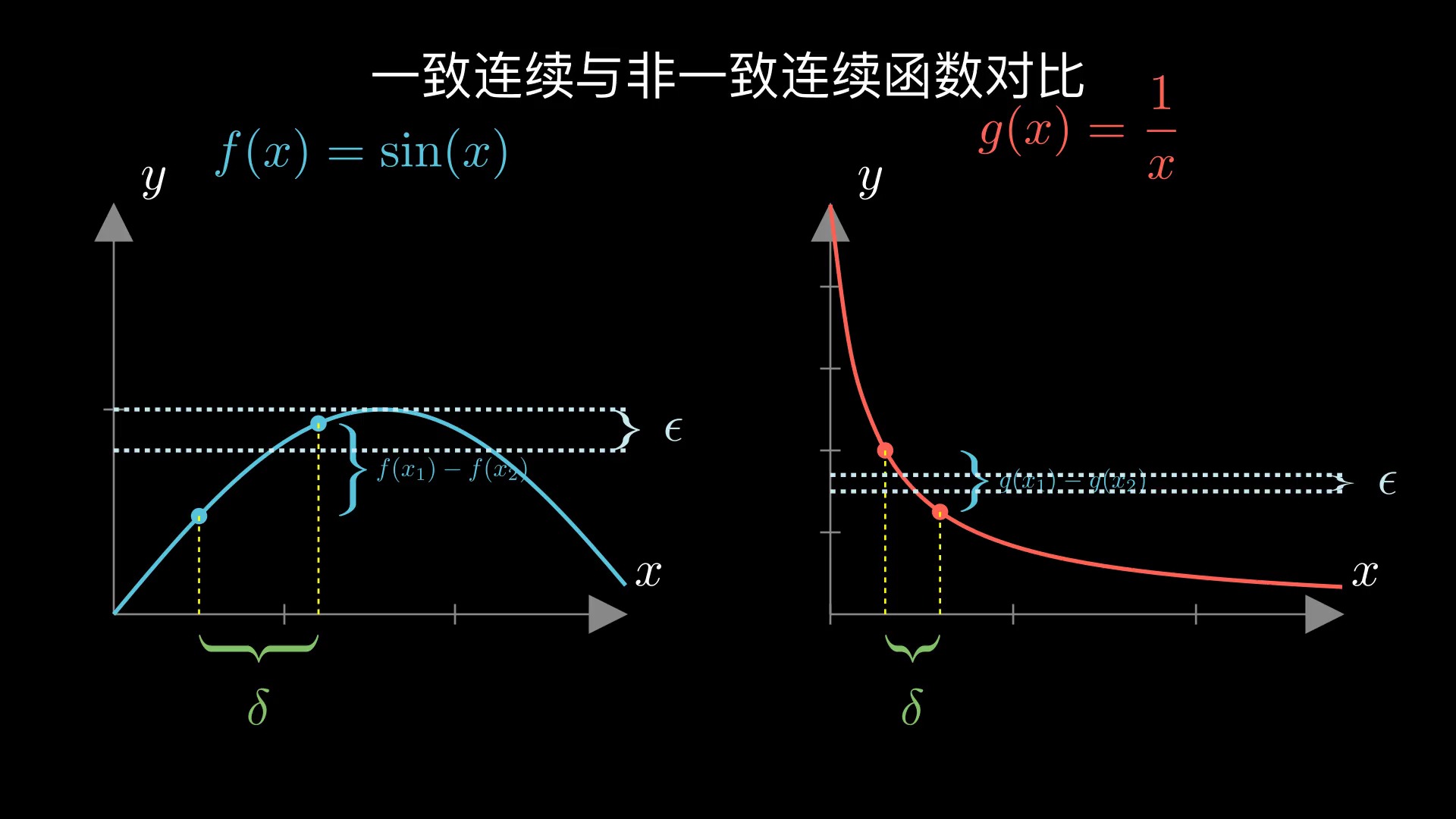
This video demonstrates how to prove that the limit of the sequence does not exist by using the contrapositive of the Cauchy Convergence Principle. It defines the negative condition (), selects , and uses visual examples with specific indices () to show that adjacent terms always maintain a distance of at least 2. Finally, it generalizes this finding to conclude that since the sequence is not a Cauchy sequence, its limit cannot exist.
Before you watch
- Definition of Sequence Limits
- Cauchy Sequences
- Real Number Completeness Axiom
- Quantifier Logic (Negation)