A squaring machine
For , inputs , and produce outputs , and . Different inputs may share an output; that does not violate the function rule.
Dr. Trefor Bazett · YouTube · 5:51
A function assigns exactly one output to each input in its domain. Using the squaring function, this introduction explains graphs, the vertical line test, and the distinction between possible inputs and outputs.
Use the learning inspector for key ideas and moments, or open the reading tabs for the complete notes.
Generated from the video's visuals and explanation; not verbatim speech.
For , inputs , and produce outputs , and . Different inputs may share an output; that does not violate the function rule.
A graph represents a function of only if a vertical line does not hit two different output points for the same input. This checks output uniqueness.
The domain specifies the allowed inputs. The range is the set of outputs actually attained. For squaring on all real inputs, every input is allowed and all outputs are nonnegative.
A function must act on every input in its stated domain and return exactly one output for each. Feeding in must consistently return for this squaring rule.
For , inputs , and produce outputs , and . Different inputs may share an output; that does not violate the function rule.
A graph represents a function of only if a vertical line does not hit two different output points for the same input. This checks output uniqueness.
The domain specifies the allowed inputs. The range is the set of outputs actually attained. For squaring on all real inputs, every input is allowed and all outputs are nonnegative.
A function must act on every input in its stated domain and return exactly one output for each. Feeding in must consistently return for this squaring rule.
For , inputs , and produce outputs , and . Different inputs may share an output; that does not violate the function rule. A graph represents a function of only if a vertical line does not hit two different output points for the same input. This checks output uniqueness. The domain specifies the allowed inputs. The range is the set of outputs actually attained. For squaring on all real inputs, every input is allowed and all outputs are nonnegative. A function must act on every input in its stated domain and return exactly one output for each. Feeding in must consistently return for this squaring rule.
A function must satisfy two main requirements for its outputs: existence and uniqueness. Existence means that for every input in the stated domain, the function must produce an output.
Conditions: The domain is explicitly stated.; The function rule is well-defined for all inputs in the domain.
The squaring function maps different inputs to the same output if those inputs are opposites (e.g., and ). This does not violate the function rule because a function requires exactly one output for each input, but it allows multiple inputs to share the same output.
Conditions: The function is .; Inputs are distinct real numbers.
The vertical line test is a graphical method used to determine whether a curve represents a function of . A graph represents a function if and only if no vertical line intersects the graph at more than one point.
Conditions: The graph is plotted on a standard Cartesian coordinate system.; The independent variable is .
For the squaring function defined on all real numbers, the domain is the set of all real numbers (), meaning every input is allowed. The range is the set of all nonnegative real numbers (), because squaring any real number results in a value greater than or equal to zero.
Conditions: The function is .; The domain is specified as all real inputs.
 YouTube7:51
Another explanation of Functions.
Functions YouTube10:11
Another explanation of Functions.
Functions X1:41
X1:41Next in Discrete Mathematics: Counting and Number Theory: Functions → Combinatorial counting.
Combinatorial counting · View learning sequence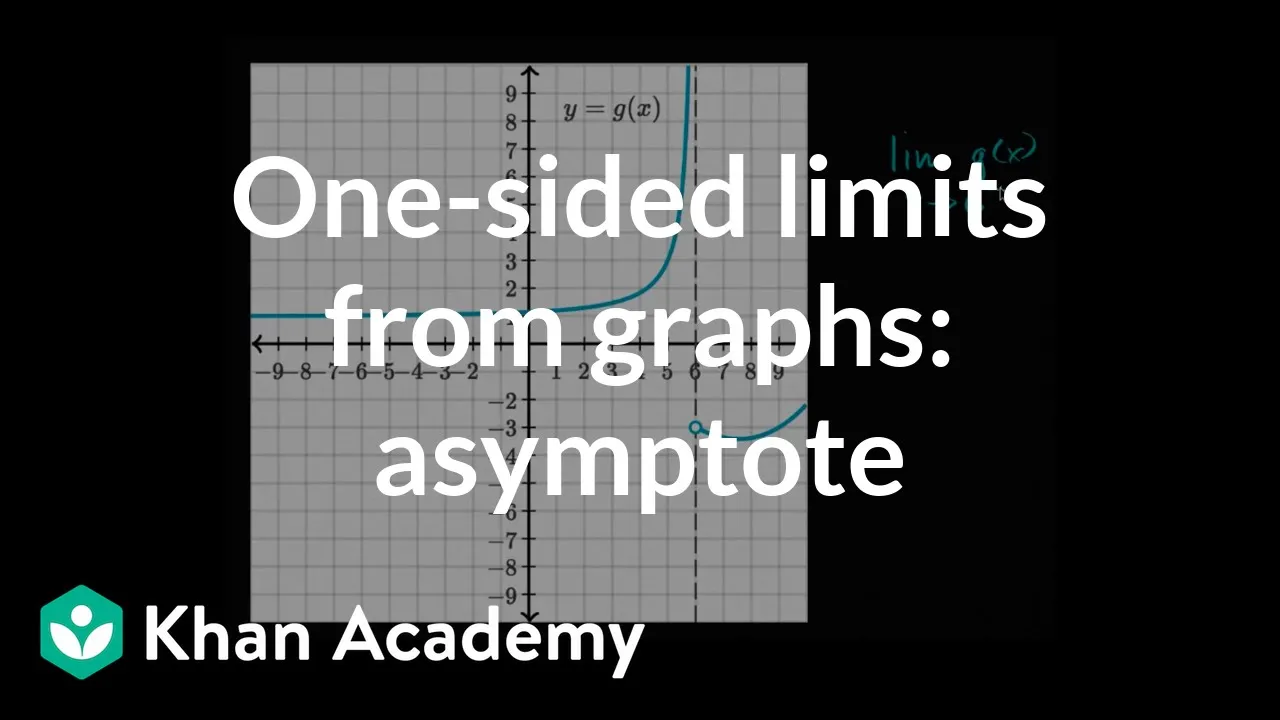 YouTube2:26
Next in Calculus: Functions → Limits.
Limits · View learning sequence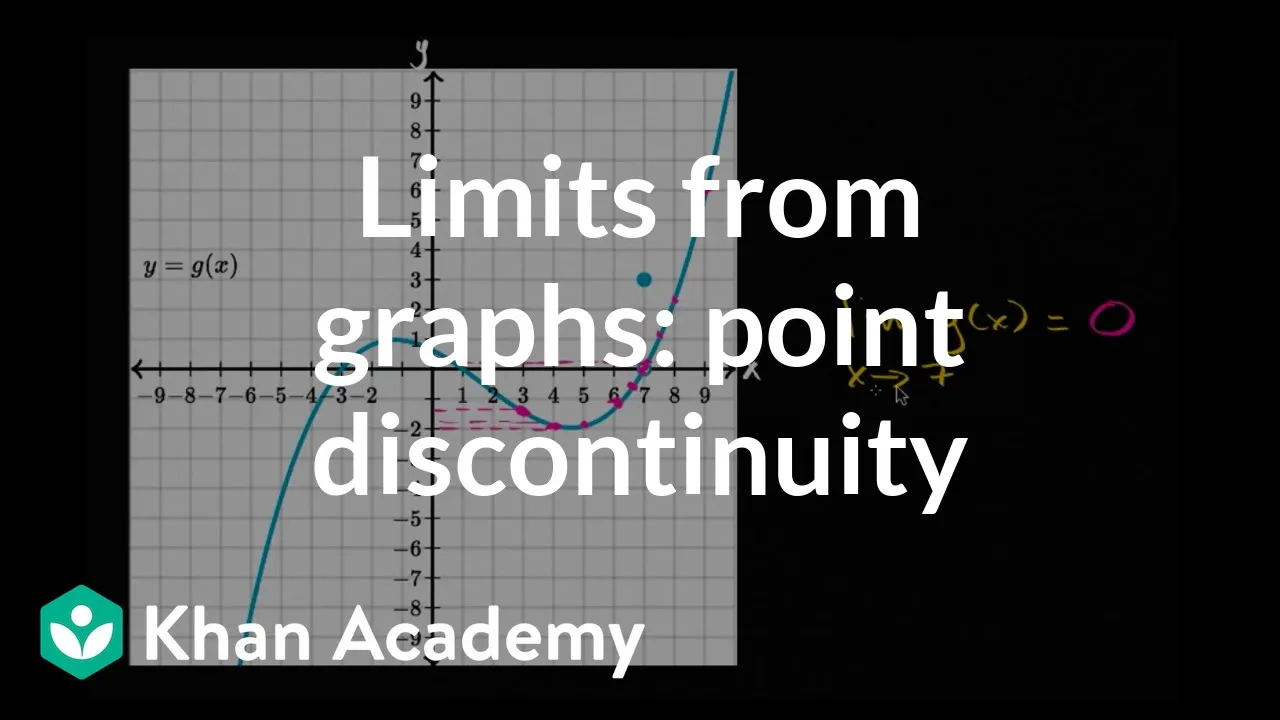 YouTube2:38
Next in Calculus: Functions → Limits.
Limits · View learning sequence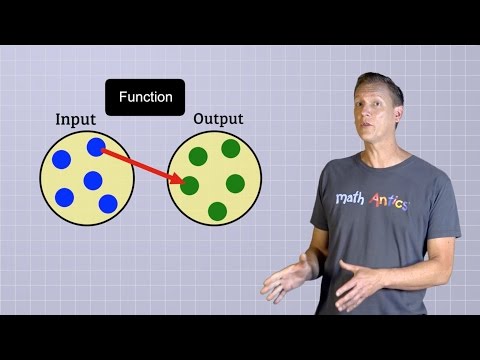 YouTube11:34
Lecture for Functions, compared with the current whiteboard.
FunctionsYouTube7:51Lecture for Functions, compared with the current whiteboard.
FunctionsYouTube10:11Visual explanation for Functions, compared with the current whiteboard.
Functions