Alternating Series Form
A series where signs alternate between positive and negative. The specific instance shown converges to the natural logarithm of 2.
Charles队长 · Bilibili · 0:30
The alternating harmonic series has partial sums approaching ln 2 from alternating sides. The alternating-series test gives sufficient conditions: nonnegative magnitudes decrease to zero. Monotonicity is not necessary for every convergent alternating series, and a finite plot alone is not a convergence proof.
Use the learning inspector for key ideas and moments, or open the reading tabs for the complete notes.
Generated from the video's visuals and explanation; not verbatim speech.
The video introduces an alternating series, specifically the expansion of . A coordinate system is set up to plot the sequence of partial sums against the number of terms .
An animation traces the path of the partial sums as yellow dots connected by lines. The points jump above and below a horizontal dashed line labeled . This illustrates that while the sum does not approach the limit monotonically, it oscillates closer and closer to it.
Text overlays summarize the requirements for such convergence: the absolute value of the general term must be monotonically decreasing, and the term itself must tend to zero. Finally, an inequality appears, providing a simple way to estimate the truncation error.
A series where signs alternate between positive and negative. The specific instance shown converges to the natural logarithm of 2.
If nonnegative decrease monotonically to zero, the alternating series converges. These are sufficient conditions. Terms tending to zero are necessary for convergence; monotonicity is not necessary in general.
Odd and even partial sums approach the limit from opposite sides. The alternating-series test justifies convergence; a finite set of plotted points alone does not.
If you stop adding terms after , the difference between your approximation and the actual infinite sum is bounded by the very next term you didn't add.
The reviewed remainder card accompanies the alternating-series criterion: if the nonnegative magnitudes decrease to zero, the series converges and the remainder magnitude is at most the next omitted term. The example converges to . Monotonic magnitudes are sufficient here, not necessary for every convergent alternating series; a finite plot is not a convergence proof.
The alternating-series test provides a simple way to estimate the truncation error: the absolute value of the remainder after summing terms is bounded by the absolute value of the very next term, .
Conditions: The series satisfies the conditions of the alternating-series test.; The error is estimated after summing terms.
The alternating-series test provides sufficient conditions for convergence: the absolute value of the general term must be monotonically decreasing, and the term itself must tend to zero. If these conditions are met, the series converges.
Conditions: The series is an alternating series.; The absolute values of the terms are nonnegative.; The sequence of absolute values is monotonically decreasing.; The limit of the terms as n approaches infinity is zero.
The partial sums of the alternating harmonic series oscillate around the limit . Odd partial sums approach the limit from one side, and even partial sums approach it from the opposite side, getting closer and closer with each additional term.
Conditions: The series is the alternating harmonic series .; The limit of the series is .
A finite plot of partial sums only shows the behavior of the series up to a certain number of terms. It cannot guarantee that the sequence of partial sums will continue to approach a limit indefinitely.
Conditions: The plot shows only a finite number of partial sums.; Convergence is defined as the limit of the infinite sequence of partial sums.
Monotonicity is a sufficient condition for convergence under the alternating-series test, but it is not necessary. Some alternating series can converge even if their terms do not decrease monotonically, as long as the terms still tend to zero and the overall sum stabilizes.
Conditions: The series is an alternating series.; The terms tend to zero as n approaches infinity.
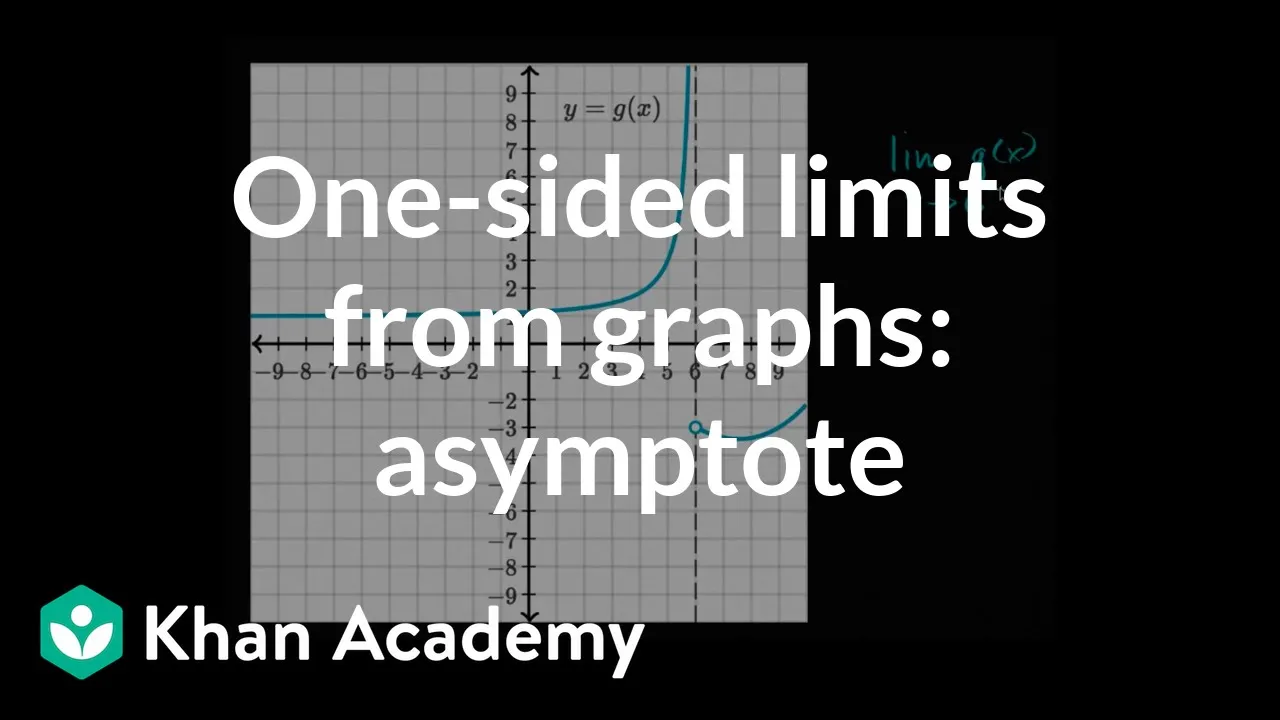 YouTube2:26
Prerequisite in Calculus: Limits → Series.
Limits · View learning sequence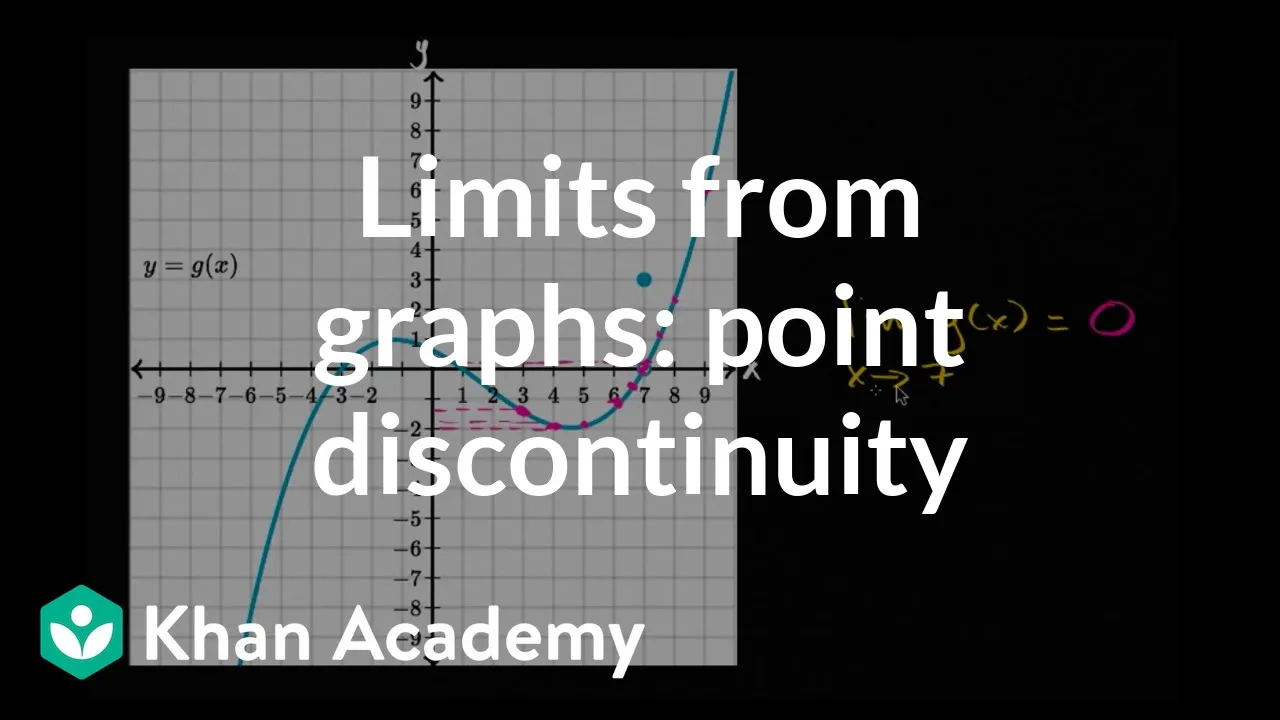 YouTube2:38
Prerequisite in Calculus: Limits → Series.
Limits · View learning sequence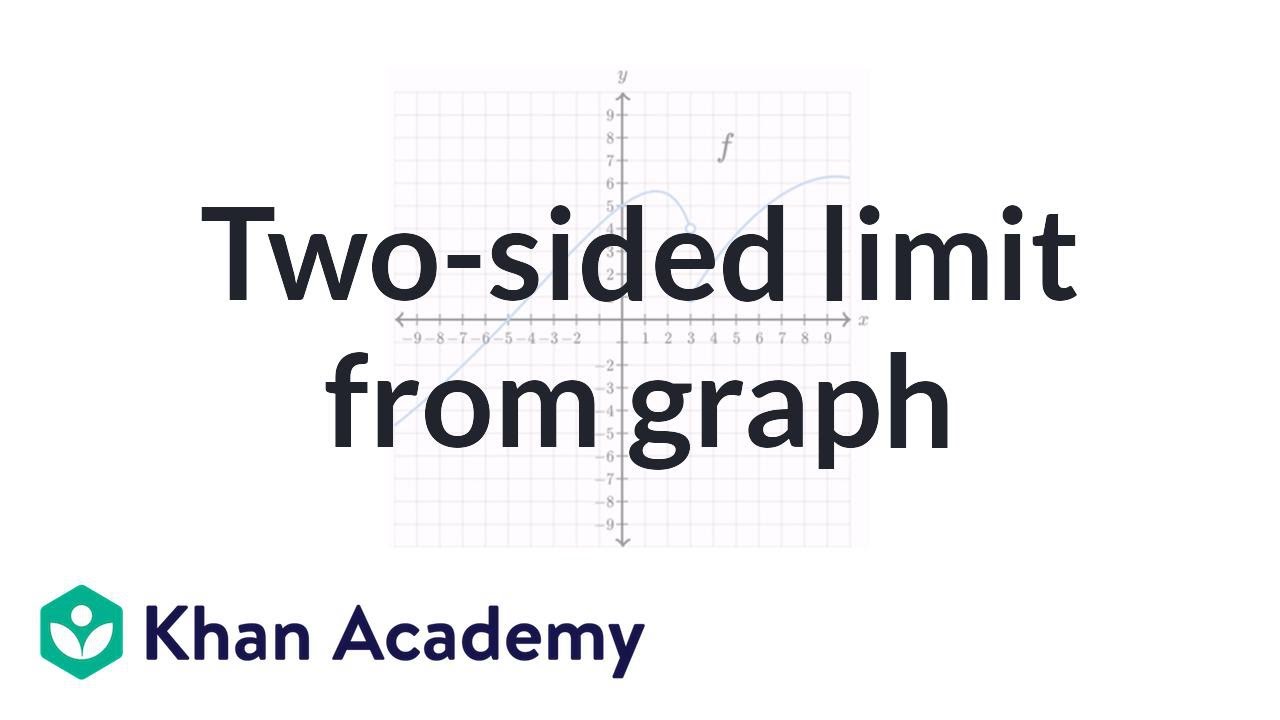 YouTube2:46
Prerequisite in Calculus: Limits → Series.
Limits · View learning sequence