Cauchy condition
For each tolerance, every sufficiently late pair is close. N may depend on tolerance, but not on the particular pair subsequently chosen.
Charles队长 · Bilibili · 0:27
The plotted sequence illustrates the Cauchy condition: at every positive tolerance, every pair of sufficiently late terms is closer than that tolerance. A real sequence converges exactly when it is Cauchy. The tolerance band provides intuition, rather than a complete proof from finitely many samples.
Use the learning inspector for key ideas and moments, or open the reading tabs for the complete notes.
Generated from the video's visuals and explanation; not verbatim speech.
The horizontal axis indexes the sequence and the vertical axis gives its values. Instead of guessing a limit, ask whether all sufficiently late terms become close to each other.
For every , find N such that every pair m, satisfies |aₘ−aₙ|<ε. The two indices may be far apart; testing only consecutive terms is insufficient. The band represents tolerance and the vertical cutoff represents N.
As tolerance tightens, examine a suitably later tail. The definition controls every tolerance and every tail pair, so a finite animation is only an illustration. Completeness guarantees that a real Cauchy sequence converges; the same conclusion need not hold in an incomplete space.
For each tolerance, every sufficiently late pair is close. N may depend on tolerance, but not on the particular pair subsequently chosen.
For example log n has consecutive differences tending to zero but diverges. The Cauchy condition controls all pairs in a tail.
The band illustrates allowed distances and the cutoff indicates where uniform tail control begins. A proof still treats every tolerance and all later indices.
In the real numbers, convergence and the Cauchy condition are equivalent. In a general space, the converse direction requires completeness.
The reviewed Cauchy-condition card explains uniform control of every pair of sufficiently late terms, with a cutoff depending on the positive tolerance but not on the chosen pair. For real sequences, the Cauchy condition is equivalent to convergence. Small consecutive differences alone do not suffice: supplies a divergent example. The converse in a general metric space requires completeness.
The Cauchy condition states that for every positive tolerance , there exists an index such that for all indices , the distance between the sequence terms is strictly less than . This means that all sufficiently late terms in the sequence become arbitrarily close to each other, regardless of how far apart their indices are.
Conditions: The sequence is defined over the real numbers.; is an arbitrary positive tolerance.; is an integer threshold that depends on .; and are any indices strictly greater than .
The standard - definition of convergence requires the existence of a specific limit such that for all . In contrast, the Cauchy condition does not reference any external limit; it only requires that the terms get close to *each other*, i.e., for all .
Conditions: Comparing the two definitions for sequences in a metric space.; Standard convergence: .; Cauchy condition: .
In the visualization of the Cauchy condition, the horizontal band represents the tolerance , defining the maximum allowed distance between any two terms in the tail. The vertical cutoff line represents the index , marking the point beyond which all sequence terms must lie within the band relative to each other.
Conditions: The visualization plots sequence index on the horizontal axis and value on the vertical axis.; The band is centered around the cluster of tail terms.; The cutoff is a specific index .
Testing only consecutive terms is insufficient because the Cauchy condition requires that *every* pair of sufficiently late terms is close, not just adjacent ones. A sequence can have consecutive differences approaching zero while still diverging or failing to cluster tightly over long intervals.
Conditions: The sequence is defined over the real numbers.; The condition checks .; The Cauchy condition requires .
A finite animation can only display a limited number of terms and a specific tolerance . The Cauchy condition, however, is a universal statement: it must hold for *every* positive and *every* pair of indices beyond some .
Conditions: The animation shows a finite number of sequence terms.; The animation uses a specific, fixed tolerance .; The Cauchy condition requires and .
The completeness of the real numbers guarantees that every Cauchy sequence of real numbers converges to a real limit. In other words, the Cauchy condition is equivalent to convergence in .
Conditions: The sequence consists of real numbers.; The sequence satisfies the Cauchy condition.; The underlying space is the set of real numbers .
 Bilibili5:38
Next in Calculus: Limits → Derivatives.
Derivatives · View learning sequence YouTube2:28
Next in Calculus: Limits → Definite integrals.
Definite integrals · View learning sequence YouTube2:39
Next in Calculus: Limits → Derivatives.
Derivatives · View learning sequence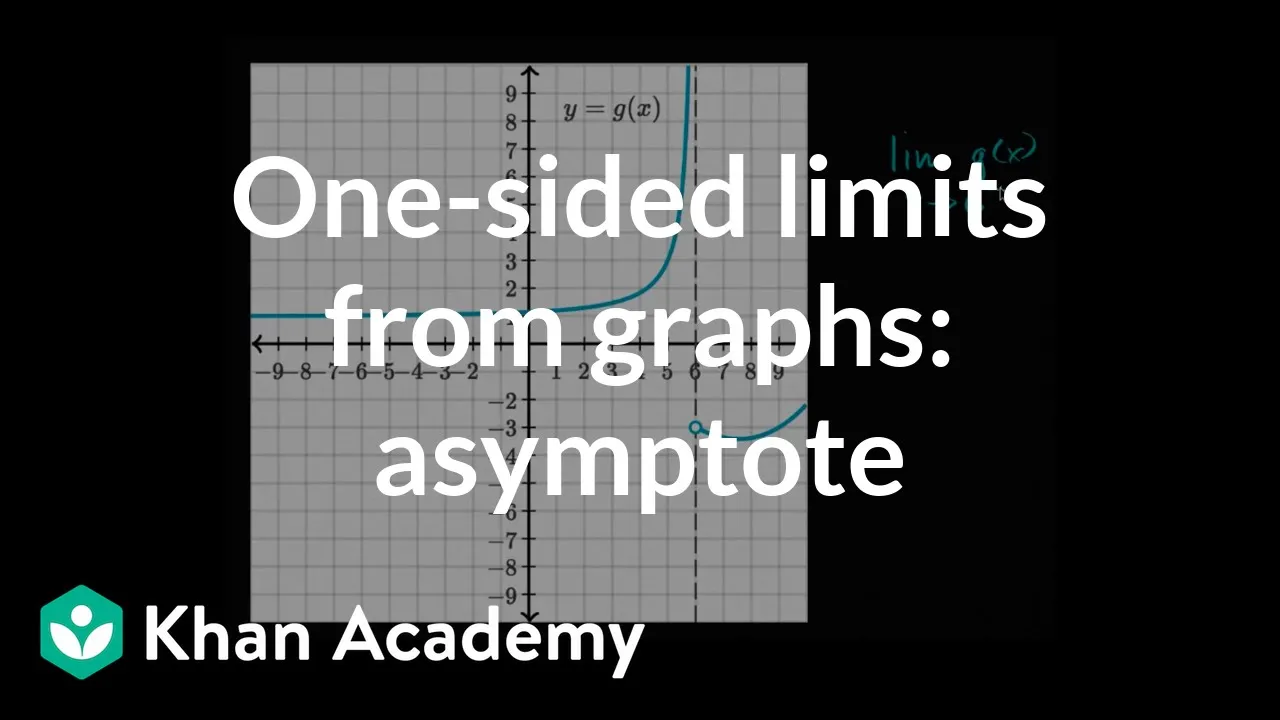 YouTube2:26
English video covering Limits; the current video is in Chinese.
Limits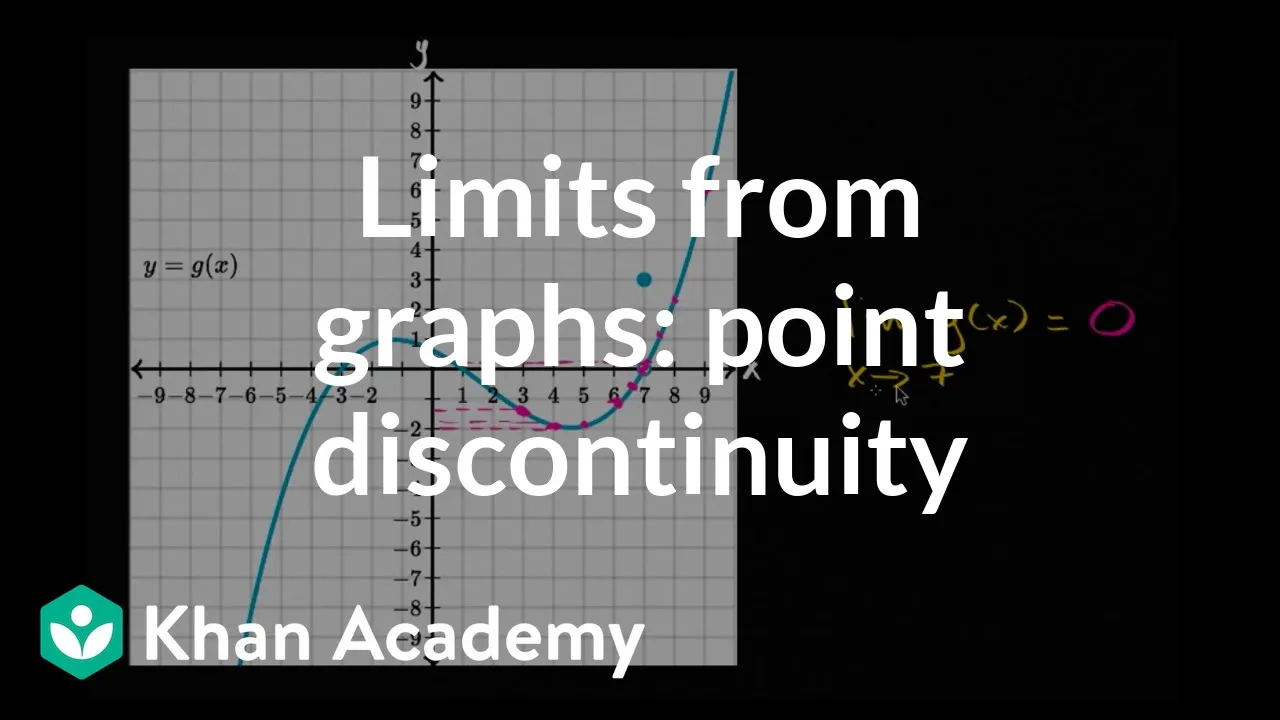 YouTube2:38
English video covering Limits; the current video is in Chinese.
Limits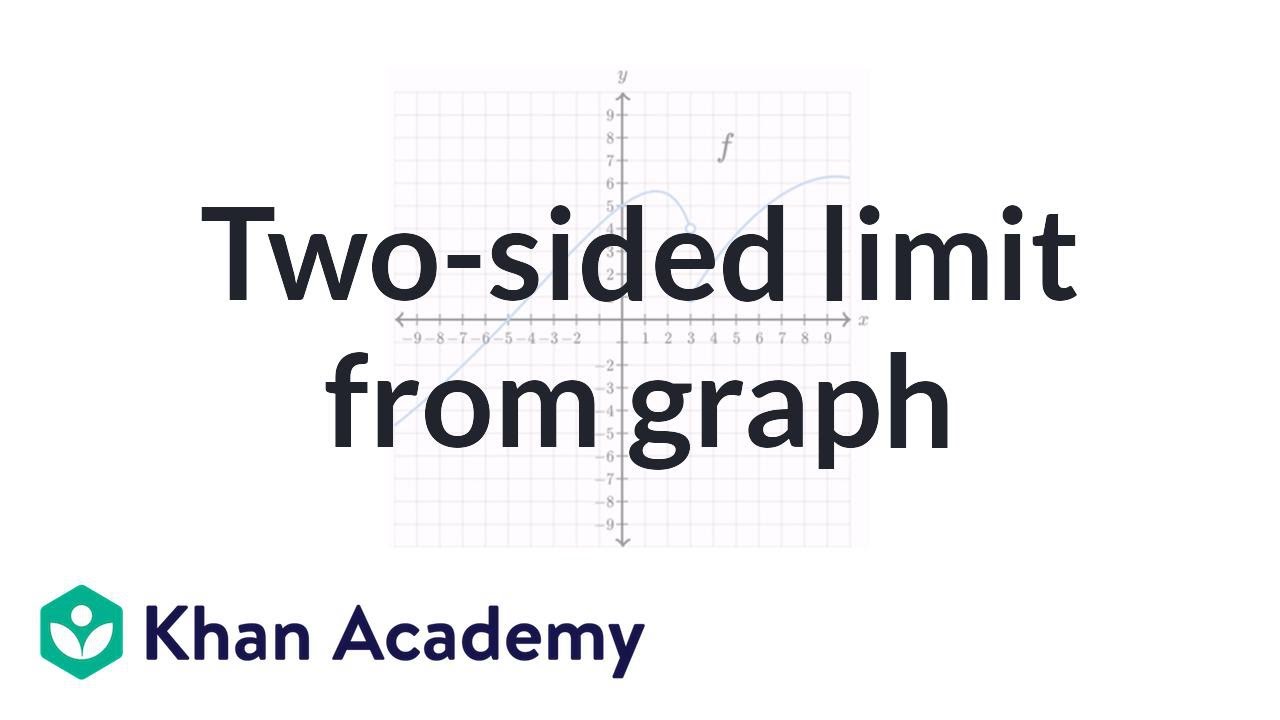 YouTube2:46
English video covering Limits; the current video is in Chinese.
LimitsYouTube2:26Whiteboard for Limits, compared with the current visual explanation.
LimitsYouTube2:38Whiteboard for Limits, compared with the current visual explanation.
LimitsYouTube2:46Whiteboard for Limits, compared with the current visual explanation.
Limits