Does order matter?
Choosing two distinct letters from four gives 12 ordered pairs but only six unordered pairs. Reversing a pair creates a different permutation, not a different combination.
The Organic Chemistry Tutor · YouTube · 17:40
Distinguish ordered arrangements from unordered selections, and handle repeated letters using factorials.
Use the learning inspector for key ideas and moments, or open the reading tabs for the complete notes.
Generated from the video's visuals and explanation; not verbatim speech.
Choosing two distinct letters from four gives 12 ordered pairs but only six unordered pairs. Reversing a pair creates a different permutation, not a different combination.
For selection without repetition, . Dividing the permutation count by r! removes the internal order of each selected group.
MISSISSIPPI has 11 letters with multiplicities 4, 4 and 2 for I, S and P. Its number of distinct arrangements is .
Choosing two distinct letters from four gives 12 ordered pairs but only six unordered pairs. Reversing a pair creates a different permutation, not a different combination.
For selection without repetition, . Dividing the permutation count by r! removes the internal order of each selected group.
MISSISSIPPI has 11 letters with multiplicities 4, 4 and 2 for I, S and P. Its number of distinct arrangements is .
Choosing two distinct letters from four gives 12 ordered pairs but only six unordered pairs. Reversing a pair creates a different permutation, not a different combination. For selection without repetition, . Dividing the permutation count by r! removes the internal order of each selected group. MISSISSIPPI has 11 letters with multiplicities 4, 4 and 2 for I, S and P. Its number of distinct arrangements is .
To find the number of distinct arrangements of a word with repeated letters, you take the factorial of the total number of letters and divide it by the product of the factorials of the multiplicities of each repeated letter. This corrects for the overcounting caused by treating identical letters as distinct.
Conditions: The word contains repeated letters.; We are finding the number of distinct permutations (arrangements).
For selection without repetition, the number of combinations is calculated using the binomial coefficient formula . This formula counts the number of ways to choose distinct elements from a set of elements where order does not matter.
Conditions: The selection is made without repetition.; The elements are distinct.; Order does not matter in the selection.
We divide by because the permutation count includes all possible internal orderings of each selected group. Since combinations are unordered selections, these internal orderings are redundant.
Conditions: The selection is made without repetition.; Order does not matter in the final count.
Reversing a pair creates a different permutation because permutations are ordered arrangements, meaning the sequence of elements matters. However, it does not create a different combination because combinations are unordered selections, where only the membership of the elements in the set matters, not their sequence.
Conditions: The elements being arranged are distinct.; We are comparing ordered arrangements (permutations) with unordered selections (combinations).
 YouTube13:34
Another explanation of Combinations.
Combinations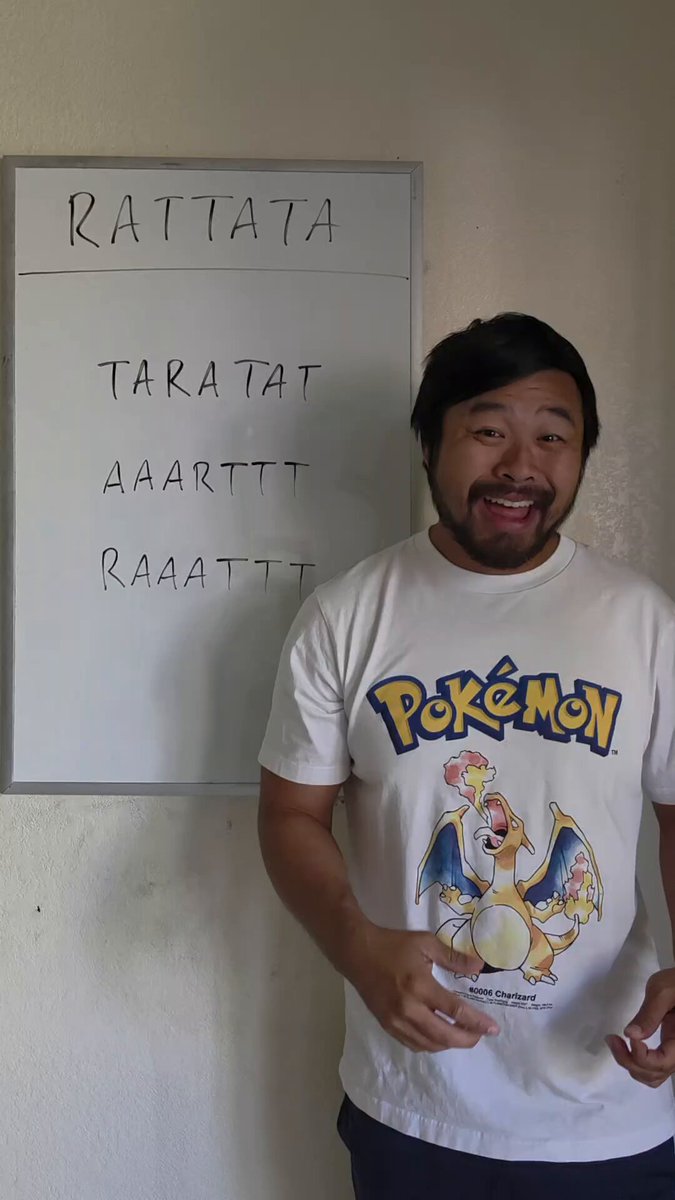 X1:41
X1:41Prerequisite in Discrete Mathematics: Counting and Number Theory: Combinatorial counting → Combinations.
Combinatorial counting · View learning sequence YouTube7:39
Prerequisite in Discrete Mathematics: Counting and Number Theory: Combinatorial counting → Combinations.
Combinatorial counting · View learning sequence YouTube10:11
Prerequisite in Discrete Mathematics: Counting and Number Theory: Combinatorial counting → Combinations.
Combinatorial counting · View learning sequenceYouTube10:11Application of Combinations, complementing the current explanation.
Combinations