Product Rule Formula
For f and g differentiable at the point, differentiate one factor at a time while retaining the other, then add the two terms.
 mathvideo•
Learn the derivative product rule and complete the example x² sin x, with bilingual notes, differentiability conditions and radians clarified.
Apply the product rule to differentiate a product of two functions: differentiate one factor, keep the other, then add the complementary term. Khan Academy demonstrates the complete example x² sin x, obtaining 2x sin x+x² cos x with consistent colors for the two factors. The lesson teaches application rather than a proof of the general rule. Editorial notes state the differentiability conditions and the use of radians for trigonometric derivatives.
Generated from the video's visuals and explanation; not verbatim speech.
Introduce the product rule as a tool for differentiating products. This lesson will apply the rule without proving the general theorem.
When f and g are differentiable at the point, differentiate one factor at a time: f'g+fg'. Keep the other factor unchanged in each term, and then add the terms.
Set up the example x² sin x as a product of the squared function and sine; the following part of the same video completes the calculation.
Continue differentiating , using .
Choose in pink and in green.
The power rule gives , and, with x in radians, the sine derivative gives .
Substitute the two pairs: becomes , and becomes .
The final result is . The two colors track where the original factors and derivatives appear.
For f and g differentiable at the point, differentiate one factor at a time while retaining the other, then add the two terms.
Split x² sin x into f(x)=x² and g(x)=sin x. This setup interval identifies the factors; the full video then computes both derivatives and the final answer.
The product rule applies when both factors are differentiable at the point; its two summands keep the undifferentiated partner factor.
Let and . Then and, using radians, . The rule gives , or .
With the argument measured in radians, the derivative of sine is cosine.
Explore conditions, steps and evidence. Supplementary explanations are labeled separately from content shown in the video.
f(x) is written in pink.
Narration identifies f as the first factor.
f(x)
The first function in the product.
Unspecified in the video.
g(x) is written in green.
Narration identifies g as the second factor.
g(x)
The second function in the product.
Unspecified in the video.
d/dx is written in white.
The presenter introduces the operation of differentiating the product.
d/dx
The derivative operator with respect to x.
Applied to functions of x.
f'(x) is written in pink.
The presenter differentiates the first factor.
f'(x)
The derivative of f(x) with respect to x.
Unspecified in the video.
g'(x) is written in green.
The presenter differentiates the second factor.
g'(x)
The derivative of g(x) with respect to x.
Unspecified in the video.
x^2 is written in white.
The first example factor is introduced as x squared.
x^2
A specific function used in an example.
Unspecified in the video.
sin x is written in white.
The other example factor is introduced as the sine function.
\sin x
A specific trigonometric function used in an example.
Unspecified in the video.
The operator is written in yellow at the top and used for the example.
\frac{d}{dx}
Derivative with respect to x
Calculus
appears in the product rule formula and is assigned to .
f(x)
First function in the product rule; set to in the example
Real-valued functions
appears in the product rule formula and is assigned to .
g(x)
Second function in the product rule; set to in the example
Real-valued functions
appears in the product rule formula and is calculated as .
f'(x)
Derivative of
Real-valued functions
appears in the product rule formula and is calculated as .
g'(x)
Derivative of
Real-valued functions
The formula d/dx[f(x)g(x)] = f'(x)g(x) + f(x)g'(x) is written on the screen.
The narration explains the two additive terms by differentiating one factor at a time.
The product rule states that the derivative of a product of two functions is equal to the derivative of the first function multiplied by the second function, plus the first function multiplied by the derivative of the second function.
Both f and g are differentiable at the point where the derivative is taken.
The notation d/dx is used.
Narration introduces differentiation with respect to the variable.
The notation d/dx represents the operation of taking the derivative of a function with respect to the variable x.
The general product rule formula is written at the top of the screen.
The presenter proceeds from the general rule to the worked example.
The derivative of a product of two functions is the derivative of the first times the second plus the first times the derivative of the second.
Both f and g are differentiable at the point where the derivative is taken.
The power rule is used to differentiate the squared factor.
is written.
Used to find the derivative of , resulting in . Applied here to find the derivative of .
For arbitrary real n, the displayed power rule applies on x>0.
In this example n=2, so the polynomial derivative is valid for every real x.
The presenter uses cosine for the derivative of sine.
is written.
The derivative of the sine function with respect to x is the cosine function.
The argument x is measured in radians.
The presenter states the lesson will demonstrate use of the rule rather than prove it.
The video will not provide a proof for the product rule, but will focus on its application.
None
The narration follows the substitution of both factors and both derivatives into the rule.
Step-by-step writing of the solution on the blackboard.
Identify the problem as finding the derivative of a product.
Given expression.
Assign the individual functions to match the product rule structure.
Definition of product rule components.
Calculate the derivative of the first function.
Power rule.
Calculate the derivative of the second function.
The power rule gives the squared-factor derivative; the sine derivative uses radians.
Write out the product rule formula with the specific functions.
Product rule formula.
Substitute the calculated derivatives and original functions into the formula.
Algebraic substitution.
Simplify the expression by removing parentheses.
Algebraic simplification.
The derivative of is . The video concludes with this final expression.
The expression x^2 \sin x is written on the screen.
The presenter chooses a squared factor multiplied by sine as the example.
This 63–79-second setup interval precedes the worked calculation, which is completed later in the same full video.
Find the derivative of the function x^2 \sin x using the product rule.
The function is f(x) = x^2 \sin x.
Set up the application of the product rule to find the derivative.
Identify the function as a product of two terms, x^2 and \sin x.
Observation from the video.
This interval selects the two factors; the full continuation computes the derivative.
The selected factors multiply to the displayed example function.
Narration completes the example through substitution and simplification.
All mathematical steps are written on the screen.
Find the derivative of .
Function to differentiate:
Product rule formula
Both f and g are differentiable at the point where the derivative is taken.
Use radians for the sine argument.
Compute .
Decompose the product into two functions.
Structure of the product rule.
Differentiate each function separately.
The power rule gives the squared-factor derivative; the sine derivative uses radians.
Apply the product rule formula.
Product rule.
Simplify the result.
Algebra.
2x \sin x + x^2 \cos x
The result matches the final expression written on the board at the end of the clip.
The formula for the product rule is written out step-by-step on a black background. Different parts of the formula are color-coded (pink for f(x) and f'(x), green for g(x) and g'(x), white for operators and other symbols).
Text 'Product Rule'
Formula d/dx[f(x)g(x)] = f'(x)g(x) + f(x)g'(x)
The formula is progressively written on the screen.
The black background remains constant.
The visual presentation breaks down the components of the product rule formula, using color coding to distinguish between the two functions and their derivatives.
Functions and their derivatives are color-coded (pink for f, green for g) throughout the explanation.
f(x) and its derivative
g(x) and its derivative
Colors are consistently applied to identify which parts of the formula correspond to which functions.
The color association remains constant from definition to final substitution.
Visual aid to help students track the components of the product rule during substitution.
The explanation uses derivative notation throughout.
Understanding the basic concept of a derivative is a prerequisite for understanding the product rule.
The presenter invokes the power rule to obtain the first factor derivative.
The power rule is a prerequisite method used within the larger derivation.
The presenter uses the standard sine derivative for the other factor.
The standard derivative of sine is a prerequisite fact used within the larger derivation.
The presenter introduces the product rule.
The presenter moves from the rule to an example.
The example demonstrates the complete application of the rule.
g'(x) = cos x is written.
Covered · Introduction to the topic and scope of the video.
Covered · Statement and explanation of the product rule formula.
Covered · Setting up an example problem to apply the product rule.
Covered · The entire clip covers the statement of the product rule and its step-by-step application to a specific example.
Apply the product rule to differentiate a product of two functions: differentiate one factor, keep the other, then add the complementary term. Khan Academy demonstrates the complete example x² sin x, obtaining 2x sin x+x² cos x with consistent colors for the two factors. The lesson teaches application rather than a proof of the general rule. Editorial notes state the differentiability conditions and the use of radians for trigonometric derivatives.
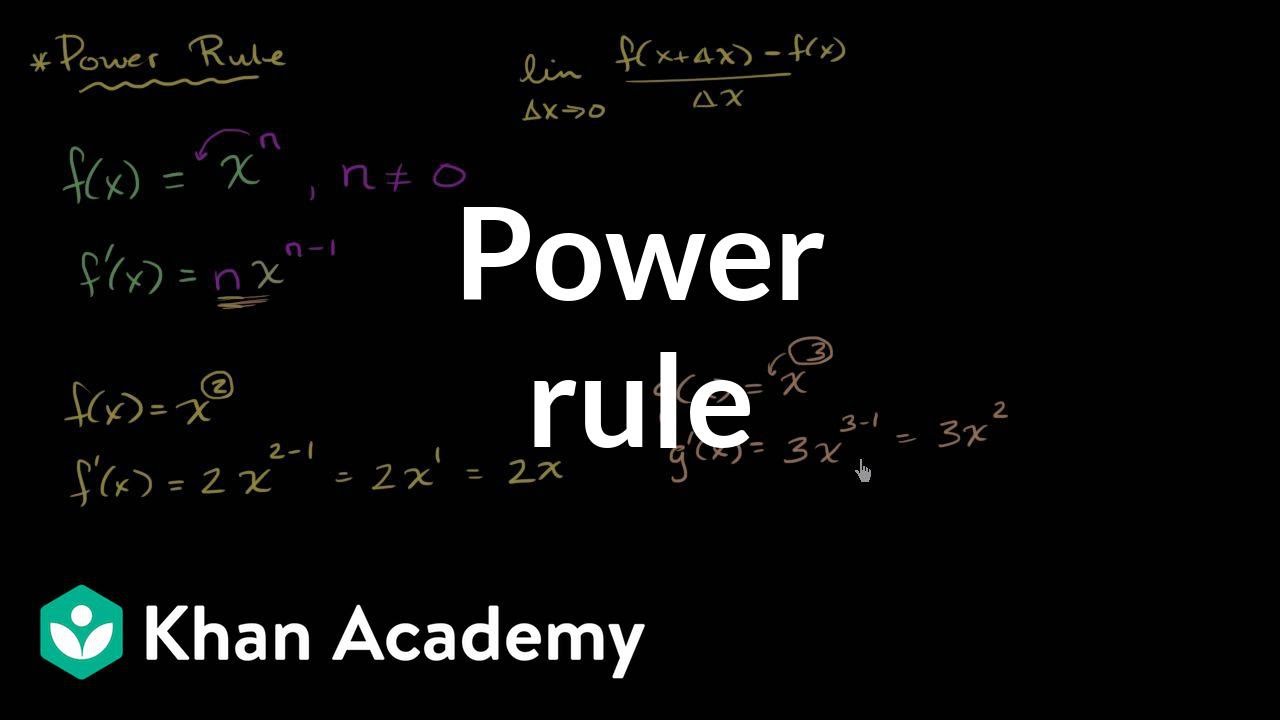 YouTube3:53
Another explanation of Derivatives.
Derivatives YouTube3:58
Another explanation of Derivatives.
Derivatives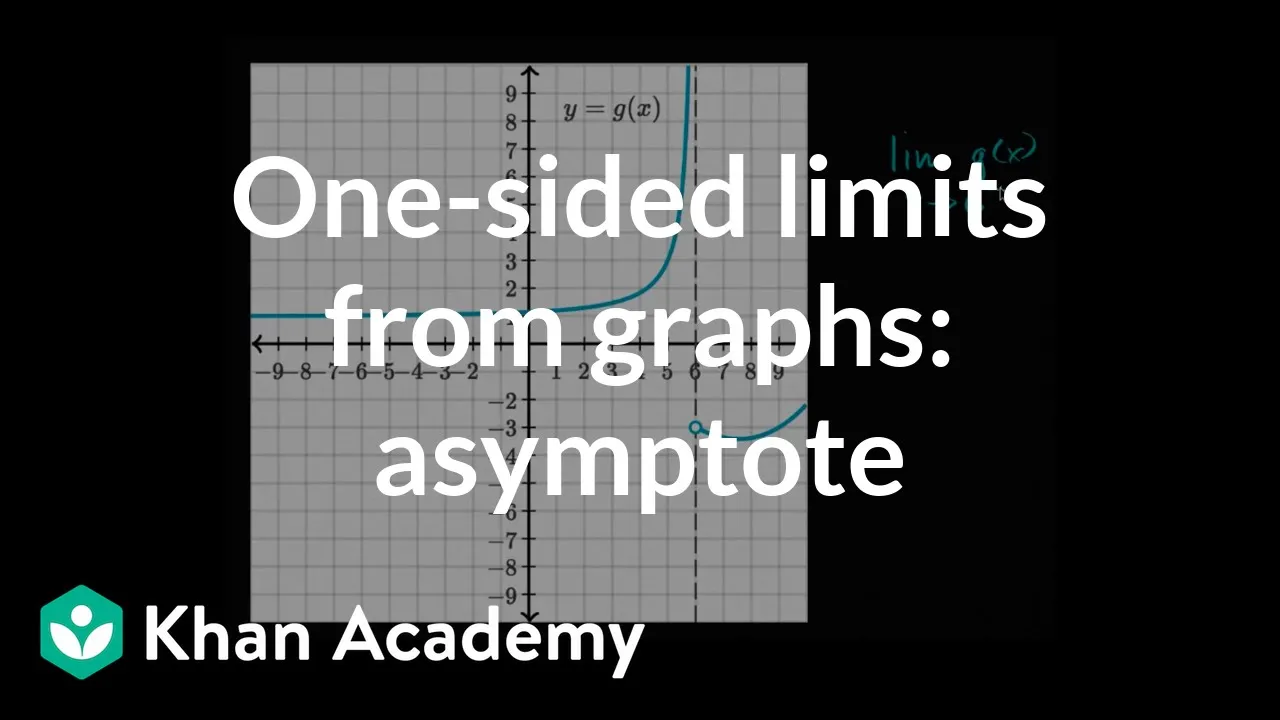 YouTube2:26
Prerequisite in Calculus: Limits → Derivatives.
Limits · View learning sequence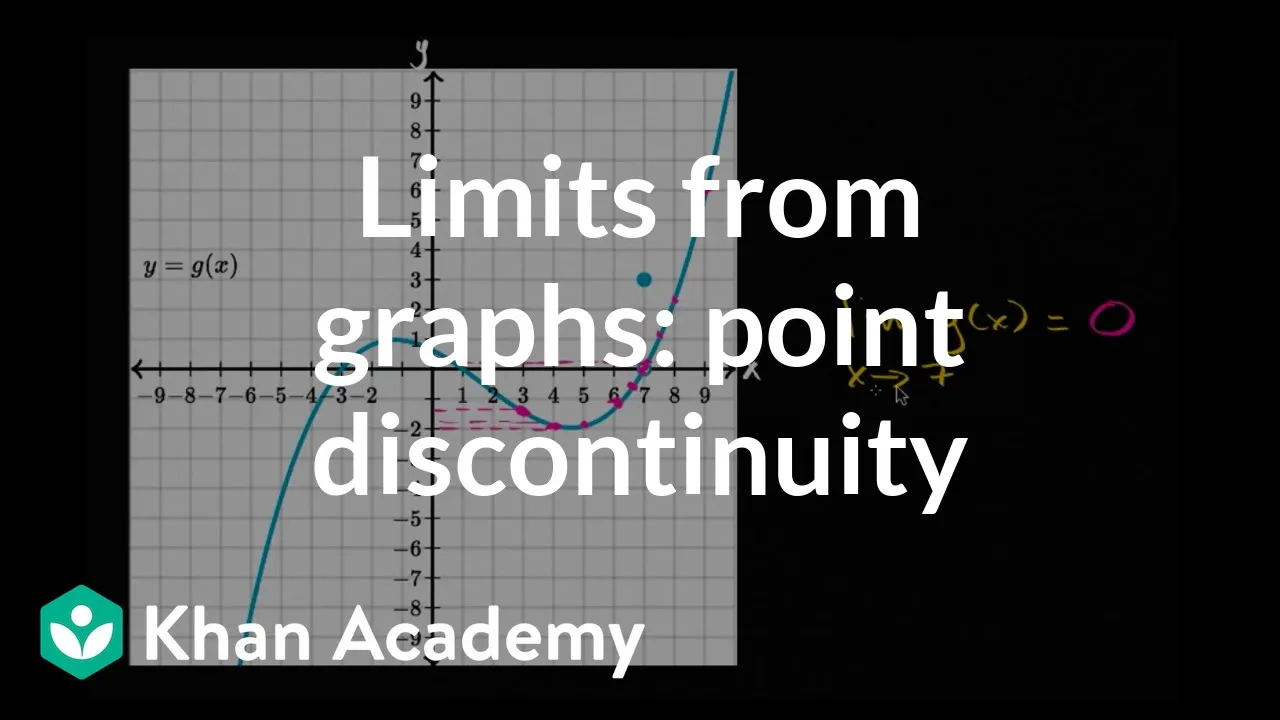 YouTube2:38
Prerequisite in Calculus: Limits → Derivatives.
Limits · View learning sequence YouTube2:46
Prerequisite in Calculus: Limits → Derivatives.
Limits · View learning sequence YouTube4:00
Chinese video covering Derivatives; the current video is in English.
Derivatives Bilibili5:38
Visual explanation for Derivatives, compared with the current whiteboard.
DerivativesYouTube3:58Visual explanation for Derivatives, compared with the current whiteboard.
Derivatives