Double Integral Formula for Volume
When a solid is bounded above and below by surfaces _top(x,y) and _bottom(x,y), its volume equals the double integral of their difference over the projection region D in the xy-plane.
Charles队长 · Bilibili · 1:20
This video demonstrates how to calculate the volume of a solid bounded by the paraboloid and the plane . It first finds the boundary of the projection region by equating the two surfaces, determining the integration limits. Then it converts the triple integral into a double integral over the projected circular domain. Finally, using a shifted polar coordinate transformation, it computes the exact volume as .
Use the learning inspector for key ideas and moments, or open the reading tabs for the complete notes.
Generated from the video's visuals and explanation; not verbatim speech.
This segment shows how to find the volume enclosed by the surface and the plane . The visual displays a 3D coordinate system with an upward-opening paraboloid and a tilted intersecting plane, forming a closed solid.
To determine the integration range, we project the intersection curve onto the xy-plane by setting . Completing the square yields ()^, defining a circular region centered at (, ) with radius sqrt(2)/2. Within this domain, the plane serves as the upper bound and the paraboloid as the lower bound for z.
The volume is expressed as the double integral . Since the circular domain is off-center, we apply a translated polar substitution: , . After simplification, the integral becomes ^{√} dr, which evaluates exactly to .
When a solid is bounded above and below by surfaces _top(x,y) and _bottom(x,y), its volume equals the double integral of their difference over the projection region D in the xy-plane.
The projection boundary is found by eliminating z from the two surface equations. Here, is rearranged via completing the square into a standard circle equation, revealing the center and radius needed for integration limits.
For circular domains not centered at the origin, standard polar coordinates are insufficient. Instead, translate the coordinate system so the circle's center moves to the origin before applying polar variables; the Jacobian remains r.
After algebraic simplification under the shifted polar substitution, the integrand reduces effectively to terms involving (). Integrating against the area element r dr dθ produces the final closed-form answer.
The reviewed volume card integrates the upper-minus-lower height over the projected region. For the surfaces and , that region is , and the height is nonnegative there. A translated polar substitution includes the Jacobian factor r and yields volume . This is a double-integral volume application.
First, integrate the polynomial with respect to to get . Evaluate this antiderivative from to .
Conditions: Radial limit is to ; Angular integral contributes factor
The volume is set up as the double integral of the difference between the upper surface (plane) and the lower surface (paraboloid) over the domain . The formula is .
Conditions: is the circular region defined by ; Plane is above Paraboloid in
After substituting and into the integrand and including the Jacobian , the angular part integrates out to due to symmetry, leaving the radial integral . The full separated form is .
Conditions: Shifted polar coordinates applied; Jacobian included
Standard polar coordinates assume symmetry around the origin . Since the projection region is a circle centered at , standard polar coordinates result in complex, variable-dependent bounds for .
Conditions: Integration domain is a circle not centered at the origin; Center of circle is
The boundary is found by equating the two surface equations to eliminate , resulting in . By completing the square, this equation transforms into , which describes a circle centered at with radius .
Conditions: Solid is bounded above by plane ; Solid is bounded below by paraboloid
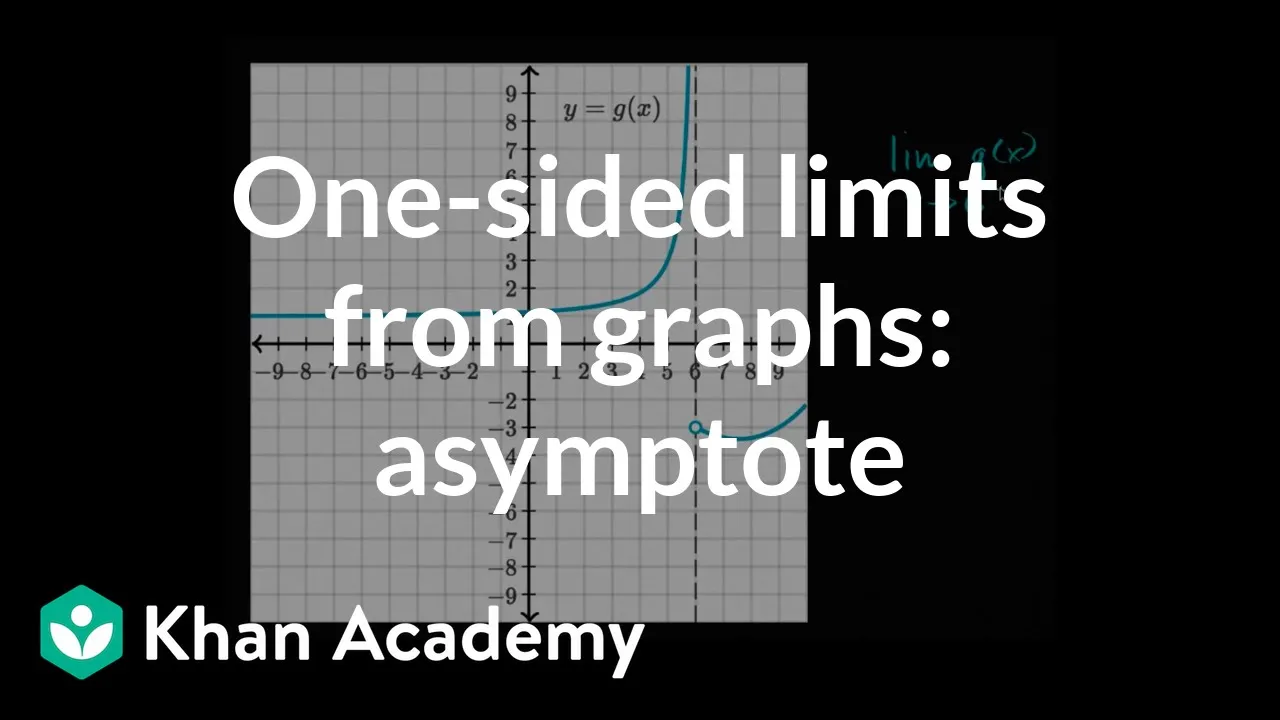 YouTube2:26
Prerequisite in Calculus: Limits → Definite integrals.
Limits · View learning sequence YouTube3:52
Next in Calculus: Definite integrals → Integration by parts.
Integration by parts · View learning sequence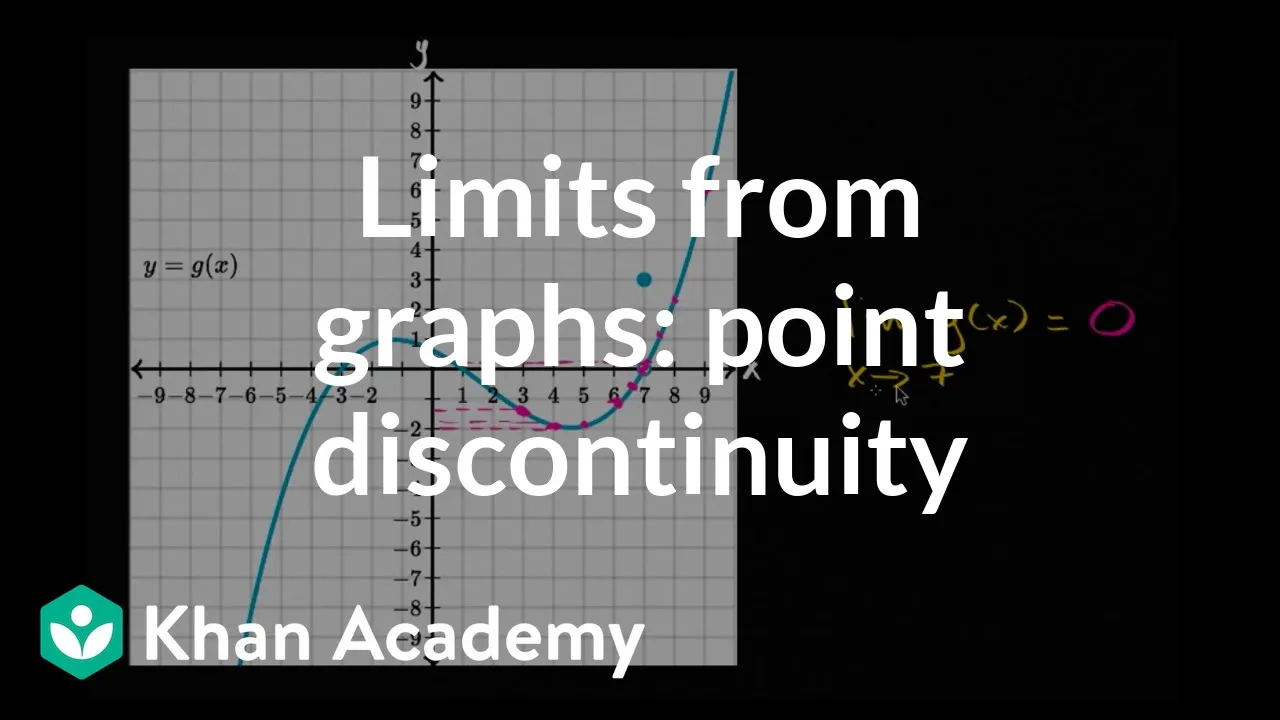 YouTube2:38
Prerequisite in Calculus: Limits → Definite integrals.
Limits · View learning sequence YouTube2:28
English video covering Definite integrals; the current video is in Chinese.
Definite integrals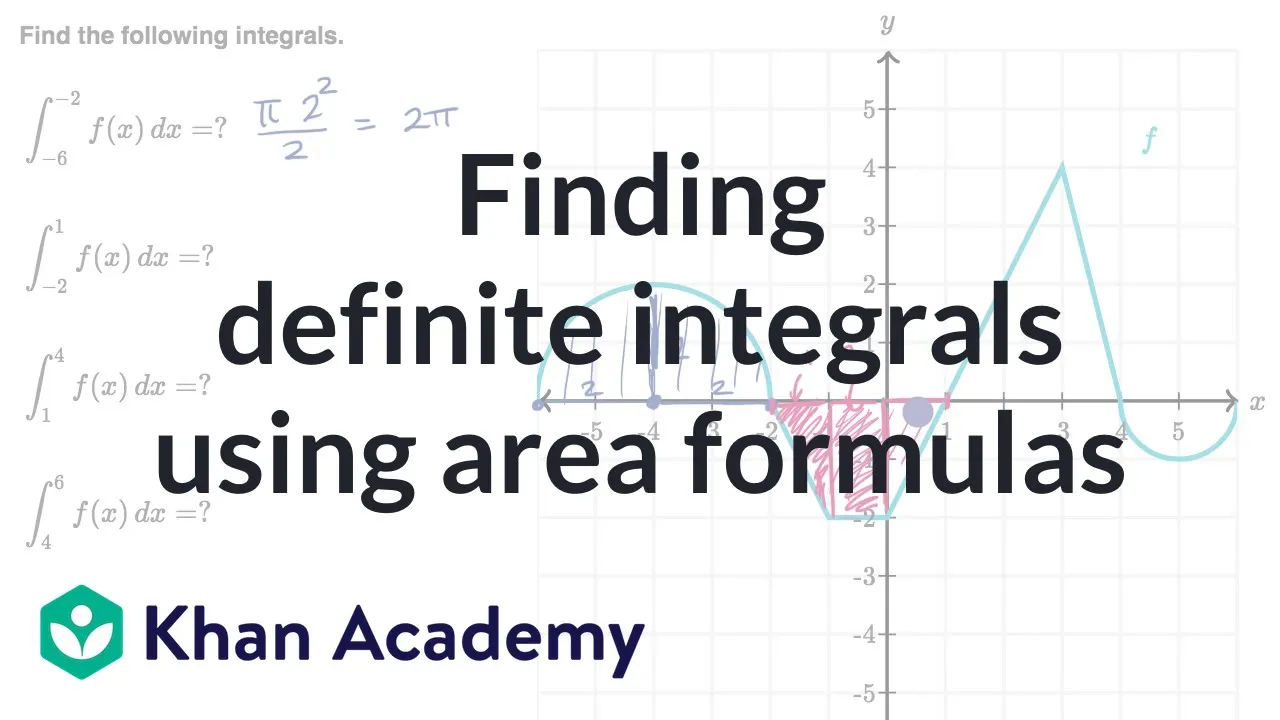 YouTube4:16
English video covering Definite integrals; the current video is in Chinese.
Definite integrals YouTube4:26
English video covering Definite integrals; the current video is in Chinese.
Definite integralsYouTube2:28Explanation of Definite integrals, complementing the current application.
Definite integralsYouTube4:16Explanation of Definite integrals, complementing the current application.
Definite integralsYouTube4:26Explanation of Definite integrals, complementing the current application.
Definite integrals