Principle of Guo Yuan Shu
Increasing the number of sides of an inscribed regular polygon makes its easily computed perimeter approach the circle circumference. The perimeter sequence illustrates a limit.
Charles队长 · Bilibili · 0:51
This animated segment demonstrates the 'Method of Exhaustion' (Guo Yuan Shu). It shows how increasing the number of sides of an inscribed regular polygon causes its perimeter to converge to the circle's circumference. The video lists calculations for and concludes with the formal epsilon-N definition of a sequence limit.
Use the learning inspector for key ideas and moments, or open the reading tabs for the complete notes.
Generated from the video's visuals and explanation; not verbatim speech.
This segment introduces the core concept of the Method of Exhaustion: observing how the perimeter sequence of an inscribed regular polygon converges to the circle's circumference as the number of sides increases indefinitely. Visually, a circle with radius is drawn, centered at point . The actual circumference is given by , setting the target for our limit analysis.
The animation proceeds to calculate perimeters for specific polygons. First, a square () is shown, yielding a perimeter , with an error margin of roughly . Next, an octagon () appears, reducing the error significantly to about . As we progress to hexadecagons (), 32-gons, and finally 64-gons, the geometric shape becomes indistinguishable from the circle visually, while numerically, reaches approximately . This illustrates rapid convergence towards .
Finally, the presentation transitions from visual approximation to rigorous mathematical definition. The general term formula is displayed, asserting that as , this expression approaches . The screen then presents the Cauchy definition of a limit using epsilon-N notation: For any arbitrarily small positive number , there exists a natural number such that whenever , the inequality holds true. This formalizes the intuitive process demonstrated earlier.
Increasing the number of sides of an inscribed regular polygon makes its easily computed perimeter approach the circle circumference. The perimeter sequence illustrates a limit.
For a circle of radius , the side length of an inscribed regular -gon is derived via trigonometry as . Multiplying by gives the total perimeter function used for taking limits.
Using a unit circle, the calculated perimeters show decreasing absolute errors as grows: has ~0.63 error, while reduces it to ~0.0025, demonstrating effective numerical stability.
The standard calculus definition describing infinite closeness. It states that a sequence converges to a value if, beyond some index , all subsequent terms stay within distance of that value.
The reviewed final card states the sequence-limit condition: for every there is such that every term with is within of the limit. Inscribed-polygon perimeters illustrate approach to the circle circumference; a finite table alone is not a proof of the quantified limit.
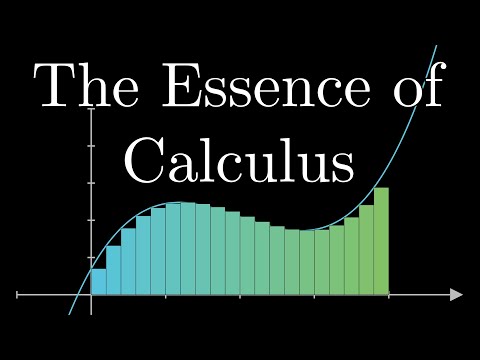 YouTube17:04
Next in Calculus: Limits → Derivatives.
Derivatives · View learning sequenceNext in Calculus: Limits → Definite integrals.
Definite integrals · View learning sequence Bilibili5:38
Next in Calculus: Limits → Derivatives.
Derivatives · View learning sequence YouTube23:31
Next in Calculus: Limits → Derivatives.
Derivatives · View learning sequence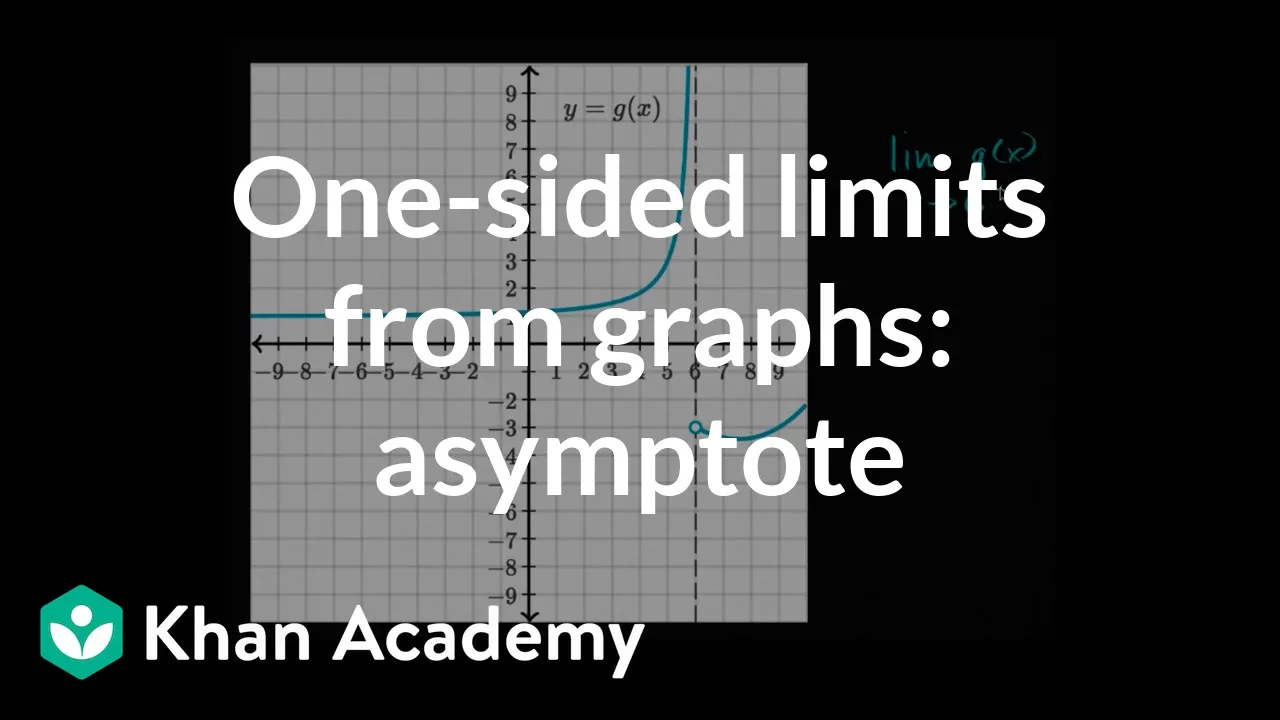 YouTube2:26
English video covering Limits; the current video is in Chinese.
Limits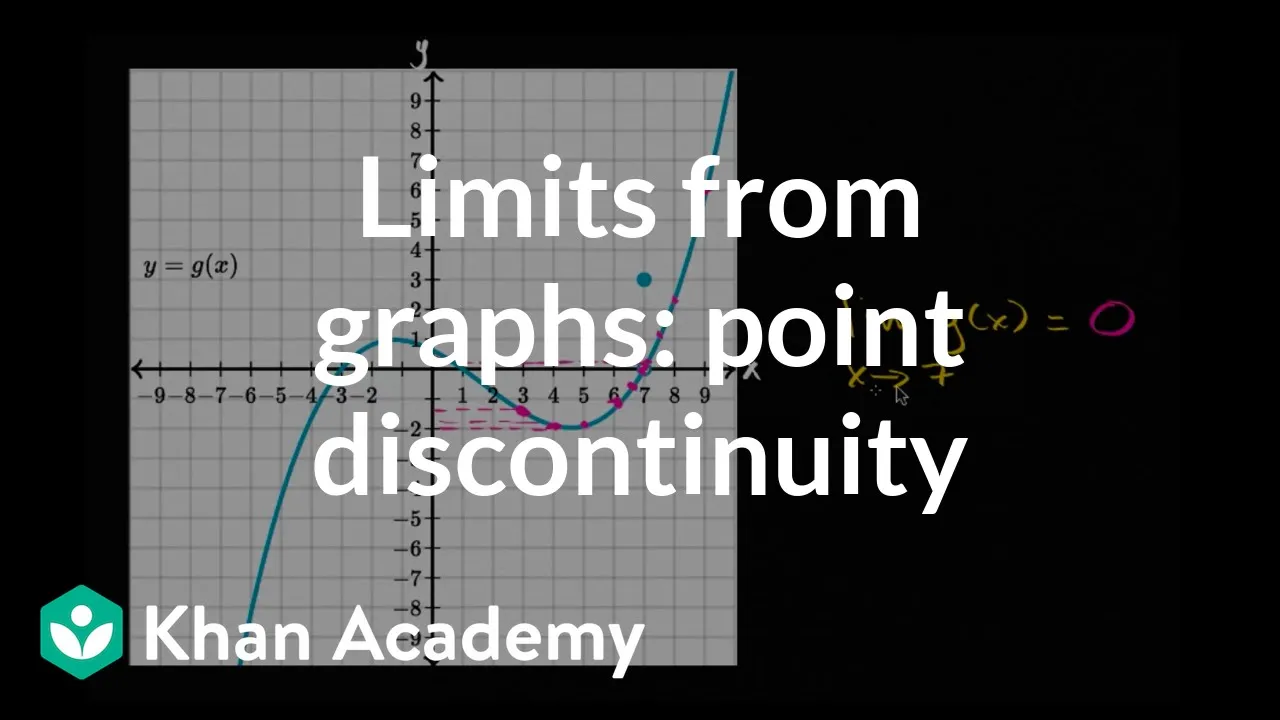 YouTube2:38
English video covering Limits; the current video is in Chinese.
Limits YouTube5:00
English video covering Limits; the current video is in Chinese.
LimitsYouTube2:26Whiteboard for Limits, compared with the current visual explanation.
LimitsYouTube2:38Whiteboard for Limits, compared with the current visual explanation.
LimitsYouTube5:00Whiteboard for Limits, compared with the current visual explanation.
Limits