An odd square wave
Oddness removes constant and cosine coefficients. Values assigned at isolated jump points do not affect the Fourier coefficients.
Charles队长 · Bilibili · 0:30
The square wave is 1 on the positive half-period and −1 on the negative half-period. Adding odd sine harmonics makes partial sums approach its flat sections. At jumps the series approaches the midpoint of the one-sided limits, while nearby Gibbs overshoot persists as more terms are added.
Use the learning inspector for key ideas and moments, or open the reading tabs for the complete notes.
Generated from the video's visuals and explanation; not verbatim speech.
Start with a 2π-periodic square wave equal to 1 on (0,π) and −1 on (−π,0). Odd symmetry removes the constant and cosine terms from its Fourier expansion.
Nonzero sine coefficients occur at odd frequencies and are positive: . They do not alternate in sign. Start with the fundamental sine wave, then add frequencies 3, 5 and so on to build the flat levels and steep transitions.
At continuous points the sums approach the original value. At a jump they approach the midpoint, zero in this example. Nearby overshoot narrows in location but its relative peak does not vanish. This distinguishes pointwise convergence from uniform convergence across the jumps.
Oddness removes constant and cosine coefficients. Values assigned at isolated jump points do not affect the Fourier coefficients.
The nonzero coefficients are positive at odd n. Retain N odd harmonics to obtain this partial sum.
Under the usual Dirichlet conditions satisfied here, the series approaches the average of the one-sided limits at a jump, rather than an arbitrary assigned endpoint value.
Overshoot occurs near the jump and its region narrows while its relative peak stays nonzero. The jump point itself is not a persistent nonzero overshoot peak.
The reviewed convergence and overshoot cards distinguish Fourier partial sums from their limiting behavior for the odd square wave. Under the applicable Dirichlet conditions, the series converges at a jump to the mean of the two one-sided limits. Gibbs overshoot occurs near the jump: its region narrows while its relative peak does not vanish. This does not assert nonzero overshoot at the jump itself.
At the jump discontinuities, the Fourier series approaches the midpoint of the one-sided limits. For the specified square wave, the left limit is and the right limit is , so the series converges to at the jumps.
Conditions: The point is a jump discontinuity.; The one-sided limits exist and are finite.
Pointwise convergence requires that for every fixed , . This holds true except at the jump, where it converges to the midpoint.
Conditions: Comparing definitions of pointwise and uniform convergence.; Observing the error bound near the discontinuity.
The nonzero sine coefficients occur at odd frequencies and are given by the formula . These coefficients are strictly positive and do not alternate in sign, meaning every odd harmonic adds constructively to the approximation of the square wave's flat sections.
Conditions: The function is the specified -periodic square wave.; Coefficients are indexed by corresponding to frequency .
Starting with the fundamental sine wave provides the basic oscillation. Adding higher-order odd harmonics (frequency 3, 5, etc.) introduces faster oscillations.
Conditions: Using the partial sum .; increases to include more harmonics.
The nonzero sine coefficients occur only at odd frequencies (). The coefficient for the harmonic is given by .
Conditions: The square wave is defined as 1 on and -1 on .; Only odd harmonics are considered.
As more terms are added, the location of the overshoot narrows toward the jump discontinuity, but the relative peak height of the overshoot does not vanish. It persists as a fixed percentage above the flat level, distinguishing pointwise convergence from uniform convergence.
Conditions: The series is the Fourier expansion of a function with a jump discontinuity.; The number of terms approaches infinity.
By starting with the fundamental sine wave and sequentially adding higher odd frequencies (3, 5, etc.), the partial sums interfere constructively in the middle of the half-periods to flatten the peaks, and destructively near the boundaries to steepen the transitions toward vertical jumps.
Conditions: The series consists of the fundamental and odd harmonics.; Terms are added sequentially to form partial sums.
The series converges pointwise because at every continuous point it approaches the function value, and at jumps it approaches the midpoint. However, it does not converge uniformly because the Gibbs overshoot near the jumps maintains a nonzero relative peak height regardless of how many terms are added, preventing the maximum error from vanishing globally.
Conditions: The function has jump discontinuities.; Convergence is analyzed over the entire period including the jumps.
At a point of discontinuity, the Fourier series converges to the midpoint of the one-sided limits. For the standard square wave jumping from -1 to 1 (or vice versa) at , the limit of the partial sums is .
Conditions: The function satisfies Dirichlet conditions.; There is a finite jump discontinuity at the point of evaluation.
Odd symmetry dictates that the function satisfies . The constant term represents the average value of the function over a period, which is zero for an odd function.
Conditions: The function is -periodic.; The function is odd, meaning .
Odd symmetry implies that . Cosine functions are even () and the constant term is also even.
Conditions: The function is periodic with period .; The function satisfies almost everywhere.
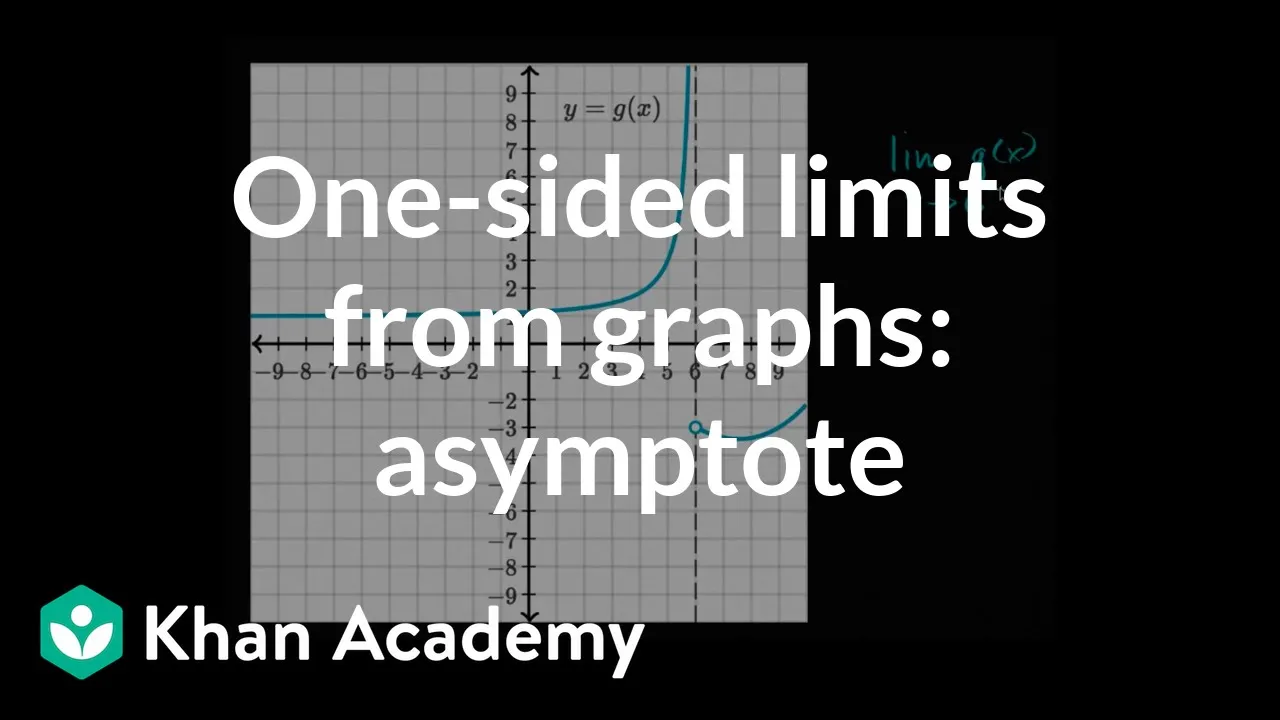 YouTube2:26
Prerequisite in Calculus: Limits → Series.
Limits · View learning sequence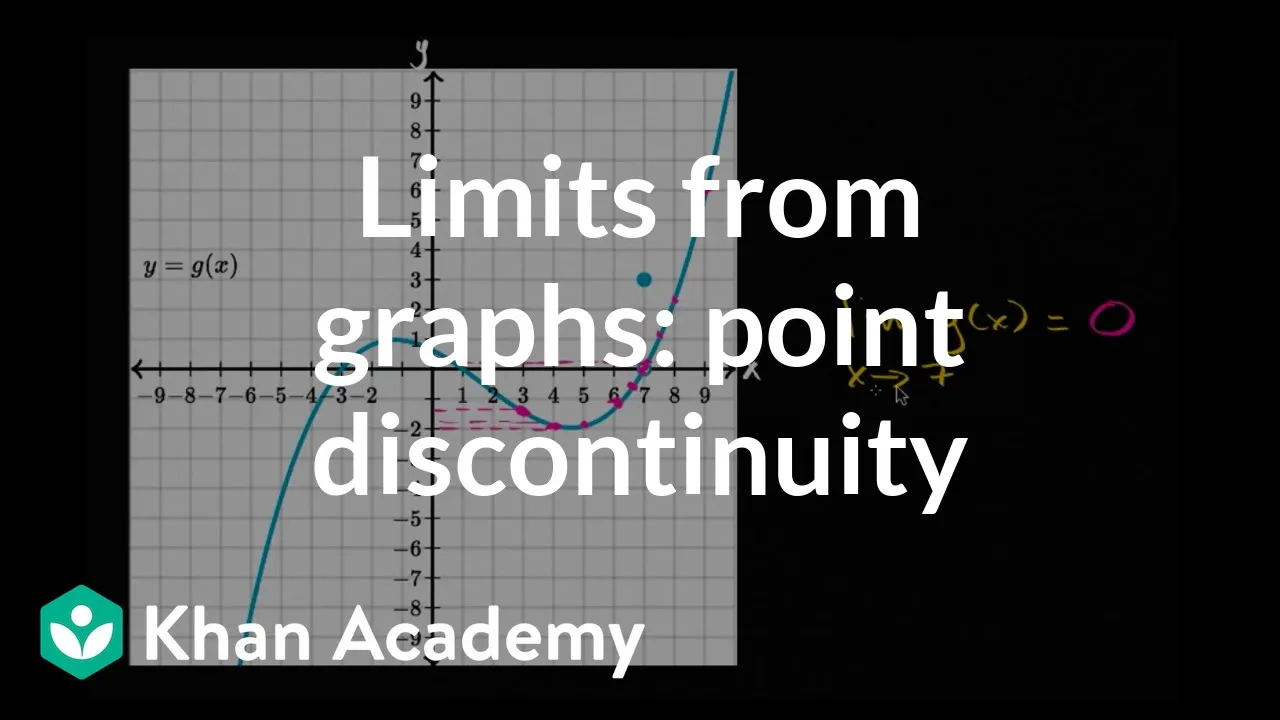 YouTube2:38
Prerequisite in Calculus: Limits → Series.
Limits · View learning sequence YouTube2:46
Prerequisite in Calculus: Limits → Series.
Limits · View learning sequence