Definition of Integration Domain
The planar region is bounded by , and the graphs ₁(x), ₂(x), with φ₁≤φ₂. These are graphs, not necessarily horizontal curves. Continuous nonnegative f supplies the solid’s height.
Charles队长 · Bilibili · 0:32
The video demonstrates the geometric interpretation and formula derivation for calculating double integrals using Cartesian coordinates via the cross-section method (integrating with respect to y first, then x).
Use the learning inspector for key ideas and moments, or open the reading tabs for the complete notes.
Generated from the video's visuals and explanation; not verbatim speech.
First, construct a solid region located above the xy-plane. The top surface of this region is given by , while its base is bounded by vertical lines , , and curves ₁(x) and ₂(x) forming a closed planar domain D. This volume corresponds exactly to evaluating the function across all points within D. The volume interpretation assumes . The iterated-integral identity also holds for signed functions under suitable integrability conditions; continuity on this compact region with continuous, ordered boundary curves is a sufficient setting.
Next, apply slicing parallel to the yz-plane. At any chosen point ₀ between [a,b], draw a perpendicular cut through the object. Along the y-direction at fixed x₀, boundaries extend from lower curve φ₁(x₀) up to upper curve φ₂(x₀). Here, height varies according to (x₀,y). Thus, area A(x₀) equals definite integral over y ranging from φ₁(x₀) to φ₂(x₀) applied to f(x₀,y).
The outer integral adds the cross-sections from to : . Computing a slice is the inner step; summing slices is the outer step. Changing the order requires describing the same domain with the other variable outside.
The planar region is bounded by , and the graphs ₁(x), ₂(x), with φ₁≤φ₂. These are graphs, not necessarily horizontal curves. Continuous nonnegative f supplies the solid’s height.
At a fixed x, the slice lies parallel to the yz-plane. Integrate over y between the two boundary graphs. For this is slice area; for signed f it is a signed integral.
Evaluate the inner integral in y while holding x fixed, then integrate its result over x from a to b. Integration order and bounds must agree with the region description.
The cross-section example computes an iterated integral over a region , φ₁(x)≤₂(x): first integrate over y at fixed x, then integrate the resulting function over x. For continuous nonnegative f the slices are geometric areas; signed f gives signed integrals. The order and bounds must agree with the stated region.
Integrating with respect to y first corresponds to summing values along the y-direction for a fixed x. Geometrically, this is equivalent to calculating the area of a slice cut parallel to the yz-plane at that fixed x.
Conditions: The integration order is dy dx (y inner, x outer).; The slices are taken perpendicular to the x-axis (parallel to the yz-plane).
The inner integral represents the area of a vertical cross-section of the solid taken parallel to the yz-plane at a fixed x-value. Specifically, for a chosen point x₀, the slice extends in the y-direction from the lower boundary curve φ₁(x₀) to the upper boundary curve φ₂(x₀), and the height of the solid at any point (x₀, y) is given by (x₀,y).
Conditions: The slice is taken at a fixed ₀ within [a,b].; The boundaries in the y-direction are defined by curves ₁(x) and ₂(x).
Changing the order of integration requires re-describing the same planar domain D using the other variable as the outer limit. If the original order was dy dx (y inner, x outer), the domain was described by x ranging from constants a to b, and y ranging between functions of x.
Conditions: The domain D is the same in both cases.; The function is integrable over D.
The volume interpretation strictly holds when the function is non-negative () over the domain D, representing the physical volume of the solid above the xy-plane. However, the iterated-integral identity also holds for signed functions (where f can be negative) under suitable integrability conditions.
Conditions: For volume interpretation: on D.; For signed functions: f is integrable (e.g., continuous on a compact region).; The domain D is bounded by continuous curves , , ₁(x), ₂(x).
The base region D is a closed planar domain in the xy-plane. It is bounded by two vertical lines and , and two curves ₁(x) and ₂(x).
Conditions: The region is closed and bounded.; x ranges from a to b.; y is bounded by functions φ₁(x) and φ₂(x) with φ₁(x) ≤ φ₂(x).
The functions φ₁(x) and φ₂(x) define the lower and upper boundaries of the integration domain D in the y-direction for any given x. In the iterated integral (_{φ₁(x)}^{φ₂(x)} ) dx, they serve as the variable limits of the inner integral.
Conditions: φ₁(x) represents the lower boundary curve ₁(x).; φ₂(x) represents the upper boundary curve ₂(x).; φ₁(x) ≤ φ₂(x) for all x in [a,b].
The solid region is constructed above the xy-plane with the top surface defined by and the base defined by the domain D. Evaluating the double integral corresponds to calculating the volume of this solid (if ) or the net signed volume (if f changes sign).
Conditions: The solid lies above the xy-plane.; Top surface: .; Base: Domain D in the xy-plane.; Volume interpretation assumes ; otherwise, it is signed accumulation.
The double integral is computed as an iterated integral by slicing the solid parallel to the yz-plane. First, for a fixed x, the inner integral calculates the area of the cross-section by integrating the function with respect to y from the lower boundary curve φ₁(x) to the upper boundary curve φ₂(x).
Conditions: The base region D is bounded by vertical lines , and curves ₁(x), ₂(x) with φ₁(x) ≤ φ₂(x).; The integration order is y first, then x.
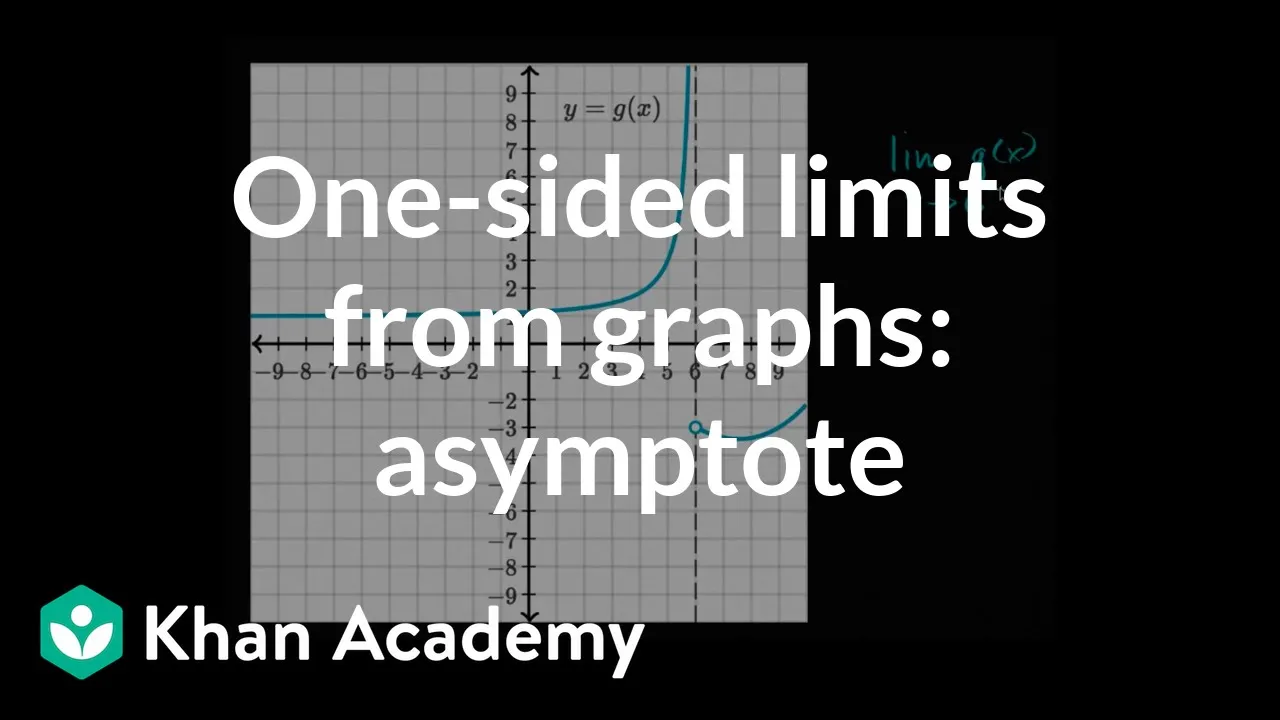 YouTube2:26
Prerequisite in Calculus: Limits → Definite integrals.
Limits · View learning sequence YouTube3:52
Next in Calculus: Definite integrals → Integration by parts.
Integration by parts · View learning sequence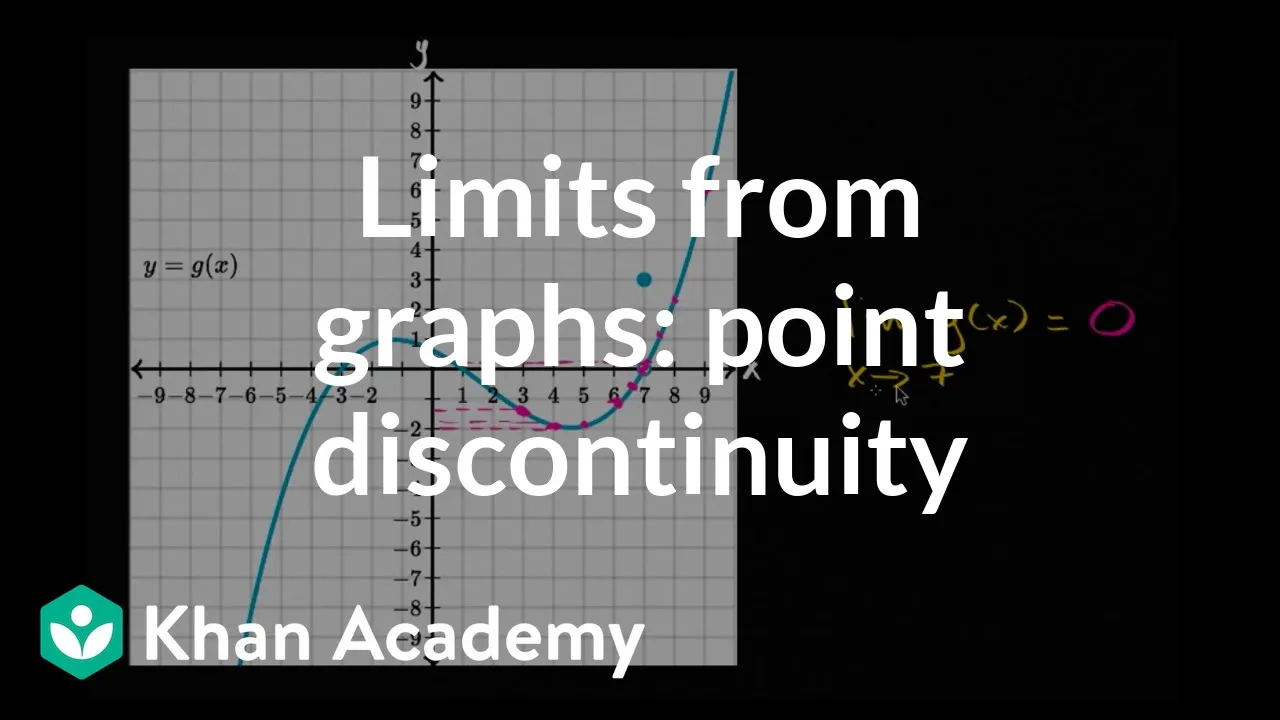 YouTube2:38
Prerequisite in Calculus: Limits → Definite integrals.
Limits · View learning sequence YouTube2:28
English video covering Definite integrals; the current video is in Chinese.
Definite integrals YouTube4:16
English video covering Definite integrals; the current video is in Chinese.
Definite integrals YouTube4:26
English video covering Definite integrals; the current video is in Chinese.
Definite integralsYouTube2:28Explanation of Definite integrals, complementing the current application.
Definite integralsYouTube4:16Explanation of Definite integrals, complementing the current application.
Definite integralsYouTube4:26Explanation of Definite integrals, complementing the current application.
Definite integrals