Discrete Particle System
For a collection of separate point masses, the total rotational inertia is simply the sum of each mass's contribution relative to the same axis.
Charles队长 · Bilibili · 1:24
This video demonstrates the calculation of the moment of inertia, progressing from discrete particle systems using summation to continuous mass distributions using integration. It specifically derives the moment of inertia for a uniform disk rotating about its diameter using polar coordinates and area elements, concluding with the formula MR².
Use the learning inspector for key ideas and moments, or open the reading tabs for the complete notes.
Generated from the video's visuals and explanation; not verbatim speech.
The video begins by defining the moment of inertia for a single point mass m located at a distance r from the axis of rotation, given by I = mr². It then expands this concept to a system of multiple discrete particles distributed in space. The total moment of inertia for such a system is calculated as the algebraic sum of the individual moments of inertia, represented by the summation notation Σ(mᵢrᵢ²).
The focus shifts to continuous mass distribution, illustrated by a uniform circular disk rotating about one of its diameters. A coordinate system is established where the rotation axis aligns with the y-axis. To perform the integration, the problem utilizes surface density ρ and polar coordinates. An infinitesimal area element dσ is defined, converting to a mass element dm = ρdσ. The squared distance from this element to the rotation axis is expressed as r²sin²θ. By integrating over the entire disk region D, the double integral separates into angular and radial components. Evaluating these yields a result that, when combined with the total mass M, simplifies to the final formula MR².
For a collection of separate point masses, the total rotational inertia is simply the sum of each mass's contribution relative to the same axis.
Transitioning from discrete sums to integrals requires defining a differential mass element based on geometry and density.
With polar angle measured from the x-axis, distance to the x-axis diameter is r sin θ; distance to the y-axis is r cos θ. Both diameters give the same result for a uniform disk by symmetry.
A standard mechanics result derived via calculus, distinct from the moment of inertia about the central vertical axis.
The reviewed mass-element card builds continuous moment of inertia by integrating squared perpendicular distance against the mass element. Density and geometry determine that element. For the uniform disk of mass M and radius R rotating about a diameter, the result is ; it is not the perpendicular central-axis value .
The total moment of inertia for a system of discrete particles is calculated as the algebraic sum of the individual moments of inertia of each particle. For a single point mass located at a distance from the axis of rotation, its moment of inertia is .
Conditions: The system consists of discrete point masses.; The distance is measured perpendicularly from the axis of rotation to the -th particle.
The derivation transitions from discrete sums to continuous integrals by defining a differential mass element , where is the surface density and is an infinitesimal area element. Using polar coordinates with the rotation axis aligned with the y-axis, the squared distance from an element to the axis is .
Conditions: The disk is uniform.; The rotation axis is one of its diameters (e.g., the y-axis).; Polar coordinates are used with the angle measured from the x-axis.
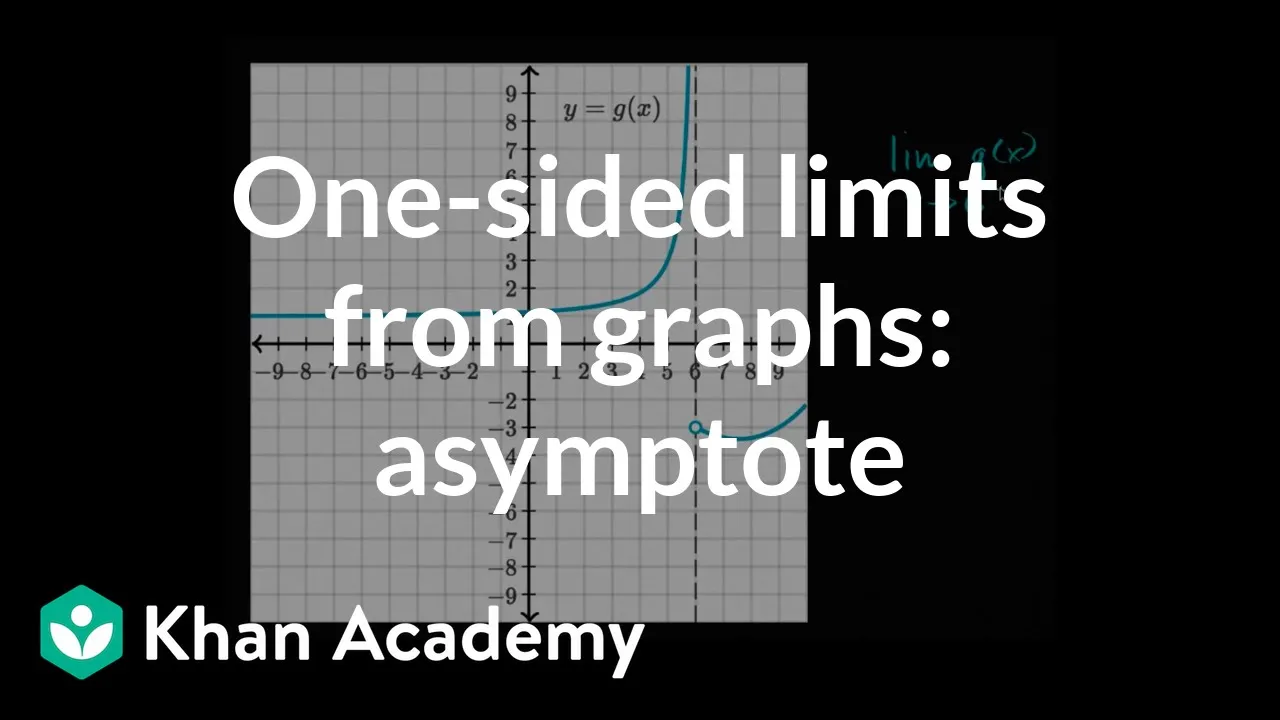 YouTube2:26
Prerequisite in Calculus: Limits → Definite integrals.
Limits · View learning sequence YouTube3:52
Next in Calculus: Definite integrals → Integration by parts.
Integration by parts · View learning sequence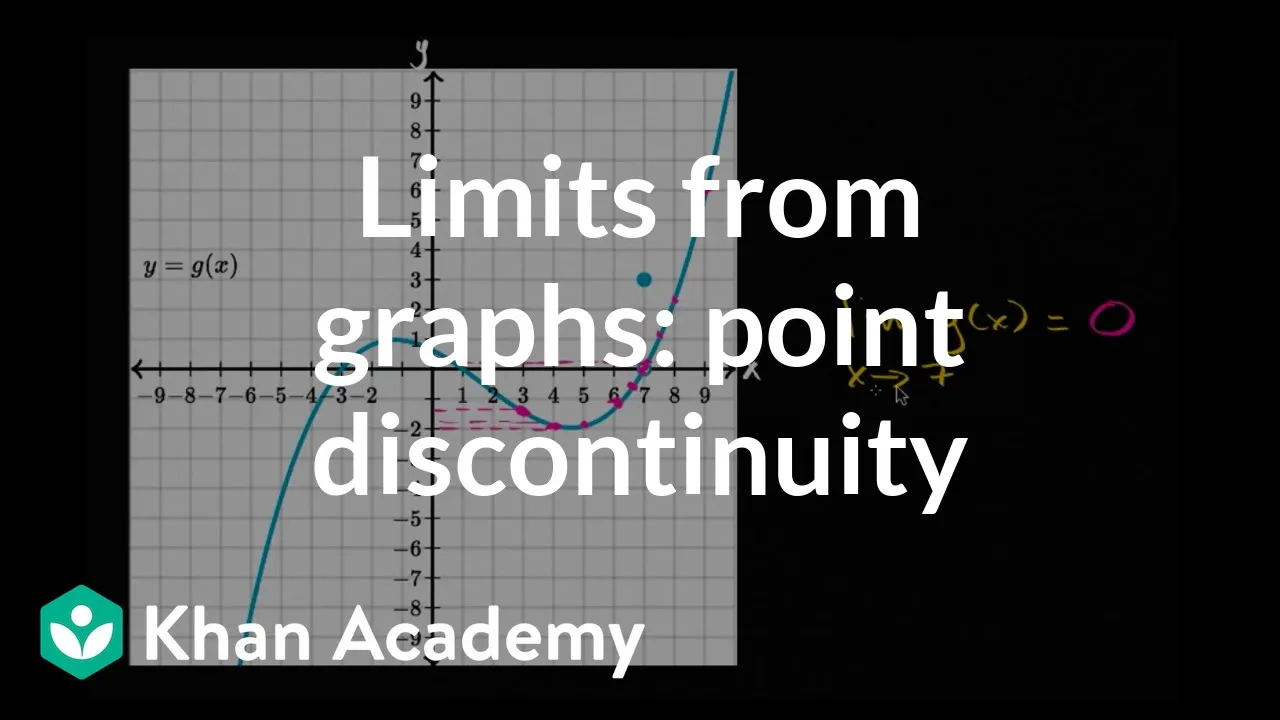 YouTube2:38
Prerequisite in Calculus: Limits → Definite integrals.
Limits · View learning sequence YouTube2:28
English video covering Definite integrals; the current video is in Chinese.
Definite integrals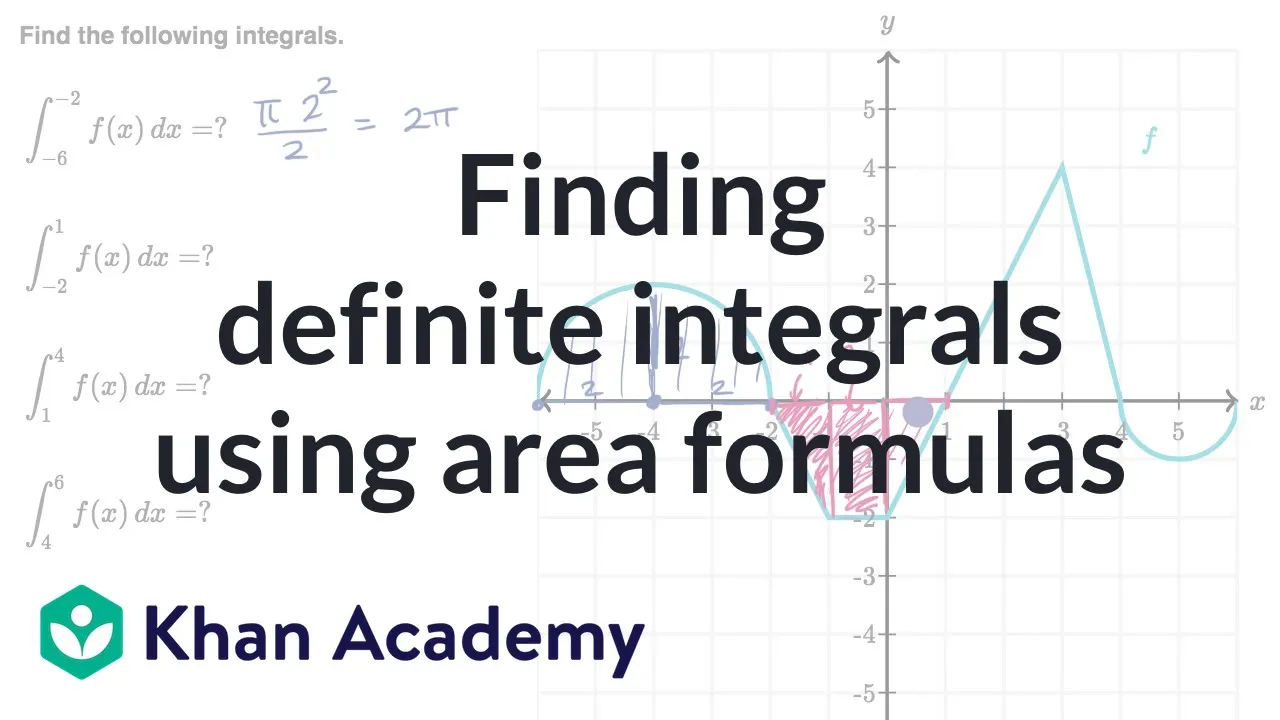 YouTube4:16
English video covering Definite integrals; the current video is in Chinese.
Definite integrals YouTube4:26
English video covering Definite integrals; the current video is in Chinese.
Definite integralsYouTube2:28Explanation of Definite integrals, complementing the current application.
Definite integralsYouTube4:16Explanation of Definite integrals, complementing the current application.
Definite integralsYouTube4:26Explanation of Definite integrals, complementing the current application.
Definite integrals