Three tests for continuity
At an interior point , check that is defined, that exists, and that this limit equals . The two-sided limit requires agreeing left and right limits.
Ace Tutors · YouTube · 5:32
Continuity and differentiability are different requirements. Graphical examples explain the three tests for continuity, then show how a continuous curve can still fail to have a derivative at a corner or cusp.
Use the learning inspector for key ideas and moments, or open the reading tabs for the complete notes.
Generated from the video's visuals and explanation; not verbatim speech.
At an interior point , check that is defined, that exists, and that this limit equals . The two-sided limit requires agreeing left and right limits.
A missing value violates the first test. A jump violates the existence of a common two-sided limit. A removable discontinuity can have a limit that differs from the assigned function value.
Differentiability requires a finite derivative to exist at the point. A smooth example has a well-defined tangent slope, but continuity alone does not supply that slope.
At a corner, the left and right slopes disagree; at a cusp, a finite derivative can also fail to exist. These examples explain why a continuous graph need not be differentiable. The informal 'no sharp points' picture is an intuition, not a general theorem guaranteeing differentiability.
At an interior point , check that is defined, that exists, and that this limit equals . The two-sided limit requires agreeing left and right limits.
A missing value violates the first test. A jump violates the existence of a common two-sided limit. A removable discontinuity can have a limit that differs from the assigned function value.
Differentiability requires a finite derivative to exist at the point. A smooth example has a well-defined tangent slope, but continuity alone does not supply that slope.
At a corner, the left and right slopes disagree; at a cusp, a finite derivative can also fail to exist. These examples explain why a continuous graph need not be differentiable. The informal 'no sharp points' picture is an intuition, not a general theorem guaranteeing differentiability.
At an interior point , check that is defined, that exists, and that this limit equals . The two-sided limit requires agreeing left and right limits. A missing value violates the first test. A jump violates the existence of a common two-sided limit. A removable discontinuity can have a limit that differs from the assigned function value.
At an interior point , check that is defined, that exists, and that this limit equals . The two-sided limit requires agreeing left and right limits. A missing value violates the first test. A jump violates the existence of a common two-sided limit. A removable discontinuity can have a limit that differs from the assigned function value. Differentiability requires a finite derivative to exist at the point. A smooth example has a well-defined tangent slope, but continuity alone does not supply that slope. At a corner, the left and right slopes disagree; at a cusp, a finite derivative can also fail to exist. These examples explain why a continuous graph need not be differentiable. The informal 'no sharp points' picture is an intuition, not a general theorem guaranteeing differentiability.
At an interior point , a function is continuous if it passes three tests: is defined, the two-sided limit exists, and this limit equals . The existence of the two-sided limit requires the left and right limits to agree.
Conditions: The point is an interior point of the function's domain.; The two-sided limit requires agreeing left and right limits.
Continuity can fail in three ways: a missing value violates the first test (the function is undefined); a jump violates the existence of a common two-sided limit (left and right limits differ); and a removable discontinuity occurs when the limit exists but differs from the assigned function value.
Conditions: The analysis applies to points where continuity is being tested.; A jump specifically means the left and right limits do not agree.; A removable discontinuity means the limit exists but does not equal .
 YouTube10:10
Another explanation of Continuity.
Continuity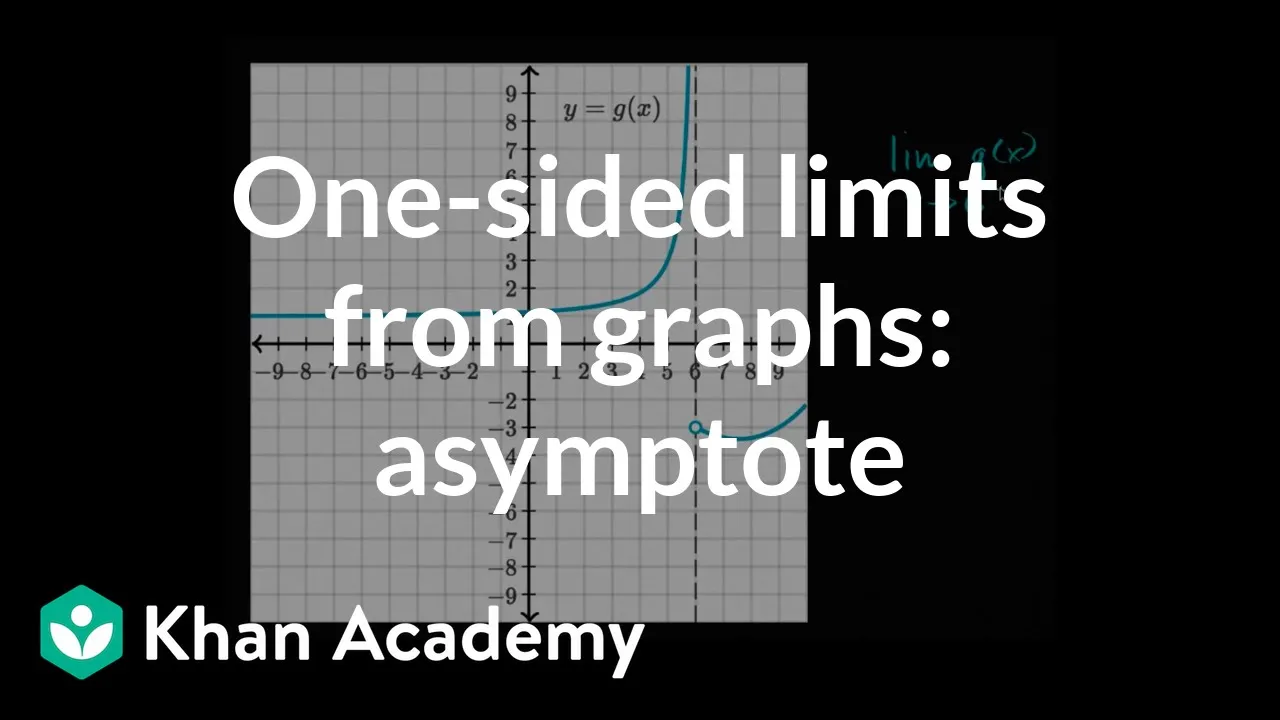 YouTube2:26
Prerequisite in Calculus: Limits → Continuity.
Limits · View learning sequence YouTube7:37
Next in Calculus: Continuity → Mean value theorem.
Mean value theorem · View learning sequence YouTube4:59
Next in Calculus: Continuity → Fundamental theorem of calculus.
Fundamental theorem of calculus · View learning sequence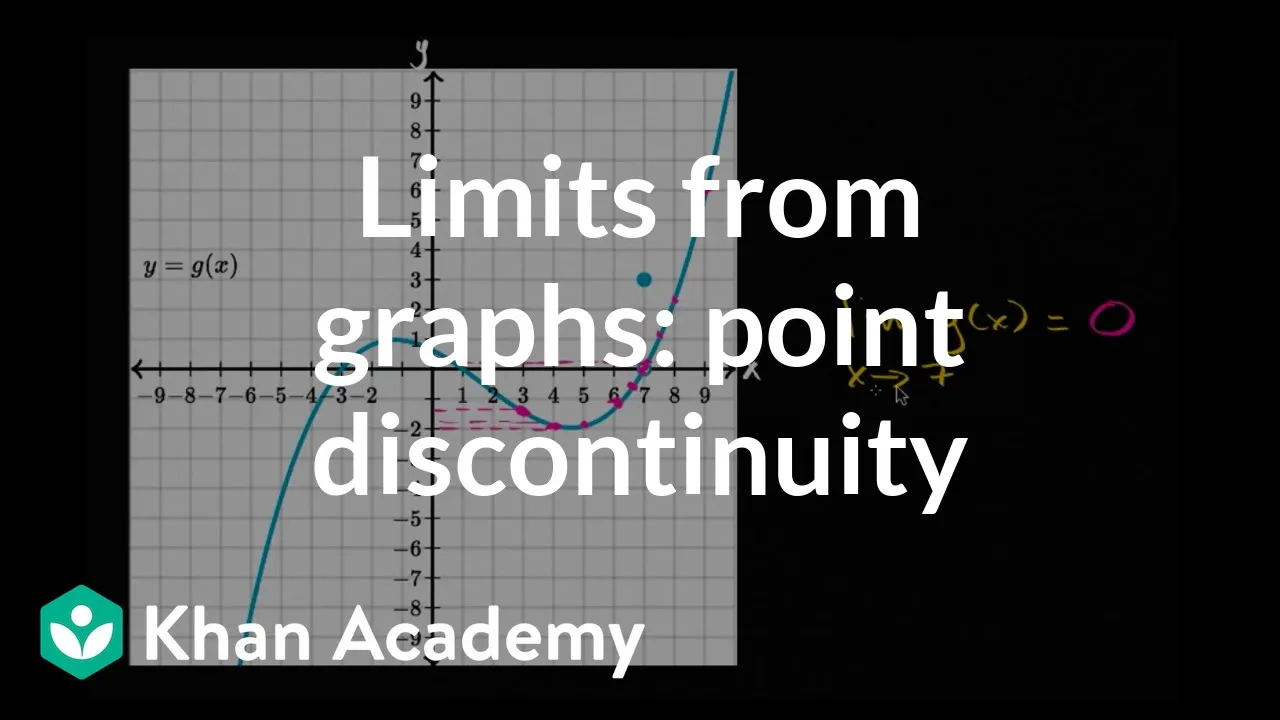 YouTube2:38
Whiteboard for Continuity, compared with the current visual explanation.
ContinuityYouTube10:10Whiteboard for Continuity, compared with the current visual explanation.
Continuity