Dijkstra's Algorithm Definition
An algorithm to find the shortest path from a single source node to all other nodes in a weighted graph.
Michael Sambol · YouTube · 2:45
This video explains Dijkstra's algorithm for finding the shortest path from a single source node to all other nodes in a weighted directed graph. It contrasts the algorithm with Prim's and Kruskal's minimum spanning tree algorithms. A step-by-step example demonstrates how to initialize distances, select the unvisited node with the smallest distance, update neighbors, and mark nodes as visited until all are processed. Finally, it states the time complexity is O(|E| + |V|log|V|) when using a Fibonacci heap. This 15-second video clip displays the complete pseudocode for Dijkstra's algorithm, which computes shortest paths from a source vertex in a graph with positive edge weights. The visual includes a brief handwritten annotation of the algorithm's time complexity, O(|E| + |V|log|V|), which fades out within the first second. The audio consists solely of a narrator introducing the pseudocode and concluding the presentation, without explaining the individual steps or logic of the algorithm.
Use the learning inspector for key ideas and moments, or open the reading tabs for the complete notes.
Generated from the video's visuals and explanation; not verbatim speech.
The video introduces Dijkstra's algorithm, explaining its purpose is to find the shortest path from a single starting node to all other nodes in a weighted directed graph.
It clarifies that this is different from Prim's and Kruskal's algorithms, which are used to find minimum spanning trees.
A sample weighted directed graph with nodes A, B, C, D, and E is presented to demonstrate the algorithm.
The process begins by initializing a distance table: the starting node A is set to 0, and all other nodes are set to infinity.
The algorithm examines edges leaving A, updating the distances to and .
Node C is selected as the next node to visit because it has the smallest distance among unvisited nodes.
Edges leaving C are examined, updating the distance to B to 3 (via C), and setting distances to and .
Node B is selected next. Edges leaving B update the distance to D to 5 and E to 6.
Node D is selected, but it has no outgoing edges, so no updates occur.
Node E is selected. Its outgoing edge to D does not provide a shorter path, so the table remains unchanged.
The final shortest paths from A are displayed: , , , , .
The video concludes by stating the time complexity of Dijkstra's algorithm is O(|E| + |V|log|V|) when using a Fibonacci heap.
The screen presents the formal pseudocode for Dijkstra's algorithm, a fundamental method in graph theory for solving the single-source shortest path problem. A handwritten annotation briefly overlays the text, stating the time complexity as , before fading away.
The algorithm takes as input a graph , which can be either directed or undirected, along with a set of strictly positive edge lengths and a designated source vertex . Its output is an array , where represents the shortest distance from to any reachable vertex .
The procedure begins by initializing the distance to infinity and the predecessor to nil for every vertex in . The distance to the source itself is set to zero, . A priority queue is then constructed containing all vertices, using their current values as keys.
The core loop continues while the priority queue is not empty. In each iteration, the vertex with the minimum distance is extracted via . The algorithm then iterates over all outgoing edges . If a shorter path to is discovered through , specifically if , the distance is updated to , the predecessor is set to , and the key for is decreased in the priority queue .
An algorithm to find the shortest path from a single source node to all other nodes in a weighted graph.
Unlike Prim's and Kruskal's which find minimum spanning trees, Dijkstra's finds shortest paths from a specific source.
1. Init distances (source=0, others=inf). 2. Pick unvisited node with min distance. 3. Update neighbors. 4. Mark visited. 5. Repeat.
The efficiency of the algorithm depends on the data structure used for the priority queue.
Dijkstra's algorithm finds the shortest paths from a source vertex to all other reachable vertices in a graph with positive edge weights . It initializes all distances to infinity except the source's distance, which is set to 0. It uses a priority queue keyed by these distances. In each step, it extracts the vertex with the smallest distance and relaxes all its outgoing edges . If a shorter path to is found via (i.e., ), it updates , records as the predecessor of , and decreases 's key in the priority queue. The video also briefly notes the time complexity as , which corresponds to an implementation using a Fibonacci heap.
Explore conditions, steps and evidence. Supplementary explanations are labeled separately from content shown in the video.
Appears in the time complexity formula as |V|.
|V|
Number of vertices in the graph
Positive integer
Appears in the time complexity formula as |E|.
|E|
Number of edges in the graph
Non-negative integer
Input: Graph
G
The graph on which Dijkstra's algorithm operates.
A directed or undirected graph.
Input: Graph ; for all :
V
The set of vertices in the graph G.
Input: Graph ; for all edges (u,v) :
E
The set of edges in the graph G.
positive edge lengths { : }; if dist(v) > dist(u) + :
l
The edge length function assigning a positive weight to each edge.
vertex ; dist(s) = 0
s
The source vertex from which shortest paths are computed.
dist(u) is set to the distance from s to u.; dist(u) = ; dist(s) = 0
dist
An array storing the current shortest known distance from the source s to each vertex.
prev(u) = nil; prev(v) = u
prev
An array storing the predecessor vertex on the shortest path from s to each vertex.
H = makequeue(V) (using dist-values as keys); while H is not empty:
H
A priority queue containing vertices, keyed by their current dist values.
Speaker states Dijkstra's algorithm finds the shortest distance from one node to every other node.
Text on screen reads 'shortest path from one node to every other node'.
Dijkstra's algorithm is a method for finding the shortest path from a single starting node to all other nodes in a weighted directed graph.
Graph must be weighted
Graph can be directed or undirected (video uses directed)
Speaker contrasts Dijkstra's with Prim's and Kruskal's algorithms.
Unlike Prim's and Kruskal's algorithms which produce minimum spanning trees, Dijkstra's algorithm produces shortest paths from a specific source node.
Speaker narrates the steps: pick start node, update distances, pick smallest unvisited, repeat.
Visual demonstration of updating the distance table and crossing off nodes.
1. Initialize distances to infinity, except start node (0). 2. Select the unvisited node with the smallest distance. 3. Update distances to its neighbors if a shorter path is found. 4. Mark the node as visited. 5. Repeat until all nodes are visited.
Requires a priority queue or list to track unvisited nodes and their current shortest distances.
Formula O(|E| + |V|log|V|) is written on screen.
Speaker states the time complexity is Big O of E plus V log V if a Fibonacci heap is used.
The time complexity of Dijkstra's algorithm is O(|E| + |V|log|V|) when implemented using a Fibonacci heap for the priority queue.
Uses a Fibonacci heap data structure.
procedure dijkstra(G,l,s) ... decreasekey(H,v)
The pseudocode defines Dijkstra's algorithm for finding shortest paths from a source vertex s in a graph with positive edge lengths. It initializes distances to infinity and predecessors to nil, sets the source distance to 0, and uses a priority queue H to repeatedly extract the unvisited vertex with the smallest distance. For each extracted vertex u, it relaxes all outgoing edges (u,v), updating dist(v) and prev(v) if a shorter path is found via u, and decreases the key of v in the priority queue.
The graph must have positive edge lengths.
The graph can be directed or undirected.
A weighted directed graph with nodes A, B, C, D, E is drawn and processed step-by-step.
Speaker walks through the selection of nodes A -> C -> B -> D -> E and updates the distance table.
Find the shortest paths from node A to all other nodes in the given weighted directed graph.
Nodes: A, B, C, D, E
Edges and weights: A->, A->, C->, B->, B->, C->, C->, E->
Determine the shortest distance from A to B, C, D, and E.
Initialize distances: , others=infinity. Unvisited set: {A, B, C, D, E}.
Starting condition for Dijkstra's algorithm.
Select A (dist 0). Update neighbors: B=min(inf, )=4, C=min(inf, )=2. Mark A visited.
Process edges leaving the current minimum distance unvisited node.
Select C (dist 2). Update neighbors: B=min(4, )=3, D=min(inf, )=6, E=min(inf, )=7. Mark C visited.
Process edges leaving C.
Select B (dist 3). Update neighbors: D=min(6, )=5, E=min(7, )=6. Mark B visited.
Process edges leaving B.
Select D (dist 5). No outgoing edges. Mark D visited.
Process edges leaving D.
Select E (dist 6). Update neighbor D: min(5, )=5 (no change). Mark E visited.
Process edges leaving E.
Shortest distances from A: , , , , .
The final table matches the calculated shortest paths.
Hand-drawn graph appears with nodes A, B, C, D, E and weighted directed edges.
Nodes A, B, C, D, E
Directed edges with weights
Graph is drawn on the whiteboard.
Edge weights remain constant throughout the example.
Defines the problem instance for the algorithm demonstration.
Distance table on the right updates values as nodes are processed; unvisited list at bottom shrinks.
Distance table
Unvisited nodes list
Distances decrease or become finite.
Nodes are removed from the unvisited list.
Processed nodes are never revisited or updated again.
Shows the greedy selection and relaxation steps of Dijkstra's algorithm.
Handwritten text 'Time complexity O(|E| + |V|log|V|)' appears over the pseudocode and then fades out.
Handwritten text overlay
The handwritten text appears at the start of the clip and fades out completely by 1 second.
The underlying typed pseudocode remains visible throughout.
The annotation indicates the time complexity of the algorithm when implemented with a Fibonacci heap priority queue, though this specific implementation detail is not stated in the typed pseudocode.
Speaker explicitly distinguishes Dijkstra's from Prim's and Kruskal's.
Thinking Dijkstra's algorithm finds a minimum spanning tree like Prim's or Kruskal's.
Dijkstra's finds the shortest path from a single source to all other nodes, not a tree connecting all nodes with minimum total edge weight.
Comparison made between Dijkstra's and MST algorithms.
Dijkstra's algorithm solves the single-source shortest path problem, whereas Prim's and Kruskal's solve the minimum spanning tree problem.
Complexity is discussed after the algorithm steps.
The stated time complexity applies specifically to the execution steps of Dijkstra's algorithm when using a Fibonacci heap.
Detailed walkthrough of the algorithm.
Time complexity formula shown.
Here is the pseudocode for Dijkstra's algorithm.
Covered · Introduction and definition.
Covered · Algorithm execution example.
Covered · Final result display.
Covered · Time complexity discussion.
Covered · Static display of Dijkstra's algorithm pseudocode with brief audio introduction and conclusion.
Reviewed English material v1: card/concept_card "Dijkstra's Algorithm Definition" starting at 0:00 — An algorithm to find the shortest path from a single source node to all other nodes in a weighted graph.
Reviewed English material v1: knowledge_item/definition "Contrast with Minimum Spanning Tree Algorithms" from 0:12 to 0:16 — Unlike Prim's and Kruskal's algorithms which produce minimum spanning trees, Dijkstra's algorithm produces shortest paths from a specific source node.
The pseudocode initializes distances to infinity and predecessors to nil, sets the source distance to 0, and uses a priority queue H. It repeatedly extracts the vertex u with the minimum distance, relaxes all outgoing edges (u,v), updating dist(v) and prev(v) if a shorter path is found, and decreases the key of v in H.
Conditions: Input: Graph , directed or undirected.; Positive edge lengths { : }.; Source vertex .; Output: dist(u) is the shortest distance from s to u for all reachable u.
Dijkstra's algorithm is a method for finding the shortest path from a single starting node to all other nodes in a weighted directed graph. It is distinct from minimum spanning tree algorithms like Prim's and Kruskal's, which connect all nodes with the minimum total edge weight rather than finding paths from a specific source.
Conditions: The graph must be weighted.; The graph can be directed or undirected, though the video primarily demonstrates it on a directed graph.
The time complexity of Dijkstra's algorithm is when implemented using a Fibonacci heap for the priority queue. Here, is the number of vertices and is the number of edges.
Conditions: The implementation uses a Fibonacci heap data structure for the priority queue.; represents the number of vertices.; represents the number of edges.
Dijkstra's algorithm updates distances by iteratively selecting the unvisited node with the smallest known distance, marking it as visited, and relaxing its outgoing edges. Relaxation involves checking if the path to a neighbor through the current node is shorter than the previously known path.
Conditions: Requires a priority queue or list to track unvisited nodes and their current shortest distances.; The graph must have non-negative edge weights (positive in the pseudocode).
 YouTube1:47
Another explanation of Minimum spanning tree.
Minimum spanning tree YouTube2:16
Another explanation of Minimum spanning tree.
Minimum spanning tree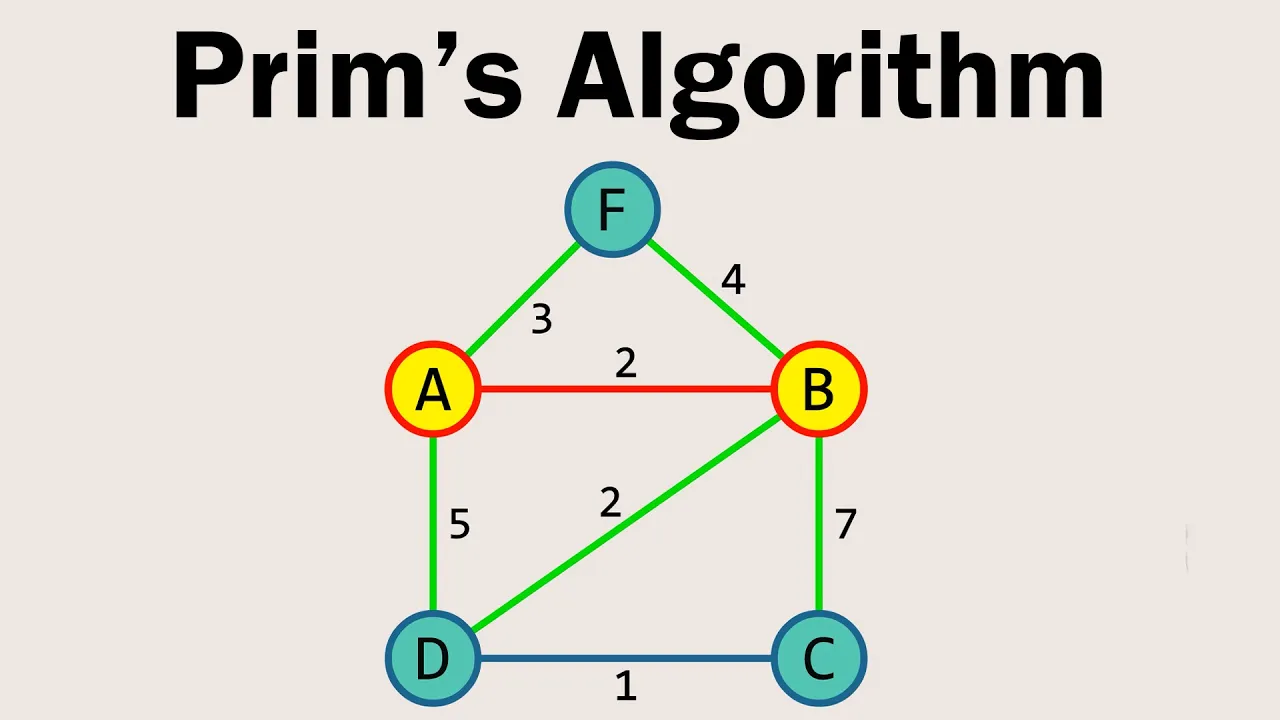 YouTube3:34
Another explanation of Minimum spanning tree.
Minimum spanning treeYouTube3:34Visual explanation for Minimum spanning tree, compared with the current whiteboard.
Minimum spanning tree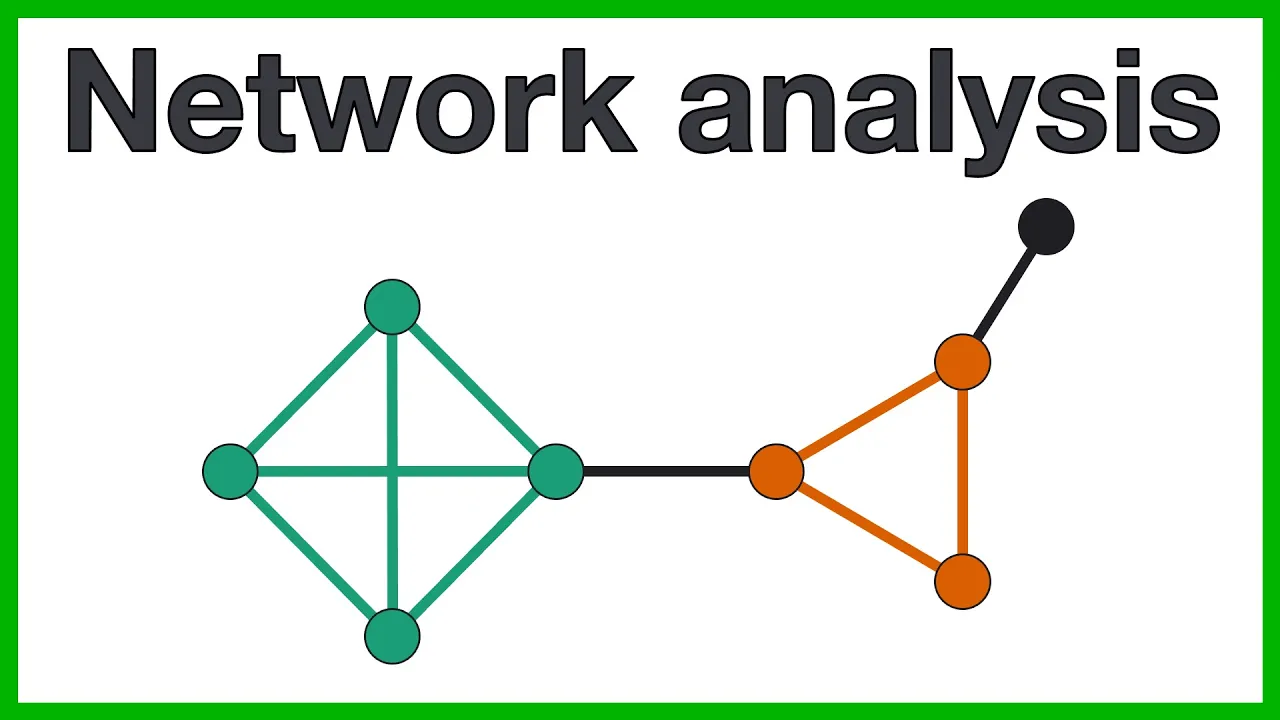 YouTube5:25
Lecture for Shortest path models, compared with the current whiteboard.
Shortest path models YouTube7:22
Application of Shortest path models, complementing the current explanation.
Shortest path models