Preserve every linear combination
A map is linear when T(av+bw)=aT(v)+bT(w) for all vectors and scalars in the chosen field. In particular, a linear map sends zero to zero, though that condition alone is insufficient.
Let's Get Complex · YouTube · 8:37
Recognize linear transformations through preserved combinations and examples including rotations, projections and differentiation.
Use the learning inspector for key ideas and moments, or open the reading tabs for the complete notes.
Generated from the video's visuals and explanation; not verbatim speech.
A map is linear when T(av+bw)=aT(v)+bT(w) for all vectors and scalars in the chosen field. In particular, a linear map sends zero to zero, though that condition alone is insufficient.
Rotation about the origin and uniform scaling both preserve vector addition and scalar multiplication. Their composition, such as rotating 30 degrees and scaling by two, remains linear.
Projection onto the horizontal axis is a linear map. Differentiation on a polynomial space is also linear because the derivative of a linear combination is the same combination of derivatives.
A map is linear when T(av+bw)=aT(v)+bT(w) for all vectors and scalars in the chosen field. In particular, a linear map sends zero to zero, though that condition alone is insufficient.
Rotation about the origin and uniform scaling both preserve vector addition and scalar multiplication. Their composition, such as rotating 30 degrees and scaling by two, remains linear.
Projection onto the horizontal axis is a linear map. Differentiation on a polynomial space is also linear because the derivative of a linear combination is the same combination of derivatives.
A map is linear when T(av+bw)=aT(v)+bT(w) for all vectors and scalars in the chosen field. In particular, a linear map sends zero to zero, though that condition alone is insufficient. Rotation about the origin and uniform scaling both preserve vector addition and scalar multiplication. Their composition, such as rotating 30 degrees and scaling by two, remains linear. Projection onto the horizontal axis is a linear map. Differentiation on a polynomial space is also linear because the derivative of a linear combination is the same combination of derivatives.
 Bilibili4:27
Another explanation of Linear transformations.
Linear transformations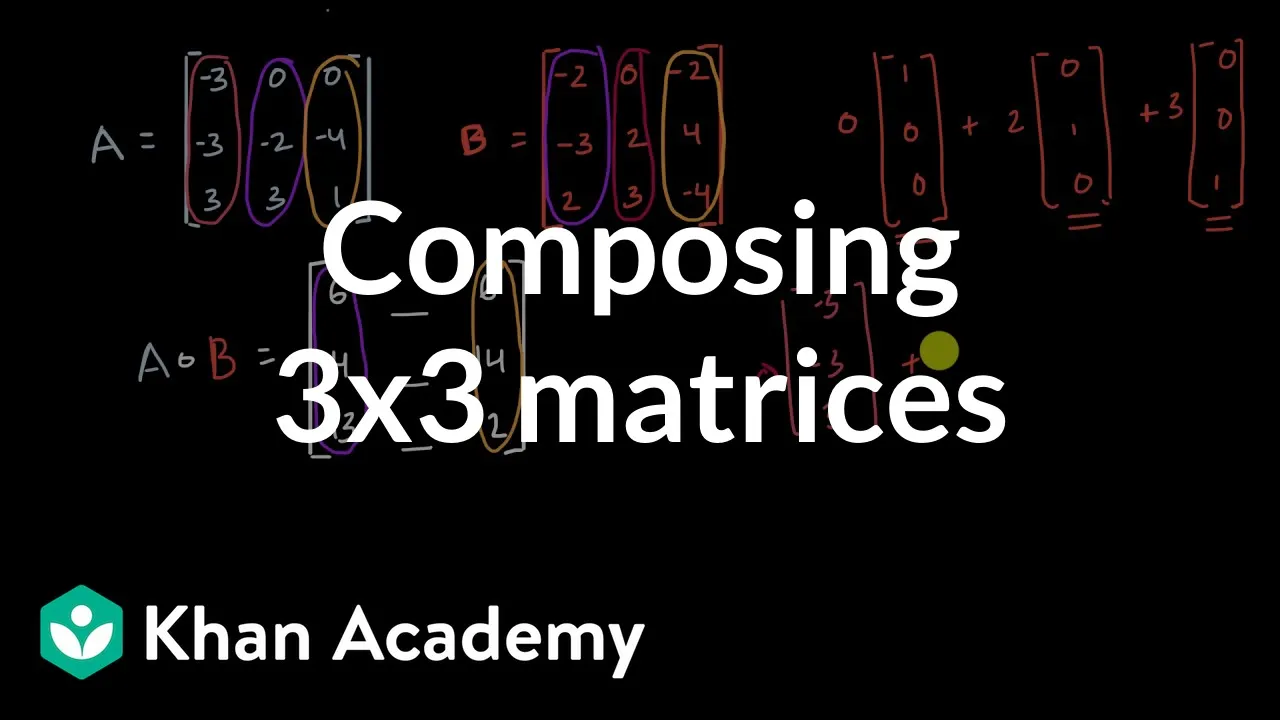 YouTube3:37
Another explanation of Linear transformations.
Linear transformations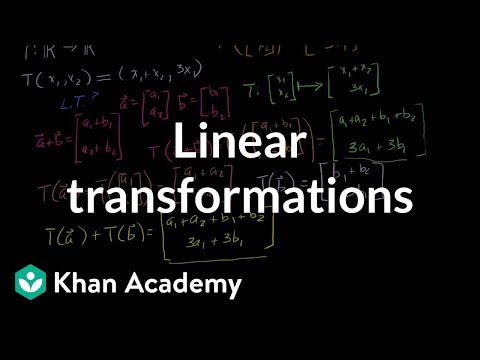 YouTube13:52
Another explanation of Linear transformations.
Linear transformationsBilibili4:27Prerequisite in Linear algebra: Matrices → Linear transformations.
Matrices · View learning sequencePrerequisite in Linear algebra: Vector spaces → Linear transformations.
Vector spaces · View learning sequenceYouTube3:37Prerequisite in Linear algebra: Matrices → Linear transformations.
Matrices · View learning sequence YouTube16:38
Next in Linear algebra: Linear transformations → Eigenvalues and eigenvectors.
Eigenvalues and eigenvectors · View learning sequenceYouTube3:37Whiteboard for Linear transformations, compared with the current visual explanation.
Linear transformationsYouTube13:52Whiteboard for Linear transformations, compared with the current visual explanation.
Linear transformations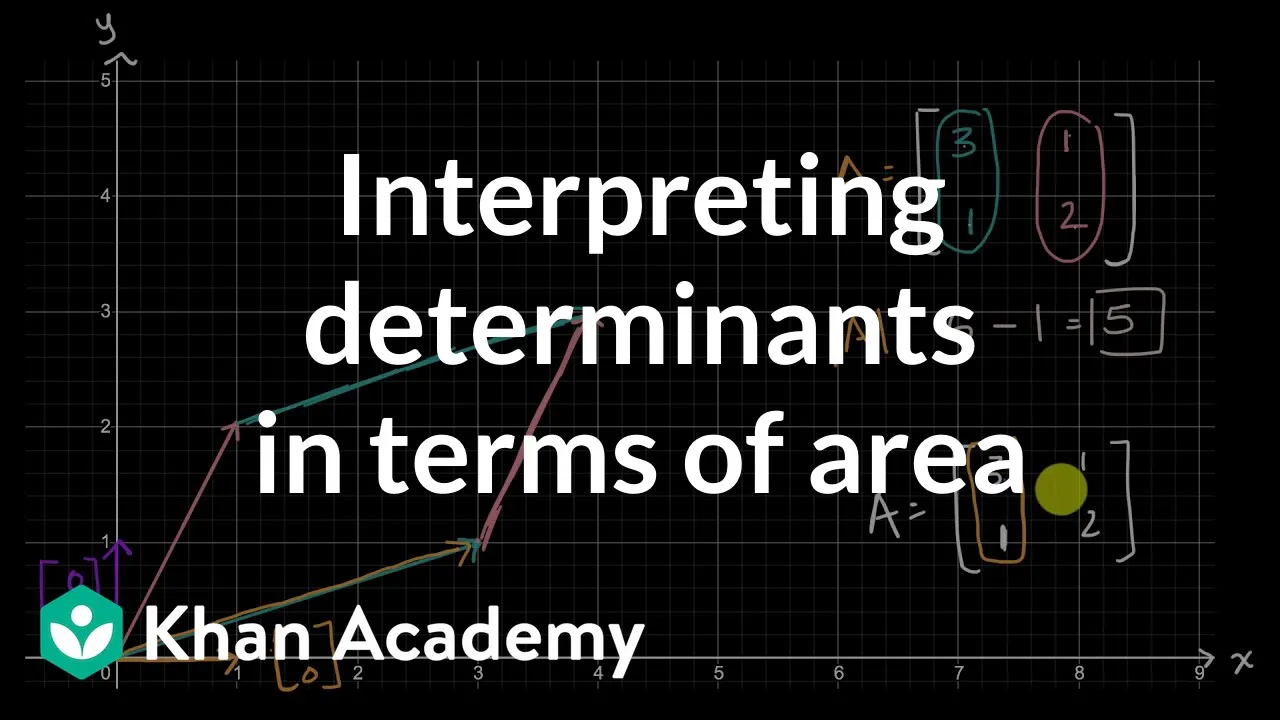 YouTube4:19
Whiteboard for Linear transformations, compared with the current visual explanation.
Linear transformations