Visualizing Monotonic Increase
Discrete plotted points show non-decreasing vertical positions relative to their index, forming a curve-like trajectory that approaches stability.
Charles队长 · Bilibili · 0:46
This video visually demonstrates the proof that every bounded monotonic sequence converges, utilizing the Least Upper Bound Principle. It begins by plotting a monotonically increasing sequence approaching a horizontal asymptote labeled as the supremum . By introducing an arbitrary positive number , it establishes that cannot be an upper bound, ensuring at least one term exceeds this value. Leveraging the sequence's monotonicity, all subsequent terms remain within the interval , thereby satisfying the formal definition of convergence to limit .
Use the learning inspector for key ideas and moments, or open the reading tabs for the complete notes.
Generated from the video's visuals and explanation; not verbatim speech.
Look closely at the Cartesian coordinate system displayed on screen. A series of blue dots extends from the lower left towards the right, steadily rising but flattening out as they progress. This visualizes a monotonically increasing sequence denoted as . As more points appear, they consistently stay below an imaginary horizontal boundary line. The text appearing on the left states 'A sequence with an upper bound has a least upper bound,' accompanied by the formula . This clarifies our foundational premise: the sequence is both monotonically increasing and bounded above. The red dashed line marks this minimal ceiling—the supremum .
To rigorously prove that the sequence actually converges to , we must employ precise mathematical logic. Text emerging on the right prompts us to consider any arbitrarily small positive number . At this moment, a green dashed line appears just beneath the red one, separated by exactly distance , and is explicitly labeled . According to the fundamental properties of the supremum, any number strictly smaller than fails to serve as an upper bound for the entire collection of points. Consequently, there must exist at least one specific term—highlighted here as a distinct yellow dot—that possesses a numerical value strictly greater than the height of this green threshold line.
Having identified such a pivotal term, we now exploit the inherent property that the sequence is 'monotonically increasing.' This implies that every single term following this special point must necessarily be greater than or equal to it, and therefore also strictly greater than . Simultaneously, because acts as the absolute upper bound, none of these later terms can ever exceed . The concluding statement at the bottom synthesizes this logical chain perfectly: for sufficiently large indices , the inequality holds true universally. This matches the exact analytical definition required for a sequence to possess as its limit, thus completing the elegant demonstration that bounded monotonic sequences invariably converge.
Discrete plotted points show non-decreasing vertical positions relative to their index, forming a curve-like trajectory that approaches stability.
A nonempty real set bounded above has a supremum. Take the supremum of the set of sequence values as the candidate limit. Merely being an upper bound does not characterize the supremum.
Subtracting any tiny margin from the supremum creates a new floor that some sequence members will inevitably surpass.
Combining previous steps yields containment within open-closed interval near target, fulfilling standard calculus requirements.
The reviewed final proof card combines monotonicity with the supremum property. For a nondecreasing real sequence bounded above, let L be the supremum of its terms. For each positive tolerance, some term exceeds , and every later term remains in . This verifies convergence to L, rather than inferring it only from a finite plot.
A monotone increasing sequence bounded above converges to its supremum because the supremum acts as the least upper bound. For any arbitrary tolerance , the property of the supremum guarantees that there exists at least one term in the sequence that exceeds .
Conditions: The sequence is monotone increasing.; The sequence is bounded above.; is the supremum of the set of sequence values.; is an arbitrary positive tolerance.
The video uses an animated Cartesian coordinate system. The horizontal axis represents the index , and the vertical axis represents the term values .
Conditions: The visualization assumes a monotone increasing sequence bounded above.; The axes are labeled for index and value.
The Least Upper Bound Property guarantees the existence of a unique supremum for the set of sequence values, provided the set is non-empty and bounded above. This supremum serves as the candidate limit for the sequence.
Conditions: The set of sequence values is non-empty.; The set of sequence values is bounded above.
The definition of supremum includes two conditions: is an upper bound, and no number smaller than is an upper bound. If we take any , the value is strictly less than .
Conditions: is the supremum of the sequence values.; is an arbitrary positive number.
Monotonicity ensures that once a term exceeds , all subsequent terms (for ) are greater than or equal to . Since the sequence is also bounded above by , these terms satisfy .
Conditions: The sequence is monotone increasing.; There exists an index such that .; is an upper bound for the sequence.
 Bilibili5:38
Next in Calculus: Limits → Derivatives.
Derivatives · View learning sequence YouTube2:28
Next in Calculus: Limits → Definite integrals.
Definite integrals · View learning sequence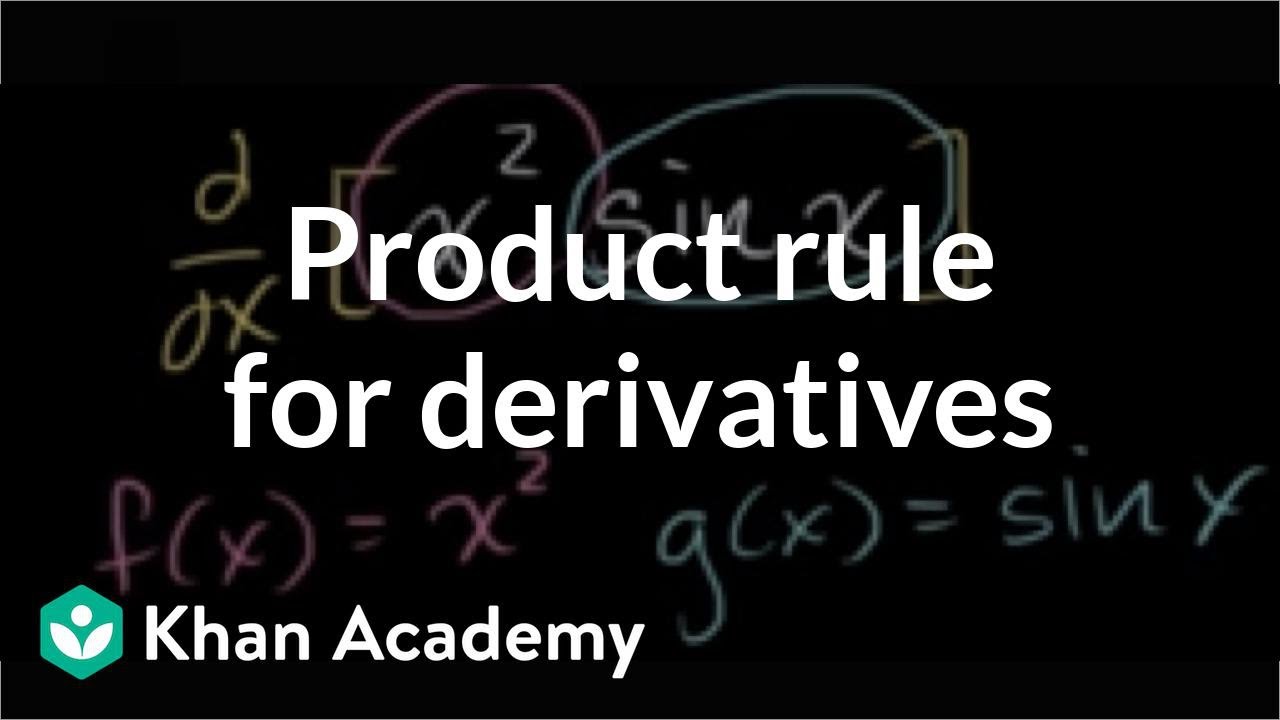 YouTube2:39
Next in Calculus: Limits → Derivatives.
Derivatives · View learning sequence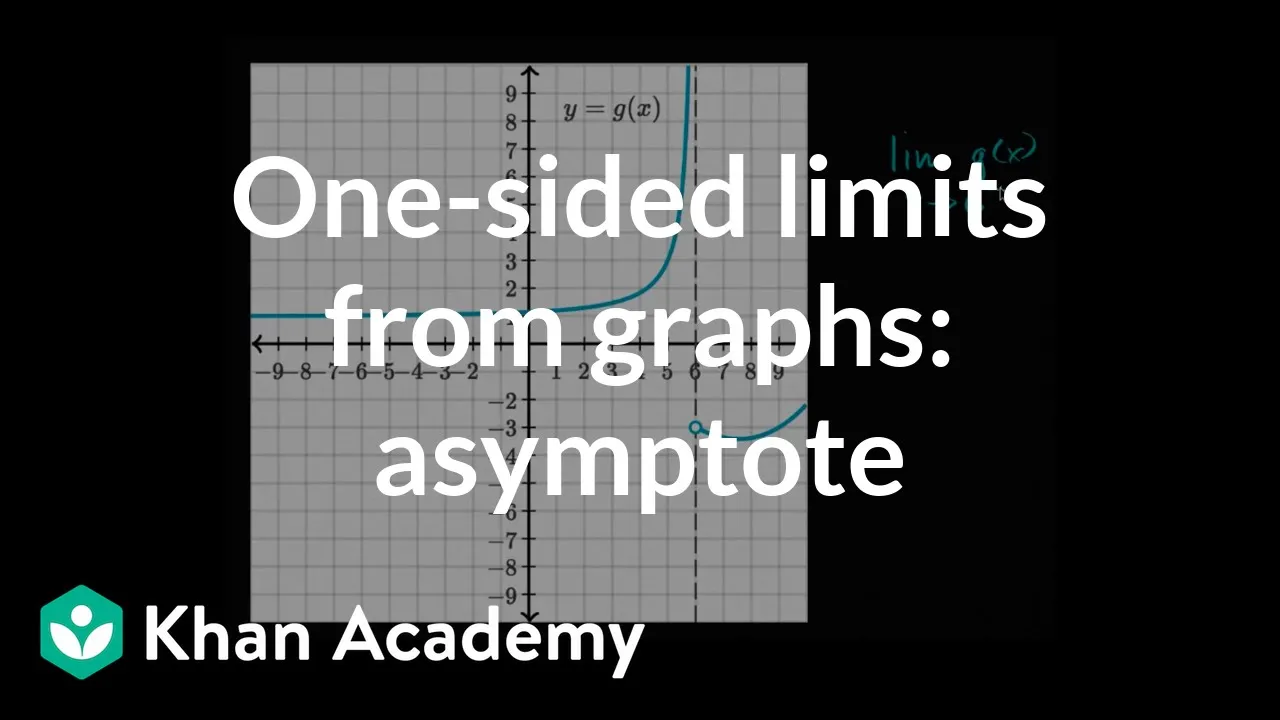 YouTube2:26
English video covering Limits; the current video is in Chinese.
Limits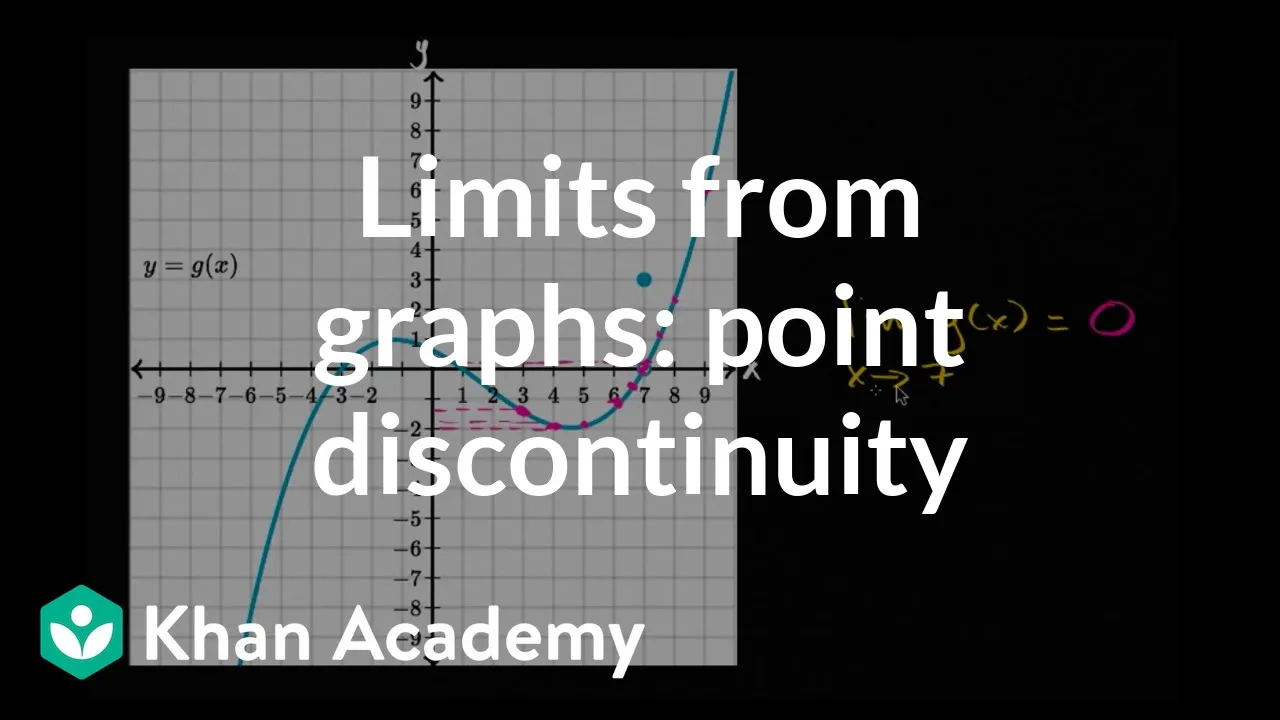 YouTube2:38
English video covering Limits; the current video is in Chinese.
Limits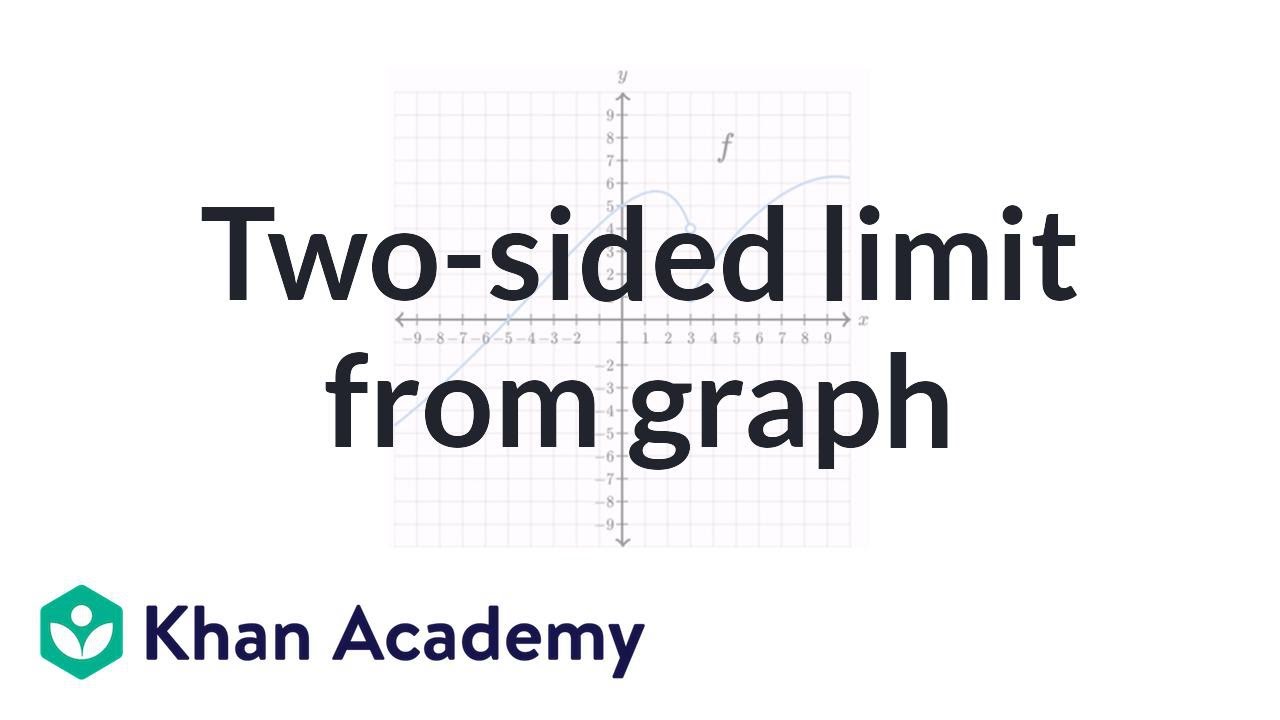 YouTube2:46
English video covering Limits; the current video is in Chinese.
LimitsYouTube2:26Explanation of Limits, complementing the current proof.
LimitsYouTube2:38Explanation of Limits, complementing the current proof.
LimitsYouTube2:46Explanation of Limits, complementing the current proof.
Limits