Least Upper Bound Principle
Every non-empty subset of real numbers that is bounded above has a least upper bound (supremum). This foundational axiom ensures the existence of the limit candidate L used throughout the visual proof.
Charles队长 · Bilibili · 0:50
This video visually demonstrates the proof that a monotone increasing sequence bounded above converges to its supremum. Using an animated coordinate system, it plots a rising dotted curve representing the sequence {}. It introduces the least upper bound L and an arbitrary value L - ε. By leveraging the properties of the supremum and the sequence's monotonicity, it establishes that for sufficiently large n, the terms are trapped within the interval (L - ε, L], thereby proving convergence.
Use the learning inspector for key ideas and moments, or open the reading tabs for the complete notes.
Generated from the video's visuals and explanation; not verbatim speech.
The animation begins by plotting a blue dotted line on a Cartesian plane, illustrating a strictly increasing sequence denoted as {}. The vertical axis represents the term values while the horizontal axis represents the index n. The curve rises but flattens out, suggesting the presence of an upper boundary.
According to the Least Upper Bound Property, since the set of sequence values is non-empty and bounded above, there exists a unique supremum L. A red dashed line marks this level L, satisfying for all n. Below it, a green dashed line indicates L - ε for any given . Because L is the *least* upper bound, L - ε cannot be an upper bound, implying some term exceeds L - ε.
Utilizing the monotonicity condition, if , then every subsequent term (for ) must also satisfy . Combined with the global upper bound , we derive the inequality . This confirms that beyond index N, all terms lie within the epsilon neighborhood of L, formally proving that .
Every non-empty subset of real numbers that is bounded above has a least upper bound (supremum). This foundational axiom ensures the existence of the limit candidate L used throughout the visual proof.
A number L is the supremum of a set S if two conditions hold: (1) L is an upper bound ( for all ), and (2) no smaller number is an upper bound (if , then y is not an upper bound). Condition (2) guarantees elements arbitrarily close to L exist below it.
For every the supremum property gives . Monotonicity gives for , while the upper bound gives . Thus all tail errors are below ε; terms need not become stationary.
The reviewed summaries prove that an increasing real sequence bounded above converges to its supremum . For each , the supremum gives ; monotonicity then gives for all . This proves this sequence-limit theorem, not convergence for arbitrary bounded sequences.
The red dashed line represents the supremum , which serves as the least upper bound for the sequence . Visually, it establishes the ceiling that the sequence approaches but never exceeds.
Conditions: Visual demonstration of a monotone increasing sequence.; Existence of a supremum .
A monotone increasing sequence bounded above converges to its supremum because the supremum acts as the least upper bound. For any arbitrary tolerance , the property of the supremum guarantees that there exists at least one term in the sequence that exceeds .
Conditions: The sequence is monotone increasing.; The sequence is bounded above.; is the supremum of the set of sequence values.; is an arbitrary positive tolerance.
First, the supremum property ensures there exists an index such that . Second, monotonicity ensures that for all , , so .
Conditions: Sequence is monotone increasing.; Sequence is bounded above by .; is given.
By definition, a monotone increasing sequence satisfies for all . Through induction or transitivity, if , then .
Conditions: The sequence is monotone increasing.; is a fixed integer index.; is any integer such that .
The video uses an animated Cartesian coordinate system. The horizontal axis represents the index , and the vertical axis represents the term values .
Conditions: The visualization assumes a monotone increasing sequence bounded above.; The axes are labeled for index and value.
The Least Upper Bound Property guarantees the existence of a unique supremum for the set of sequence values, provided the set is non-empty and bounded above. This supremum serves as the candidate limit for the sequence.
Conditions: The set of sequence values is non-empty.; The set of sequence values is bounded above.
This double inequality is valid for all indices such that , where is the specific index guaranteed by the supremum property such that . Before , terms may be less than or equal to .
Conditions: is defined such that .; is an integer index.; Sequence is monotone increasing and bounded above by .
The green dashed line indicates the value for any given . It visually demonstrates the concept of an 'epsilon neighborhood' below the supremum.
Conditions: is an arbitrary positive distance.; is the supremum.
The definition of supremum includes two conditions: is an upper bound, and no number smaller than is an upper bound. If we take any , the value is strictly less than .
Conditions: is the supremum of the sequence values.; is an arbitrary positive number.
Monotonicity ensures that once a term exceeds , all subsequent terms (for ) are greater than or equal to . Since the sequence is also bounded above by , these terms satisfy .
Conditions: The sequence is monotone increasing.; There exists an index such that .; is an upper bound for the sequence.
The Least Upper Bound Property defines as the *smallest* number that bounds the set from above. If we subtract any positive amount from , the resulting value is strictly less than the least upper bound.
Conditions: is the supremum (least upper bound) of the set .; is an arbitrary positive real number.
 Bilibili5:38
Next in Calculus: Limits → Derivatives.
Derivatives · View learning sequence YouTube2:28
Next in Calculus: Limits → Definite integrals.
Definite integrals · View learning sequence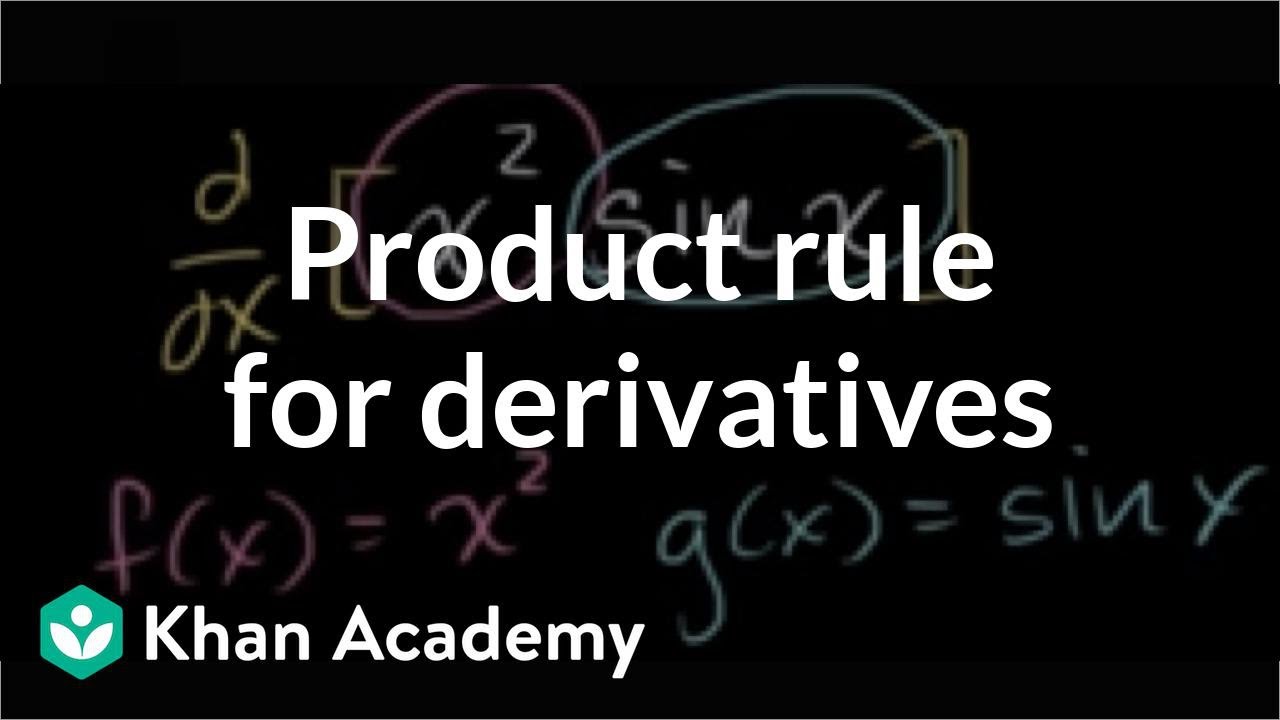 YouTube2:39
Next in Calculus: Limits → Derivatives.
Derivatives · View learning sequence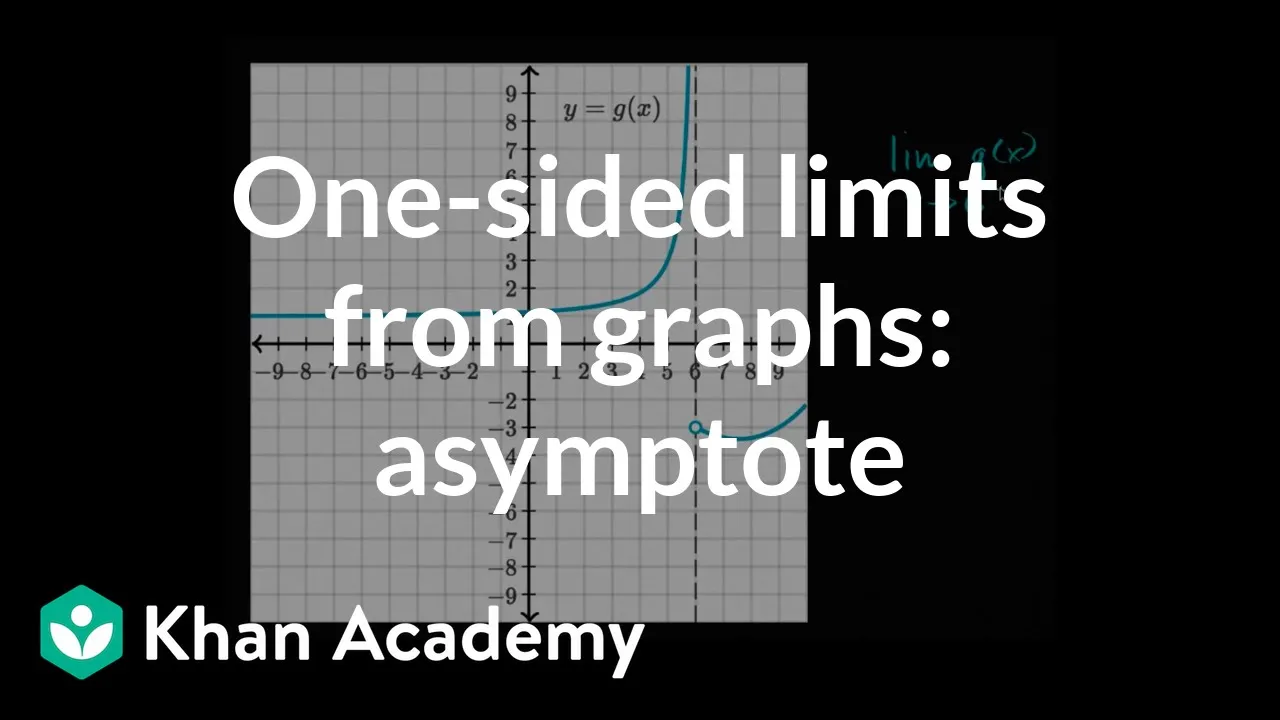 YouTube2:26
English video covering Limits; the current video is in Chinese.
Limits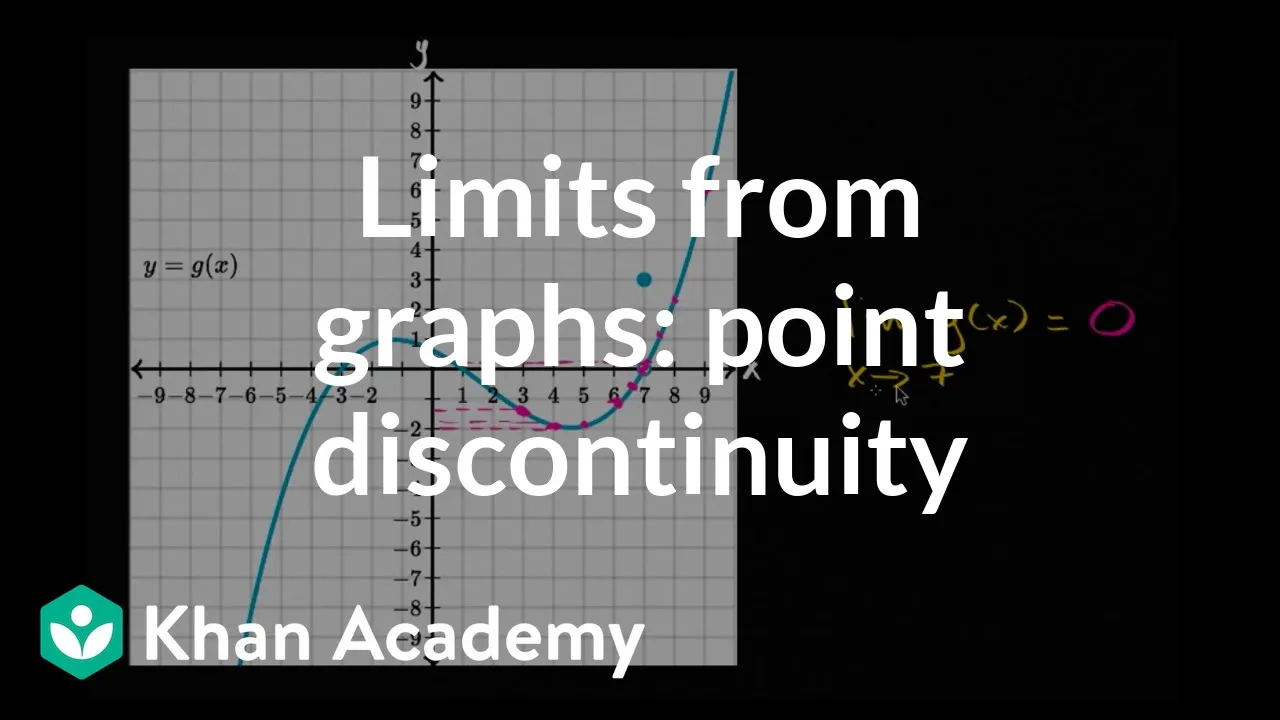 YouTube2:38
English video covering Limits; the current video is in Chinese.
Limits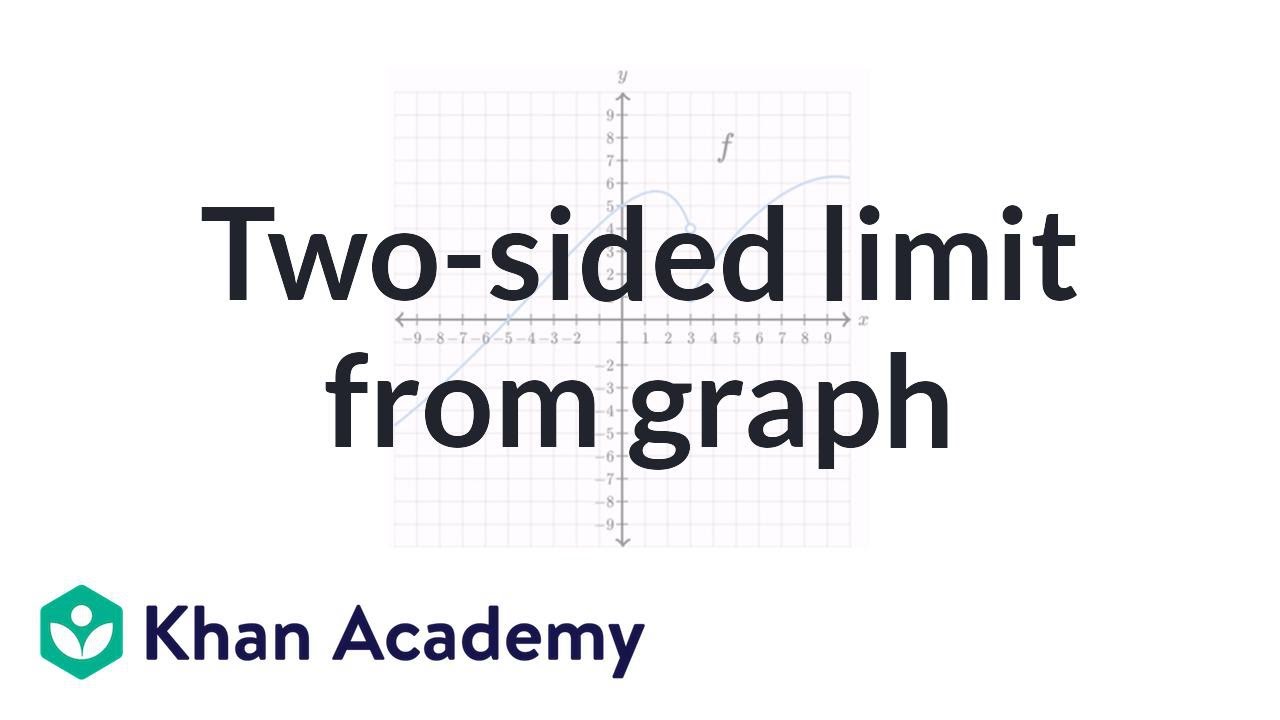 YouTube2:46
English video covering Limits; the current video is in Chinese.
LimitsYouTube2:26Explanation of Limits, complementing the current proof.
LimitsYouTube2:38Explanation of Limits, complementing the current proof.
LimitsYouTube2:46Explanation of Limits, complementing the current proof.
Limits