Geometric versus signed area
A nonnegative continuous function integrates to its under-graph area. For sign-changing functions, use absolute values for total geometric area.
Charles队长 · Bilibili · 0:53
The animation divides a curved region into vertical strips and explains the definite integral through sums of rectangle areas. For a continuous nonnegative function, the Riemann sums approach the geometric area as the maximum partition width tends to zero. A sign-changing function requires absolute values when computing total geometric area.
Use the learning inspector for key ideas and moments, or open the reading tabs for the complete notes.
Generated from the video's visuals and explanation; not verbatim speech.
Consider on [a,b], bounded by the graph, horizontal axis and the two endpoint lines. Assume f is continuous and nonnegative so its value gives the height of each vertical strip.
Divide the interval into small pieces and choose a sample point ξᵢ in each. A rectangle of height f(ξᵢ) and width Δxᵢ approximates that piece of area. Adding them gives the Riemann sum. The differential notation dA= summarizes this construction.
Refine the partition until its maximum width tends to zero. The sum approaches . The maximum width is essential: merely increasing the number of pieces is not enough. If f changes sign, the integral subtracts below-axis area; total geometric area is ||dx.
A nonnegative continuous function integrates to its under-graph area. For sign-changing functions, use absolute values for total geometric area.
Use function value as height and horizontal increment as width. Finite rectangles approximate the area before a limit makes the answer exact.
For a Riemann-integrable function, sums with arbitrary sample points approach the integral as the partition mesh tends to zero. More pieces alone do not guarantee this.
Continuity on a closed interval guarantees Riemann integrability. Differentiability everywhere is not required.
Rectangle sums explain the definite integral: for a Riemann-integrable function, arbitrary-sample sums approach the integral as the partition mesh tends to zero. Continuity on a closed interval is sufficient. Nonnegative functions give under-graph area, while sign-changing functions require integrating the absolute value for total geometric area.
For a continuous nonnegative function, the definite integral represents the exact area of the region bounded by the graph of the function, the horizontal axis, and the vertical lines at the endpoints of the interval.
Conditions: The function is continuous.; The function is nonnegative.; The interval is closed [a, b].
The sample point ξᵢ is chosen within each subinterval to determine the height of the approximating rectangle. The function value f(ξᵢ) serves as the height, while the width of the subinterval Δxᵢ serves as the base.
Conditions: The interval [a, b] is divided into subintervals.; A point ξᵢ is selected from each subinterval.
For a function that changes sign, the definite integral calculates the net signed area, subtracting the area below the x-axis from the area above it. To find the total geometric area, one must integrate the absolute value of the function, ||dx, ensuring all contributions are positive.
Conditions: The function is continuous on [a, b].; The function takes both positive and negative values in [a, b].
The area of a vertical strip is approximated by a rectangle. The height of the rectangle is determined by the function value at a chosen sample point within the strip, and the width is the width of the subinterval.
Conditions: The interval is divided into subintervals.; A sample point is chosen in each subinterval.
Increasing the number of pieces does not guarantee that the width of each piece shrinks to zero. If some pieces remain wide, the approximation error in those regions persists, preventing the Riemann sum from converging to the exact integral.
Conditions: The partition is refined by adding more pieces.; The maximum width of the partition does not necessarily tend to zero.
The Riemann sum approaches the geometric area when the function is continuous and nonnegative on the interval, and the maximum width of the partition tends to zero. These conditions ensure that the rectangles accurately fill the space under the curve without significant gaps or overlaps.
Conditions: The function f is continuous on [a, b].; The function f is nonnegative on [a, b].; The maximum width of the partition tends to zero.
The maximum width of the partition (often called the mesh) must tend to zero to ensure that the Riemann sum converges to the definite integral. Merely increasing the number of rectangles is insufficient because the widths of individual rectangles might not shrink uniformly, leaving gaps or overlaps that prevent the sum from accurately approximating the area under the curve.
Conditions: The function is continuous on the closed interval [a, b].; The partition is refined such that the maximum subinterval width tends to zero.
The notation dA= summarizes the construction of a thin vertical strip of area. It represents the product of the function's height and an infinitesimal width dx, capturing the idea that the total area is the accumulation of these infinitesimal elements.
Conditions: The function is continuous and nonnegative.; The area is being approximated by vertical strips.
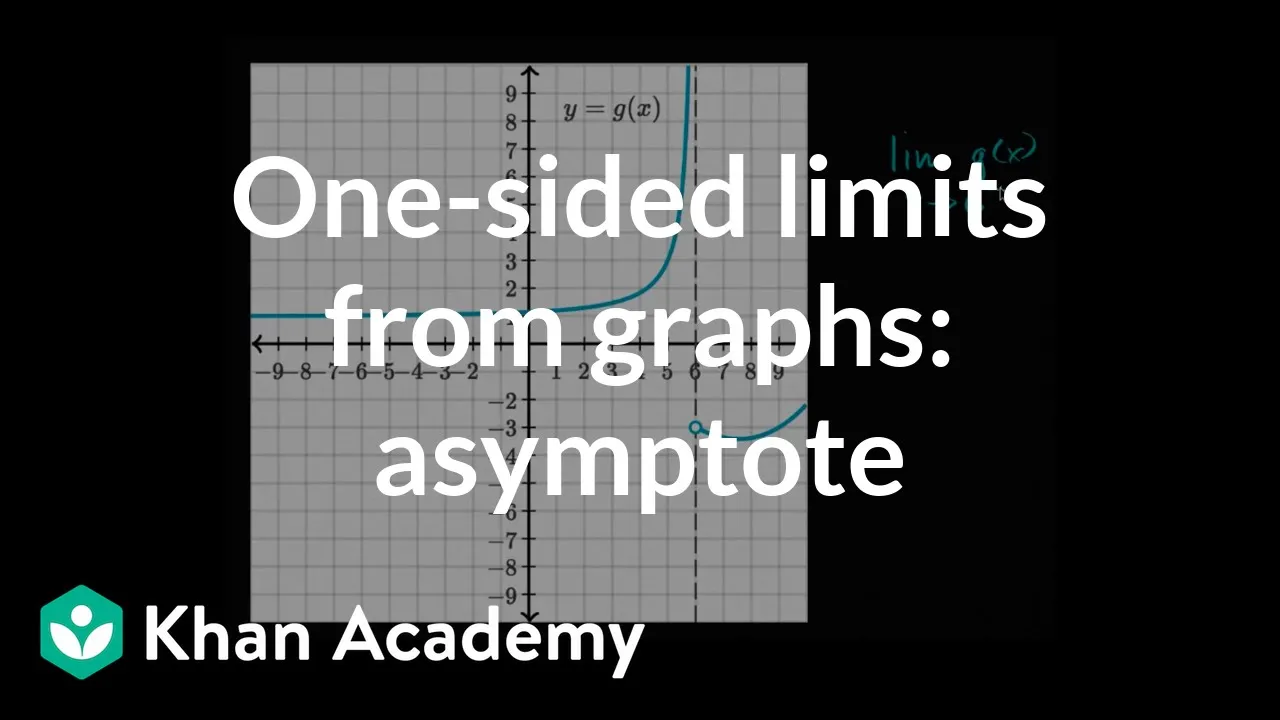 YouTube2:26
Prerequisite in Calculus: Limits → Definite integrals.
Limits · View learning sequence YouTube3:52
Next in Calculus: Definite integrals → Integration by parts.
Integration by parts · View learning sequence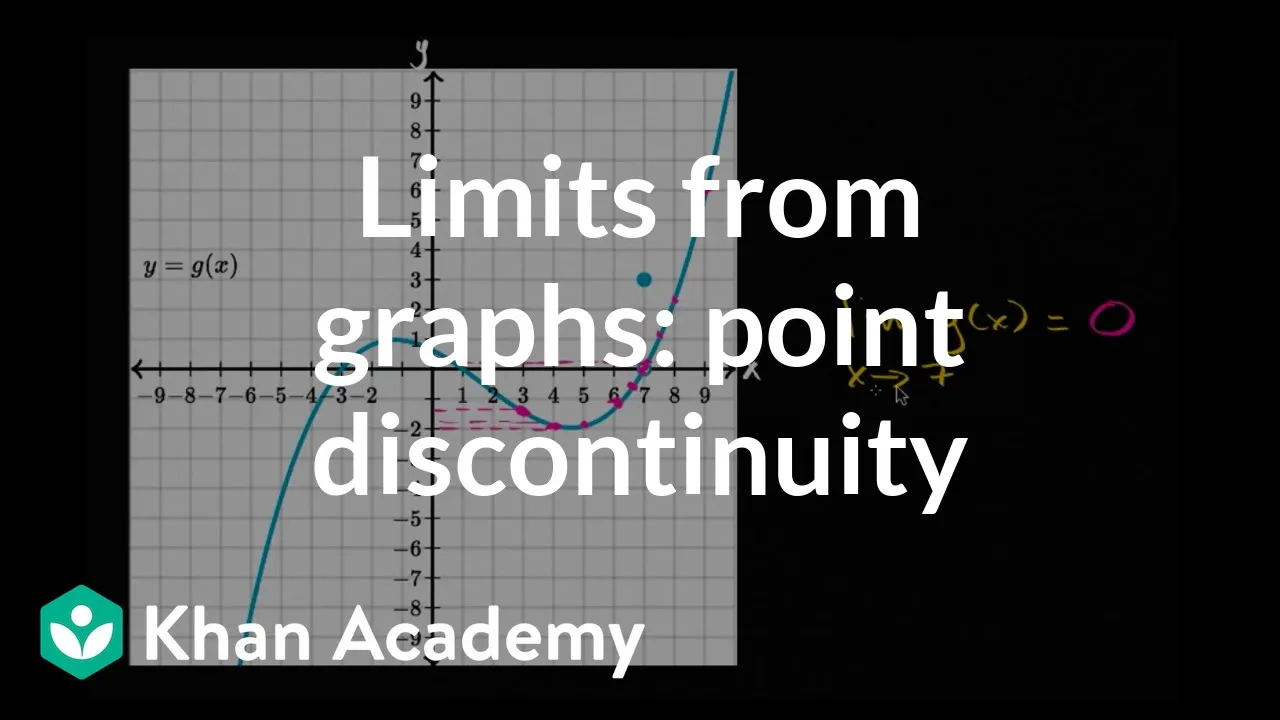 YouTube2:38
Prerequisite in Calculus: Limits → Definite integrals.
Limits · View learning sequence YouTube2:28
English video covering Definite integrals; the current video is in Chinese.
Definite integrals YouTube4:16
English video covering Definite integrals; the current video is in Chinese.
Definite integrals YouTube4:26
English video covering Definite integrals; the current video is in Chinese.
Definite integralsYouTube2:28Whiteboard for Definite integrals, compared with the current visual explanation.
Definite integralsYouTube4:16Whiteboard for Definite integrals, compared with the current visual explanation.
Definite integralsYouTube4:26Whiteboard for Definite integrals, compared with the current visual explanation.
Definite integrals