Left and right limits
When both sides are available in the domain, equal existing one-sided limits give the two-sided limit.
Charles队长 · Bilibili · 1:18
The video contrasts left/right limits in one variable with approaches to a point in two variables. A multivariable limit requires uniform control of every nearby domain point. For xy/(x²+y²), the coordinate axes give zero while the diagonals give ±, disproving the limit at the origin.
Use the learning inspector for key ideas and moments, or open the reading tabs for the complete notes.
Generated from the video's visuals and explanation; not verbatim speech.
Where the domain permits approach from both sides, a two-sided one-variable limit exists if the left and right limits both exist and agree. The animation first illustrates this consistency.
In two variables, the input is a point in the plane. The epsilon-delta definition requires every domain point sufficiently close to, but distinct from, the origin to give an output close to A. A few plotted paths illustrate the idea but cannot by themselves prove existence.
For =xy/(x²+y²), coordinate-axis paths give zero, gives , and gives −. All approach the origin, but their outputs have different limits. Two differing paths suffice to disprove a limit. Agreement along all straight lines alone need not prove one.
When both sides are available in the domain, equal existing one-sided limits give the two-sided limit.
Control every point in a punctured domain neighborhood, rather than checking a few paths or all straight lines.
Different output limits along two approaches rule out a common limit. Existence requires uniform control of every approach.
Along y=kx the value is k/(²), which varies with k and is zero for .
The reviewed two-path card disproves a common limit using incompatible approach values for at the origin: the axes give and the diagonals give and . Establishing existence instead requires uniform control of all nearby domain points; agreement on a few paths, or even all straight lines, is not sufficient.
The limit fails to exist because the function approaches different values along different paths to the origin. The epsilon-delta definition requires uniform control of every nearby domain point, meaning all paths must yield the same limit.
Conditions: The function is .; The limit is evaluated as .; The domain excludes the origin .
Along the line , substituting into the function yields for . This value depends on the slope and is constant with respect to .
Conditions: The function is .; The path is the straight line .; .
A two-sided one-variable limit exists if the left and right limits both exist and agree, provided the domain permits approach from both sides. This consistency ensures that the function approaches the same value regardless of the direction of approach.
Conditions: The domain permits approach from both sides of the point.; The left limit exists.; The right limit exists.; The left and right limits are equal to the same value .
The epsilon-delta definition requires that for every , there exists a such that every domain point sufficiently close to, but distinct from, the origin gives an output close to . This means uniform control of every nearby domain point, rather than just checking a few paths.
Conditions: The input is a point in the plane .; The limit is evaluated as .; The function is defined on a domain containing a punctured neighborhood of the origin.
 Bilibili5:38
Next in Calculus: Limits → Derivatives.
Derivatives · View learning sequence YouTube2:28
Next in Calculus: Limits → Definite integrals.
Definite integrals · View learning sequence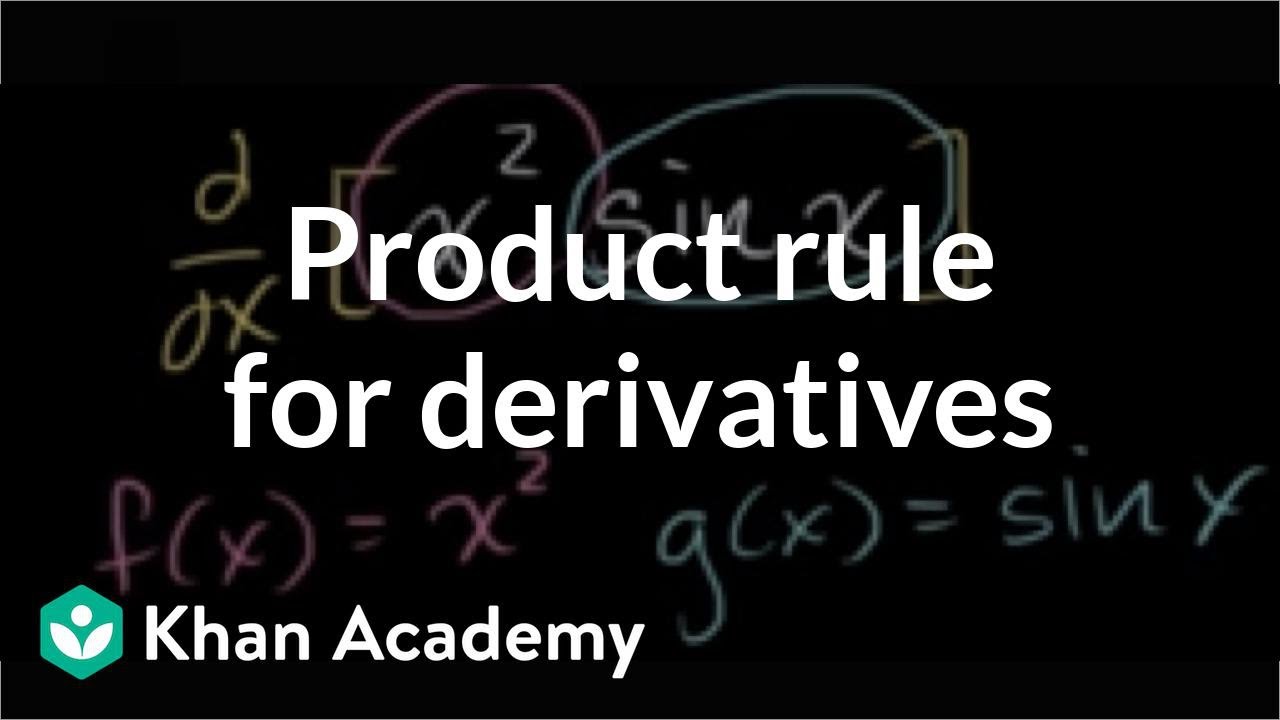 YouTube2:39
Next in Calculus: Limits → Derivatives.
Derivatives · View learning sequence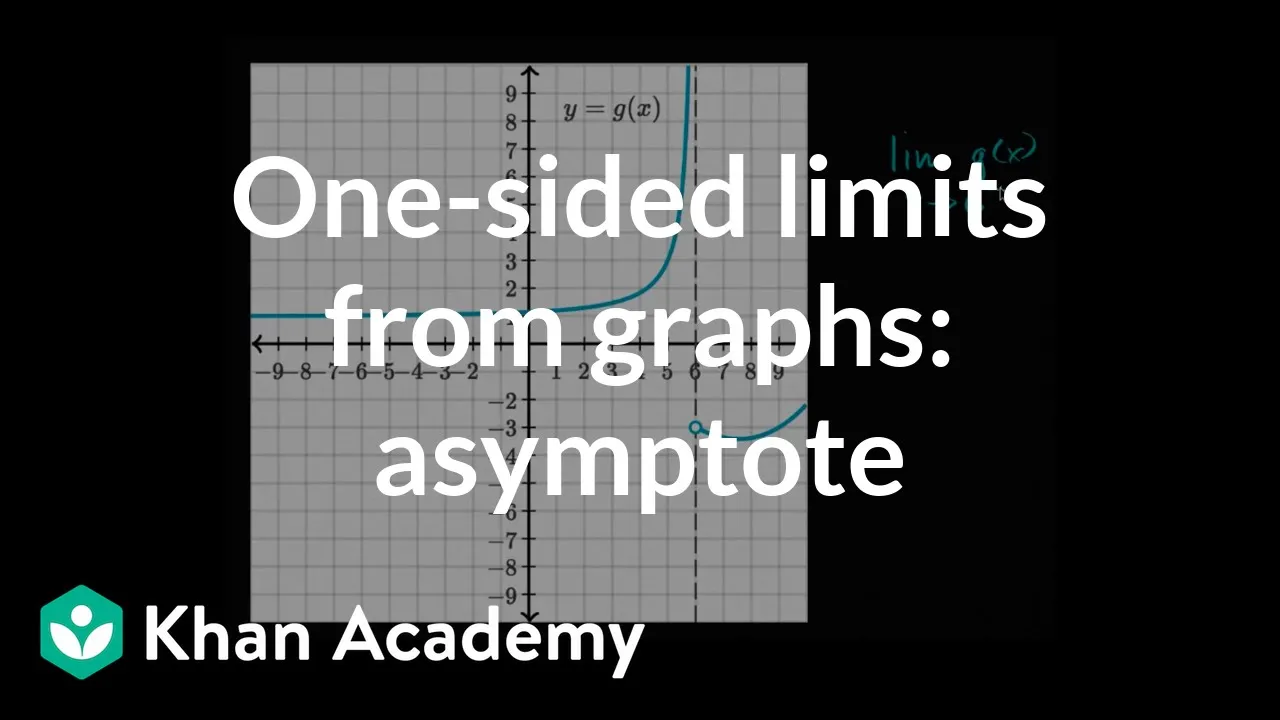 YouTube2:26
English video covering Limits; the current video is in Chinese.
Limits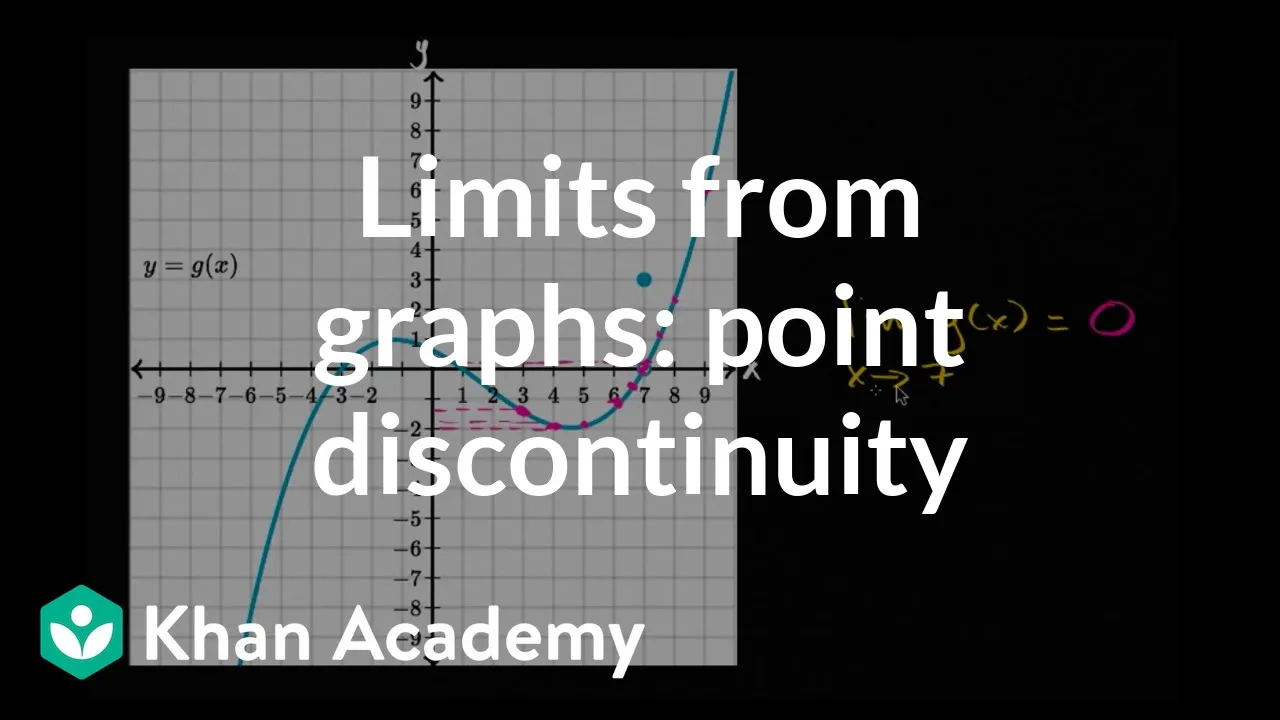 YouTube2:38
English video covering Limits; the current video is in Chinese.
Limits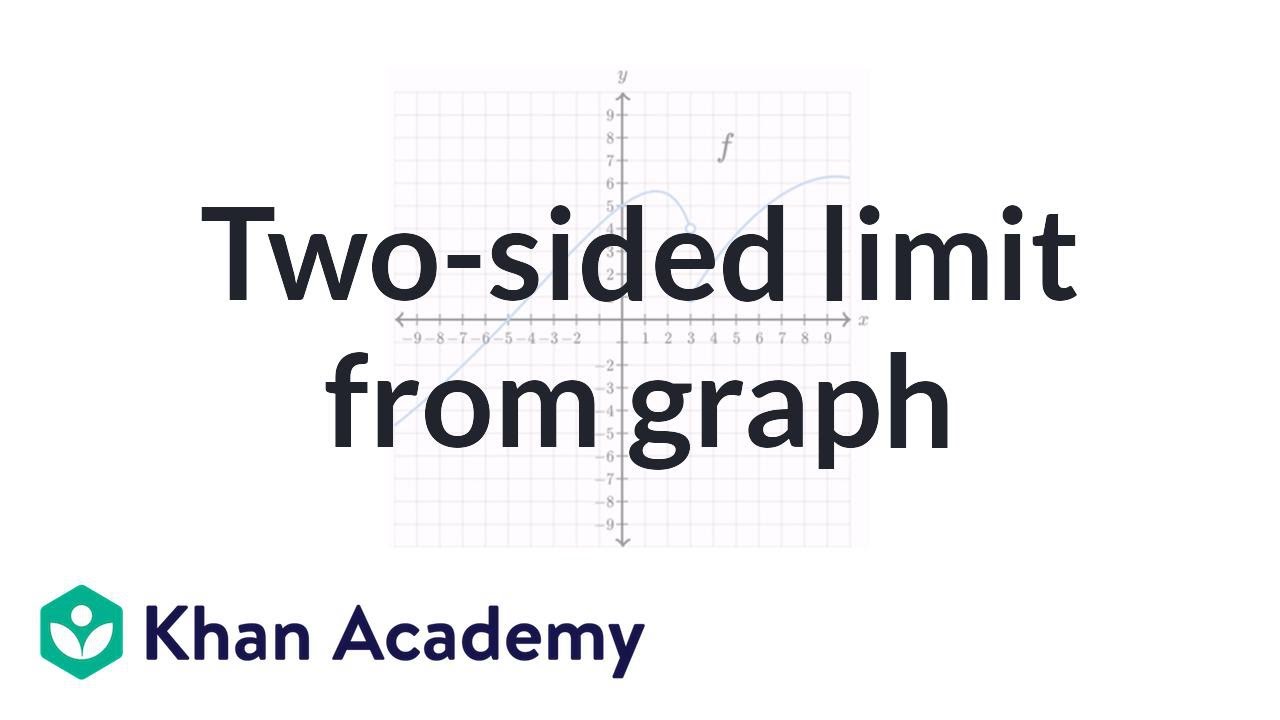 YouTube2:46
English video covering Limits; the current video is in Chinese.
LimitsYouTube2:26Whiteboard for Limits, compared with the current visual explanation.
LimitsYouTube2:38Whiteboard for Limits, compared with the current visual explanation.
LimitsYouTube2:46Whiteboard for Limits, compared with the current visual explanation.
Limits