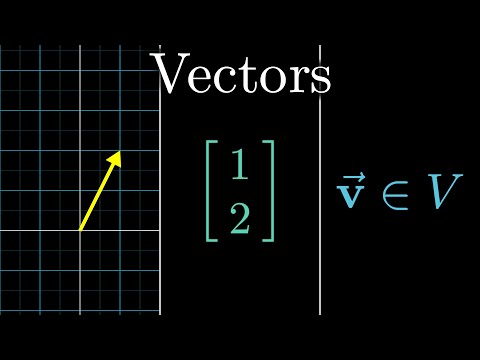
Geometric vectors and scalars
In the geometric examples, a scalar records magnitude while a vector also records direction. A displacement needs both how far and in which direction, unlike distance alone.
TED-Ed · YouTube · 4:41
A vector is more than an array of numbers. Using two observers with different coordinate directions, the animation shows how the same geometric vector can have different components and why a basis gives those components meaning.
Use the learning inspector for key ideas and moments, or open the reading tabs for the complete notes.
Generated from the video's visuals and explanation; not verbatim speech.
In the geometric examples, a scalar records magnitude while a vector also records direction. A displacement needs both how far and in which direction, unlike distance alone.
A coordinate basis supplies reference vectors. An array of components describes the coefficients of those reference vectors; the numbers without their basis do not completely specify the geometric interpretation.
Observers using different axes can assign different components to the same vector. Changing coordinates changes its representation, not the underlying displacement. The video uses a language analogy to make this distinction memorable.
The ending places scalars and vectors in the broader tensor framework and mentions applications. It is a preview, rather than a derivation of formal tensor transformation rules.
In the geometric examples, a scalar records magnitude while a vector also records direction. A displacement needs both how far and in which direction, unlike distance alone.
A coordinate basis supplies reference vectors. An array of components describes the coefficients of those reference vectors; the numbers without their basis do not completely specify the geometric interpretation.
Observers using different axes can assign different components to the same vector. Changing coordinates changes its representation, not the underlying displacement. The video uses a language analogy to make this distinction memorable.
The ending places scalars and vectors in the broader tensor framework and mentions applications. It is a preview, rather than a derivation of formal tensor transformation rules.
In the geometric examples, a scalar records magnitude while a vector also records direction. A displacement needs both how far and in which direction, unlike distance alone. A coordinate basis supplies reference vectors. An array of components describes the coefficients of those reference vectors; the numbers without their basis do not completely specify the geometric interpretation. Observers using different axes can assign different components to the same vector. Changing coordinates changes its representation, not the underlying displacement. The video uses a language analogy to make this distinction memorable. The ending places scalars and vectors in the broader tensor framework and mentions applications. It is a preview, rather than a derivation of formal tensor transformation rules.
In the geometric examples, a scalar records magnitude while a vector also records direction. A displacement needs both how far and in which direction, unlike distance alone. A coordinate basis supplies reference vectors. An array of components describes the coefficients of those reference vectors; the numbers without their basis do not completely specify the geometric interpretation. Observers using different axes can assign different components to the same vector. Changing coordinates changes its representation, not the underlying displacement. The video uses a language analogy to make this distinction memorable. The ending places scalars and vectors in the broader tensor framework and mentions applications. It is a preview, rather than a derivation of formal tensor transformation rules.
A scalar records only magnitude, whereas a vector records both magnitude and direction. This distinction is necessary because describing a displacement requires knowing not just how far an object moved, but also in which direction it moved, unlike distance which is a scalar quantity.
Conditions: The context involves geometric examples.; Comparing scalar quantities (like distance) with vector quantities (like displacement).
Component numbers are coefficients of reference vectors provided by a coordinate basis. Without specifying the basis, the numbers lack the reference directions needed to reconstruct the geometric vector.
Conditions: The context is coordinate systems and vector components.; The basis vectors define the reference directions for the components.
Scalars and vectors are placed within the broader framework of tensors. The video presents this as a preview, suggesting that tensors generalize the concepts of scalars (magnitude only) and vectors (magnitude and direction) to higher dimensions or more complex structures, though formal transformation rules are not derived.
Conditions: The context is the concluding section of the video.; The discussion is introductory/preview-level, not a formal derivation.
Observers using different coordinate axes project the same geometric vector onto their respective basis vectors. Since the directions of the basis vectors differ, the coefficients (components) required to reconstruct the vector also differ.
Conditions: Two or more observers use different coordinate systems (axes).; The vector represents a fixed geometric displacement.
 Bilibili4:27
Next in Linear algebra: Vectors → Matrices.
Matrices · View learning sequenceNext in Linear algebra: Vectors → Vector spaces.
Vector spaces · View learning sequence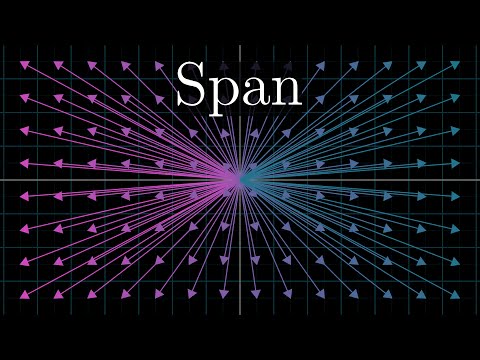 YouTube9:59
Next in Linear algebra: Vectors → Linear independence.
Linear independence · View learning sequenceNext in Linear algebra: Vectors → Span.
Span · View learning sequence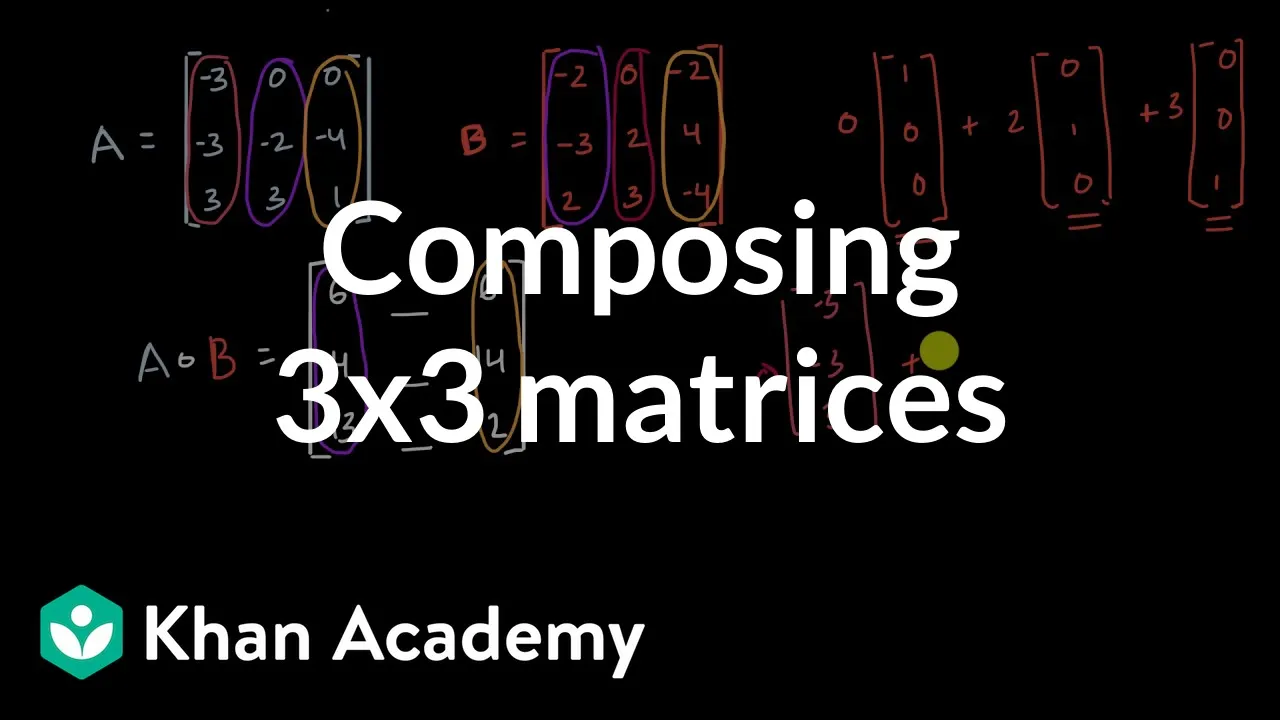 YouTube3:37
Next in Linear algebra: Vectors → Matrices.
Matrices · View learning sequence YouTube6:59
Lecture for Vectors, compared with the current visual explanation.
Vectors YouTube6:45
Lecture for Vectors, compared with the current visual explanation.
Vectors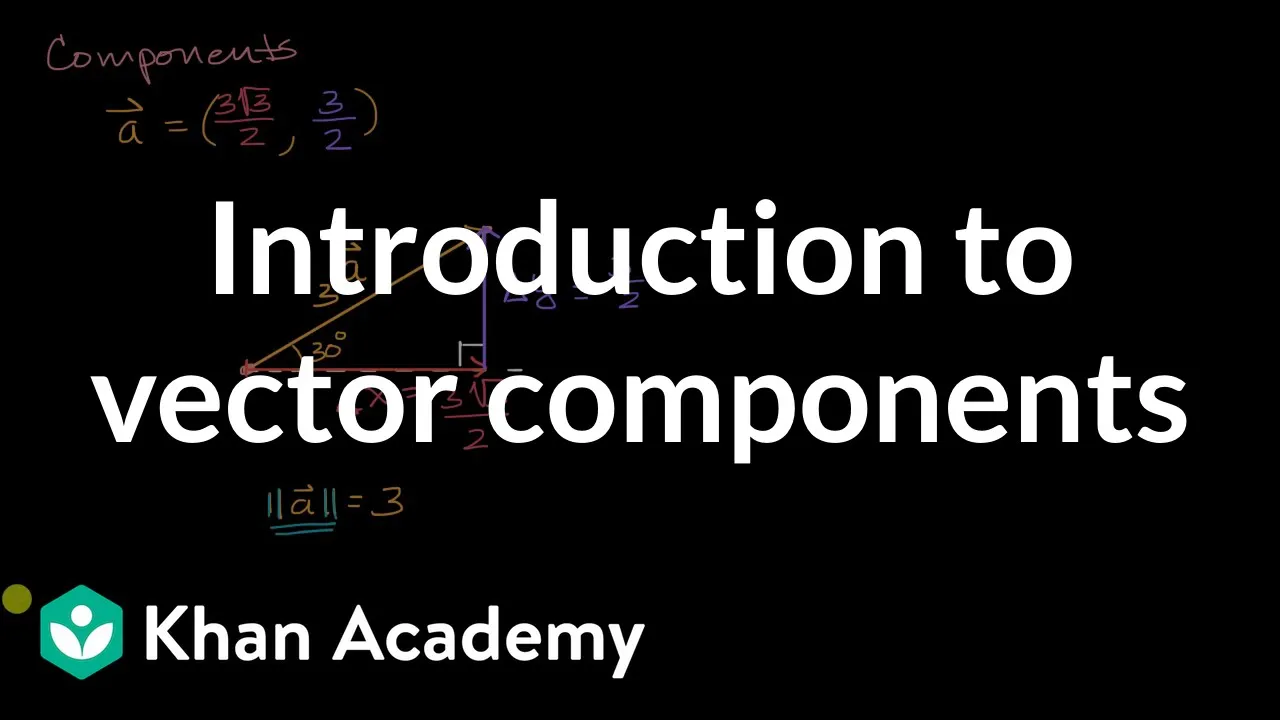 YouTube5:16
Whiteboard for Vectors, compared with the current visual explanation.
Vectors