The graph of a two-variable function
A surface represents the height above each input pair.
Charles队长 · Bilibili · 0:24
A curved surface and its tangent plane distinguish the actual increment of a two-variable function from its total differential.
Use the learning inspector for key ideas and moments, or open the reading tabs for the complete notes.
Generated from the video's visuals and explanation; not verbatim speech.
At the reference input (x₀,y₀), a differentiable surface has a tangent plane that gives its first-order local approximation. The plane need not intersect the surface only once or lie everywhere below it.
Move the input by (Δx,Δy). The actual increment Δz is the new function value minus its reference value. The total differential dz is the tangent plane’s height change for the same input displacement. Both are measured relative to the reference height.
Evaluate both partial derivatives at the reference point: . Differentiability means the remaining error divided by the input displacement length tends to zero. Existence of the two partial derivatives alone is insufficient.
A surface represents the height above each input pair.
At a differentiable point, the value and the two partial derivatives define the tangent plane. This is a first-order local approximation, not a unique-contact claim.
Subtract the reference function value from the new one. It is a change in height, not the absolute height above the xy-plane.
Both derivatives are evaluated at the reference input. Differentiability gives , where ρ is input displacement length; merely having partial derivatives does not suffice.
The surface and tangent plane compare the actual increment Δz with the total differential (x₀,y₀)(x₀,y₀)Δy. Differentiability gives , where ρ is input-displacement length; existence of partial derivatives alone is insufficient. This explains a multivariable derivative as a local linear approximation.
The tangent plane provides the first-order local approximation of the surface at the reference point. It is defined by the function's value and its two partial derivatives at that point.
Conditions: The surface is differentiable at the reference point .; The plane is constructed using the value and partial derivatives at .
Differentiability requires that the linear approximation (the tangent plane) becomes arbitrarily accurate as the input displacement approaches zero. Specifically, the remaining error between the actual increment and the total differential, divided by the input displacement length, must tend to zero.
Conditions: The function is evaluated at a reference point .; The input is displaced by with length .
The total differential is computed by evaluating both partial derivatives at the reference point and taking their linear combination with the input displacements and . The formula is .
Conditions: The function is differentiable at the reference point .; The input is moved by a displacement .
The actual increment is the difference between the new function value and the reference function value after the input is displaced. It is calculated as .
Conditions: The function is evaluated at a reference point .; The input is moved by a displacement .
The actual increment measures the true change in height on the curved surface, calculated as the new function value minus the reference value. The total differential measures the height change on the tangent plane for the same input displacement.
Conditions: The input is displaced by from a reference point .; The function is differentiable at the reference point.
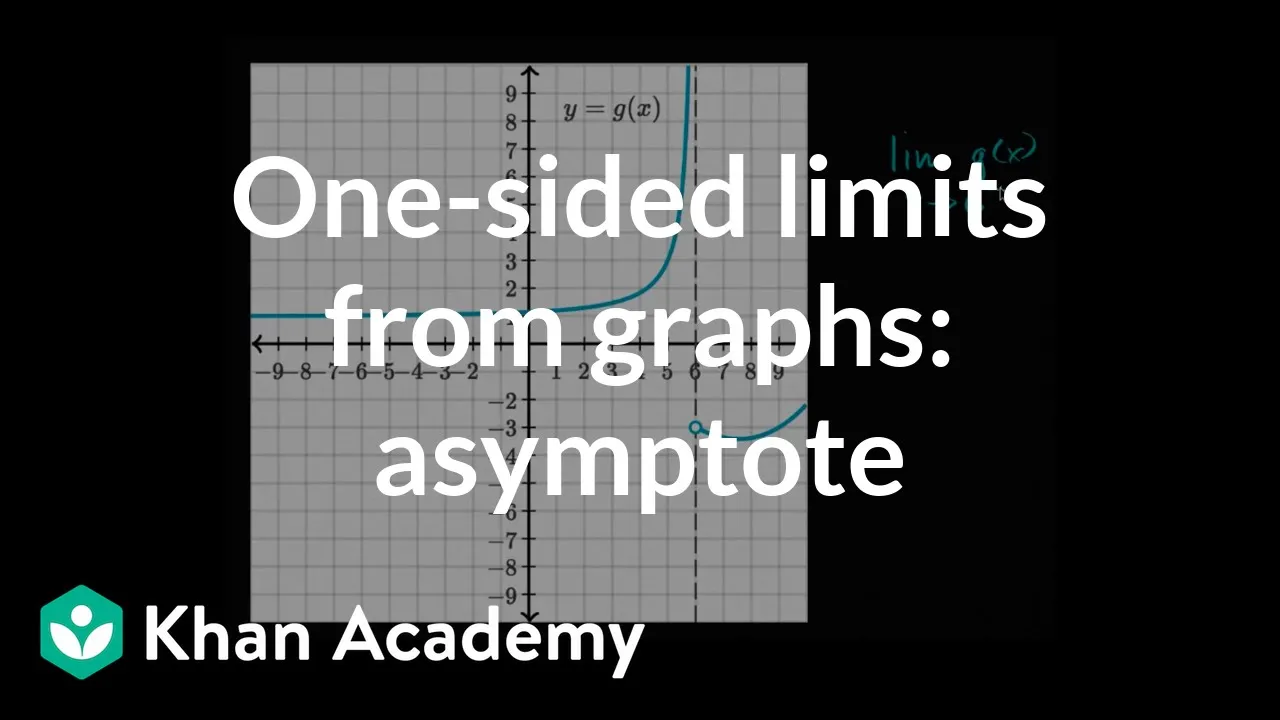 YouTube2:26
Prerequisite in Calculus: Limits → Derivatives.
Limits · View learning sequence YouTube3:52
Next in Calculus: Derivatives → Integration by parts.
Integration by parts · View learning sequence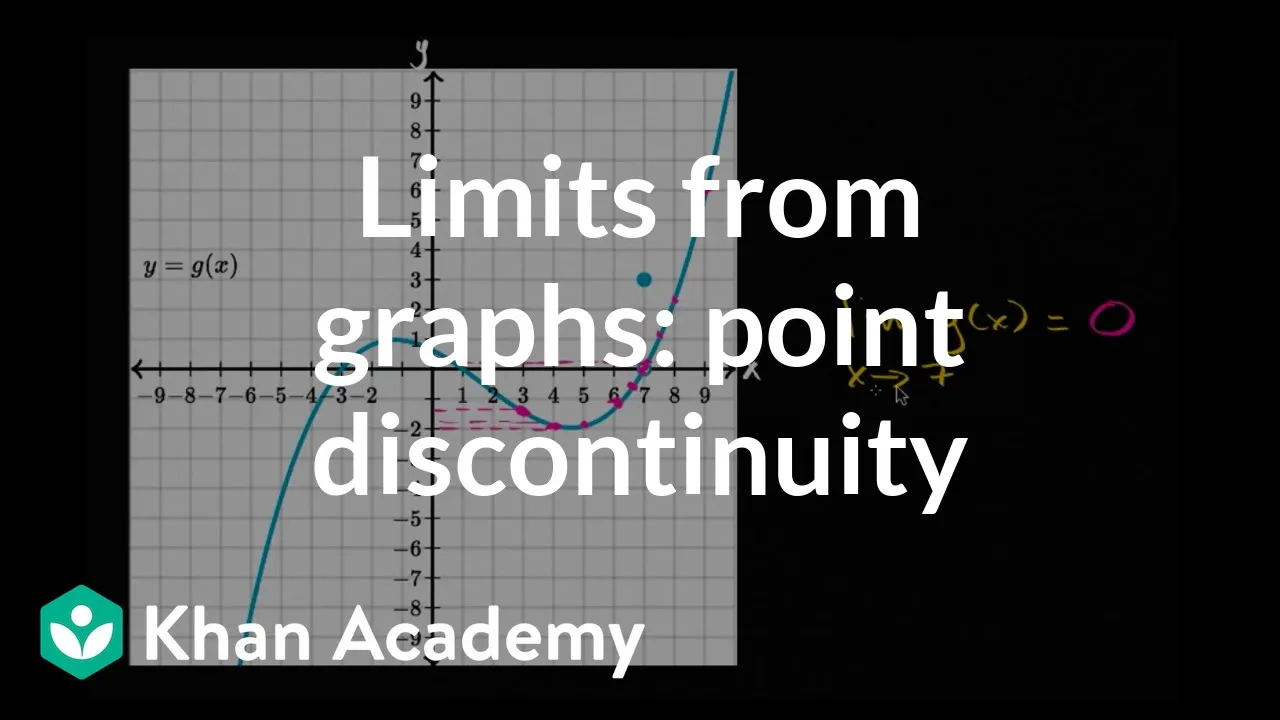 YouTube2:38
Prerequisite in Calculus: Limits → Derivatives.
Limits · View learning sequence Bilibili5:38
English video covering Derivatives; the current video is in Chinese.
Derivatives YouTube2:39
English video covering Derivatives; the current video is in Chinese.
Derivatives YouTube3:53
English video covering Derivatives; the current video is in Chinese.
DerivativesYouTube2:39Whiteboard for Derivatives, compared with the current visual explanation.
DerivativesYouTube3:53Whiteboard for Derivatives, compared with the current visual explanation.
Derivatives