Find all improper points
The integral of ³ from 0 to infinity has both an infinite endpoint and an interior singularity at . Treating only the infinite endpoint misses an essential condition.
inTuition · YouTube · 9:52
Handle every improper feature of an integral and avoid canceling separately divergent pieces.
Use the learning inspector for key ideas and moments, or open the reading tabs for the complete notes.
Generated from the video's visuals and explanation; not verbatim speech.
The integral of ³ from 0 to infinity has both an infinite endpoint and an interior singularity at . Treating only the infinite endpoint misses an essential condition.
Split at and use separate one-sided limits for the left and right pieces, as well as a limit at infinity. An ordinary improper integral converges only if every required piece converges finitely.
The antiderivative is −1/[²]. Approaching the singularity from the left makes the left integral tend to −infinity; the right integral tends to +infinity. They cannot be canceled to assign an ordinary integral value.
The integral of ³ from 0 to infinity has both an infinite endpoint and an interior singularity at . Treating only the infinite endpoint misses an essential condition.
Split at and use separate one-sided limits for the left and right pieces, as well as a limit at infinity. An ordinary improper integral converges only if every required piece converges finitely.
The antiderivative is −1/[²]. Approaching the singularity from the left makes the left integral tend to −infinity; the right integral tends to +infinity. They cannot be canceled to assign an ordinary integral value.
The integral of ³ from 0 to infinity has both an infinite endpoint and an interior singularity at . Treating only the infinite endpoint misses an essential condition. Split at and use separate one-sided limits for the left and right pieces, as well as a limit at infinity. An ordinary improper integral converges only if every required piece converges finitely. The antiderivative is −1/[²]. Approaching the singularity from the left makes the left integral tend to −infinity; the right integral tends to +infinity. They cannot be canceled to assign an ordinary integral value.
 YouTube7:54
Another explanation of Improper integrals.
Improper integrals YouTube2:28
Prerequisite in Calculus: Definite integrals → Improper integrals.
Definite integrals · View learning sequence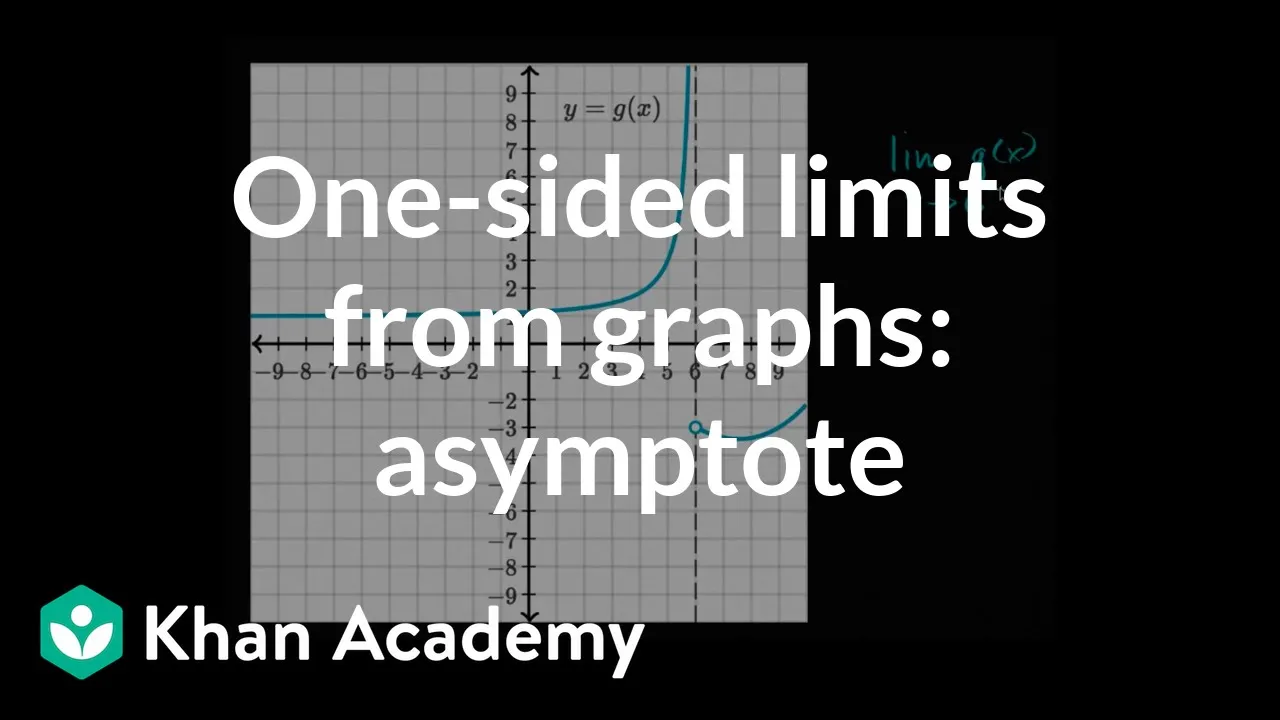 YouTube2:26
Prerequisite in Calculus: Limits → Improper integrals.
Limits · View learning sequence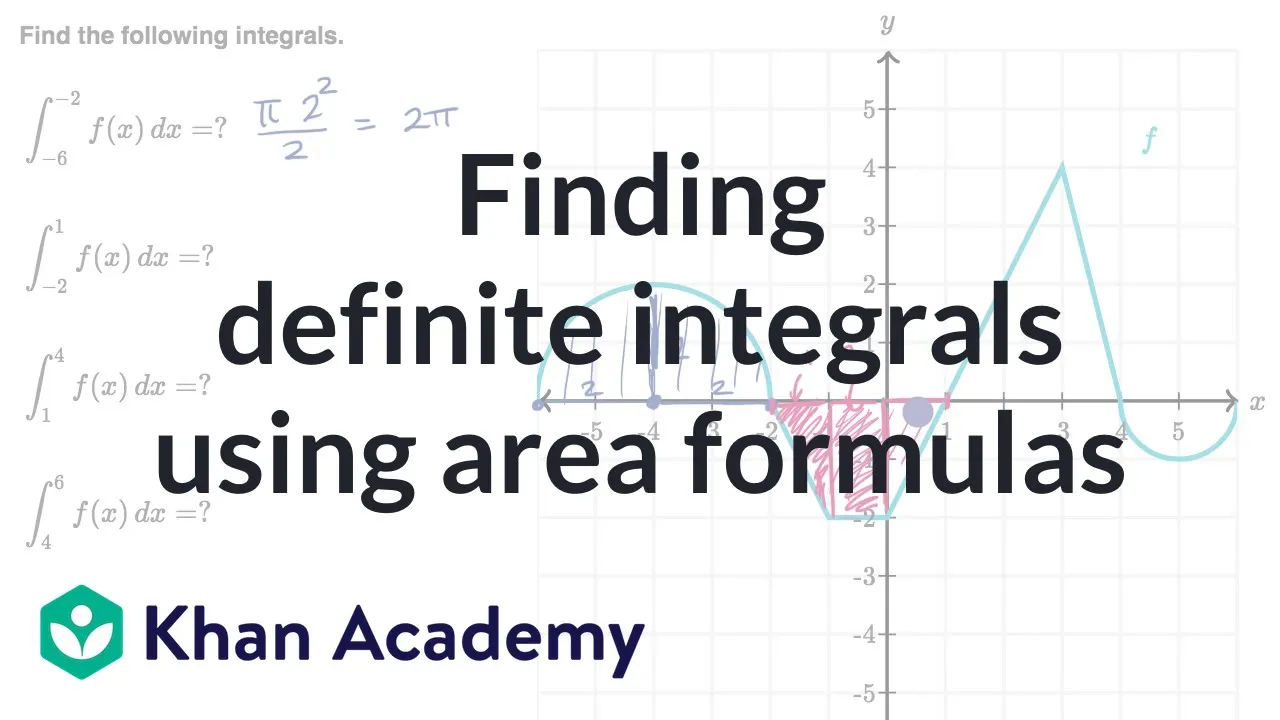 YouTube4:16
Prerequisite in Calculus: Definite integrals → Improper integrals.
Definite integrals · View learning sequenceYouTube7:54Lecture for Improper integrals, compared with the current whiteboard.
Improper integrals